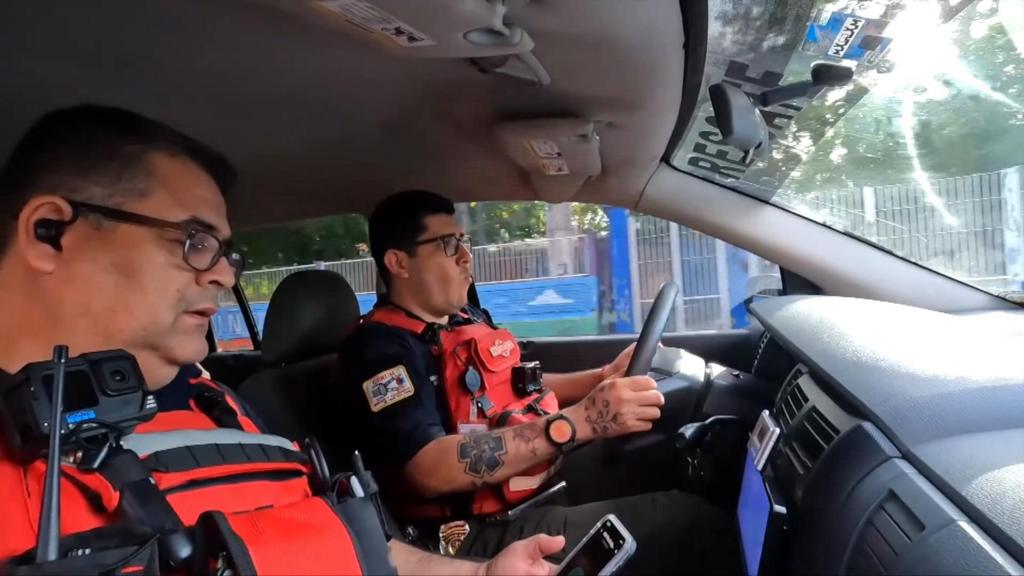
A BBC news team has documented from the ground the harsh reality of a Mexican city plunged into a spiral of lethal violence, where drug cartels exert ironclad control over daily life and public security has collapsed. The first-person report shows deserted streets, shuttered businesses, and a terrified population living under the constant threat of gunfights, kidnappings, and extortion. The situation reflects the deepening of a security crisis affecting numerous regions of Mexico, where the fight for control of drug trafficking routes to the United States is bleeding entire communities dry.
The context of this violence dates back to decades of war against drug trafficking, formally launched in 2006, which fragmented large criminal organizations and led to a proliferation of smaller, more violent groups. These cartels not only fight over drug trafficking but have diversified into systematic extortion of businesses, fuel theft, human trafficking, and territorial control. The city visited by the BBC has become a flashpoint in this confrontation, with a homicide rate placing it among the country's most dangerous. Local authorities, often infiltrated or intimidated, show limited capacity to respond, leaving citizens in a state of abandonment.
Official data indicates that Mexico recorded over 30,000 intentional homicides in 2023, remaining at historically high levels. In the state where the documented city is located, violence has increased by more than 15% year-on-year, with daily episodes of shootouts and executions. The BBC report collects anonymous testimonies from residents describing how they have normalized the sound of gunfire and modified their routines to avoid risk areas. "Going out after 6 p.m. is a lottery," says a merchant whose voice was distorted to protect his identity. "The cartels set the rules. If you don't pay the 'fee,' your business disappears."
Statements from consulted experts underscore the complexity of the problem. "We are facing a multidimensional crisis where organized crime has filled power vacuums and offers, in a perverse way, an alternative order based on coercion," explains security analyst Elena Ruiz. "The strategy of direct confrontation, without parallel strengthening of civil institutions and justice, has been counterproductive." For its part, the federal government has reiterated its commitment to a policy of "hugs, not bullets," focused on attacking the social causes of crime, although critics point out that violence persists and has even intensified in certain corridors.
The impact of this situation is devastating at the community and economic level. Investment flees, tourism evaporates, and thousands of families are forced to displace internally. Furthermore, collective psychological trauma and the erosion of the social fabric are profound. Children and young people grow up in an environment where violence is the norm, perpetuating a cycle difficult to break. International coverage, such as that carried out by the BBC, focuses on a humanitarian crisis often overshadowed by other global headlines but has direct consequences for regional stability and migratory flows to the northern border.
In conclusion, the BBC's report from the streets of this Mexican city is not just a snapshot of violence but a reflection of a structural challenge of security, governance, and justice that Mexico has faced for years. The State's inability to guarantee basic security in territories controlled by cartels reveals the magnitude of the power accumulated by these organizations. The solution, analysts agree, requires a comprehensive strategy combining law enforcement with robust economic development programs, opportunities for youth, and effective justice that restores citizen trust. Meanwhile, millions of Mexicans continue to live their daily lives under the yoke of fear and uncertainty, awaiting a change that seems distant.