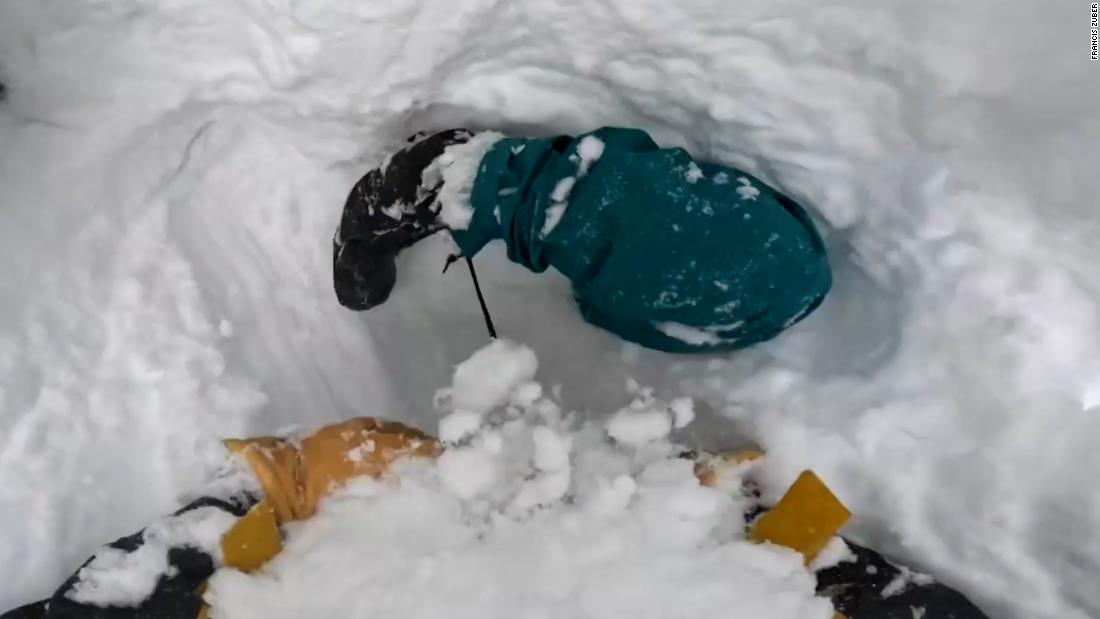
An act of heroism and quick thinking on the snowy slopes of an unidentified mountain has captured global attention, following the dramatic rescue of a snowboarder trapped upside down in a perilous tree well. The incident, captured on video by the rescuer's helmet camera, shows skier Francis Zuber spotting the situation and executing an immediate and decisive rescue, an example that safety experts hail as a textbook response. The scene, which quickly went viral on social media, has reignited warnings about the hidden dangers lurking in the wooded areas of ski resorts and backcountry terrain, where tree wells represent one of the most lethal threats to winter sports enthusiasts.
Tree wells are cavities that form around the base of trees, particularly conifers, when branches prevent snow from compacting evenly. This creates a hidden air pocket beneath accumulated snow, often deep and with loose walls. A head-first fall into one of these wells can result in near-instant burial, with the victim trapped in an inverted position and loose snow collapsing around them, stifling any attempt to shout or move. The National Ski Areas Association (NSAA) in the U.S. and organizations like the Canada Ski Patrol have documented fatal incidents related to these hazards for years, noting that most snow immersion deaths occur alone or near trees. Awareness, however, does not always translate to caution among skiers and snowboarders seeking fresh powder.
In the rescue video, Zuber is seen skiing when he notices a snowboard sticking out of the snow in an anomalous way, alongside slight movement. Immediately, he drops his poles and approaches with urgency. "I'm here, I'm going to get you out!" he is heard saying, as he begins digging frantically with his hands around the head and torso of the snowboarder, whose identity has not been revealed. Speed is critical: according to NSAA data, a person buried in snow has a 90% survival rate if rescued within the first 15 minutes, but that figure drops drastically after more time due to asphyxiation. Zuber manages to unearth the man's head within minutes, allowing him to breathe, and then continues to free the rest of his body. The snowboarder, visibly shaken but conscious, is able to exit with assistance.
Following the incident, Francis Zuber gave interviews in which he emphasized the importance of preparedness. "It was a combination of luck and being alert," he stated. "But luck is not a plan. Everyone who goes into the mountains, especially off-piste, should take an avalanche rescue course and learn about these specific dangers. Knowing what to look for and how to react in the first seconds makes the difference between life and death." His words have been backed by safety instructors like Mike Haftel from the Colorado Mountain Guides School, who noted: "Zuber's video is a textbook example: stop immediately, assess area safety, call for others if possible, and dig while prioritizing the victim's airway. He didn't waste time trying to remove the board or the feet first; he went straight for the head."
The impact of this rescue extends beyond the individual act. Several ski resorts and winter sports organizations have begun sharing the video on their platforms as mandatory educational material. Furthermore, it has spurred a notable increase in enrollments for mountain safety and avalanche rescue courses across North America and Europe. The visibility of the incident has also pressured some resorts to improve signage in wooded areas and during beginner lessons, explicitly warning about the dangers of tree wells. For the skiing and snowboarding community, it serves as a visceral reminder that the mountain, despite its beauty, is a relentless environment where human error and natural hazards can converge in seconds.
In conclusion, Francis Zuber's heroic intervention not only saved a life but has become a powerful tool for public awareness. It underscores the critical need for education, preparation, and the principle of never skiing or snowboarding alone in complex terrain. As the footage continues to circulate, its legacy could be a safer winter season for thousands of enthusiasts, reminding them that true freedom in the mountains stems from respect for its dangers and the responsibility to be prepared to aid others in a moment of extreme need.