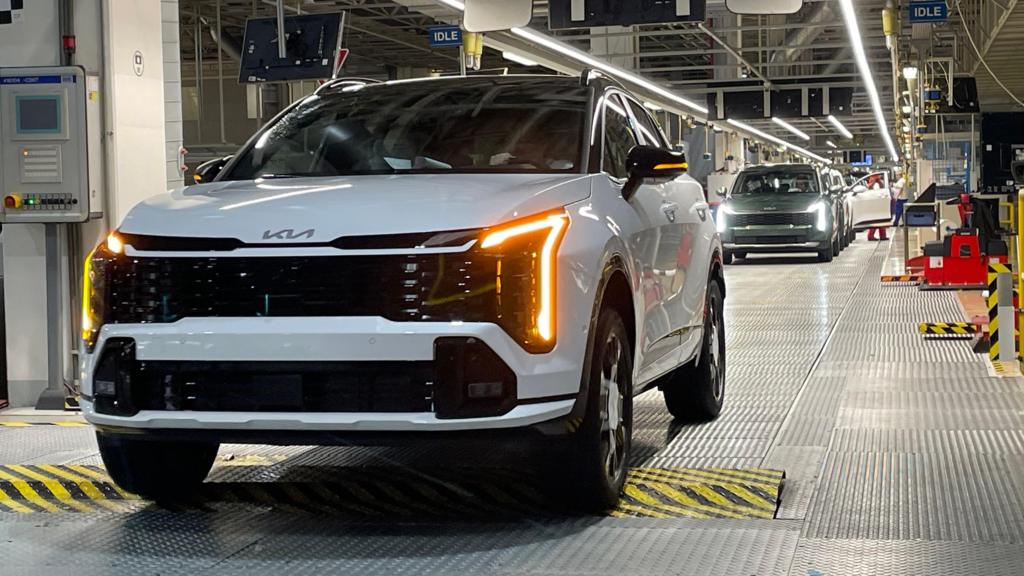
In the heart of Europe, a small nation of just 5.4 million people has achieved an unprecedented industrial feat: becoming the world's largest car manufacturer relative to the size of its population. Slovakia, a country that emerged as an independent state in 1993 following the dissolution of Czechoslovakia, has radically transformed its economy to position itself as an automotive giant. With annual production exceeding one million vehicles, Slovakia's automotive industry represents over 12% of national GDP and directly employs tens of thousands of workers, forming the fundamental pillar of its economic success.
The Slovak automotive miracle began to take shape in the late 1990s, when the government implemented an aggressive foreign direct investment attraction strategy. By offering competitive advantages such as a skilled workforce with relatively low costs, a strategic geographical position in the center of Europe, political stability, and generous tax incentives, Slovakia managed to seduce major automotive conglomerates. Volkswagen was the pioneer in 1991, establishing a plant in Bratislava that initially produced the Golf. This initial success paved the way for other giants to follow suit: PSA Group (now Stellantis) in 2006 in Trnava, and Kia Motors in 2006 in Žilina. More recently, Jaguar Land Rover opened a factory in Nitra in 2018, consolidating the ecosystem.
The numbers are eloquent. In 2022, Slovakia produced approximately 1.1 million vehicles, translating to more than 200 cars per 1,000 inhabitants—a ratio that far surpasses traditional powers like Germany (120 per 1,000), Japan (95 per 1,000), or the United States (40 per 1,000). This mass production is 98% exported, primarily to other European Union countries, but also to global markets. The industry generates around 180,000 direct and indirect jobs, and its supply chain includes more than 350 component suppliers established in the country. The sector attracts over 40% of all industrial investment in Slovakia, with value added per employee significantly above the national average.
"Our success is based on a unique combination of factors: an exceptional logistical location, a highly skilled workforce in engineering, and close cooperation between the government, industry, and the education system," stated Alexander Matušek, President of the Automotive Industry Association of Slovakia. "We have built an integrated automotive cluster ranging from R&D to final production, with a strong focus on innovation and electric mobility." This focus on electrification is crucial for the sector's future. Slovak plants already produce emblematic electric models such as the Volkswagen e-Up!, Kia e-Niro, and Jaguar I-PACE, positioning the country for the energy transition.
The socioeconomic impact of this industrial specialization is profound. Wages in the automotive sector are approximately 50% higher than the national average, boosting purchasing power and reducing the income gap with Western Europe. However, this dependence on a single sector also poses significant risks. The Slovak economy is extremely vulnerable to fluctuations in global car demand, supply chain crises (such as semiconductor shortages), and disruptive technological changes. Furthermore, competition from countries with even lower labor costs, such as Romania or Morocco, represents a constant challenge.
Looking to the future, Slovakia faces the challenge of maintaining its leadership in a rapidly transforming industry. The transition to electric vehicles requires massive investments in new technologies, charging infrastructure, and battery recycling. The government and companies are collaborating on training programs to prepare the workforce for electric and autonomous vehicle manufacturing. Environmental sustainability has also become a priority, with initiatives to reduce the carbon footprint of production. The Slovak model demonstrates how a small country can achieve world-class industrial specialization through a coherent long-term strategy, investment in human capital, and smart integration into global value chains. Its experience offers valuable lessons for other emerging economies seeking a path toward advanced industrial development.
In conclusion, Slovakia has written a remarkable chapter in contemporary industrial history. From a post-socialist transition economy to becoming the world's per capita car capital, its trajectory illustrates the power of well-designed industrial policies and the importance of continuously adapting to changing global dynamics. As it navigates the challenges of electrification and digitalization, Slovakia's future as an automotive power will depend on its ability to innovate, diversify, and maintain its competitive edge in an automotive landscape being redefined at great speed.