The commercial space industry is in a moment of intense activity and scrutiny following the announcement of a new investigation by SpaceX and a significant expansion in its client portfolio. SpaceX, the company founded by Elon Musk, has confirmed it is investigating an anomaly that occurred in the upper stage of one of its Falcon rockets during a recent mission. This incident, whose specific technical details have not yet been publicly disclosed, has led the company to conduct a thorough review of its procedures and components. Concurrently, in a move that underscores the dynamics of the launch market, Amazon has announced the booking of 10 additional missions with SpaceX for its Project Kuiper satellite constellation, citing a "near-term shortage in launch capacity." This contract expands a pre-existing relationship and represents a vote of confidence in SpaceX's reliability, even amid a technical investigation.
The context of this situation is complex. On one hand, SpaceX maintains an unprecedented launch tempo, with dozens of Falcon 9 and Falcon Heavy missions flown this year. This high operational cadence is essential to deploy the Starlink constellation, fulfill U.S. government contracts with NASA and the Department of Defense, and serve commercial customers. Any anomaly, especially in an upper stage critical for the final orbital insertion of payloads, is taken with extreme seriousness. The company has a history of transparent investigative processes following failures, such as the famed post-mortem after a Falcon 9 pad explosion in 2016, which led to significant improvements. The Falcon 9's upper stage, powered by a single Merlin Vacuum engine optimized for the vacuum of space, is a proven component, making any malfunction particularly noteworthy.
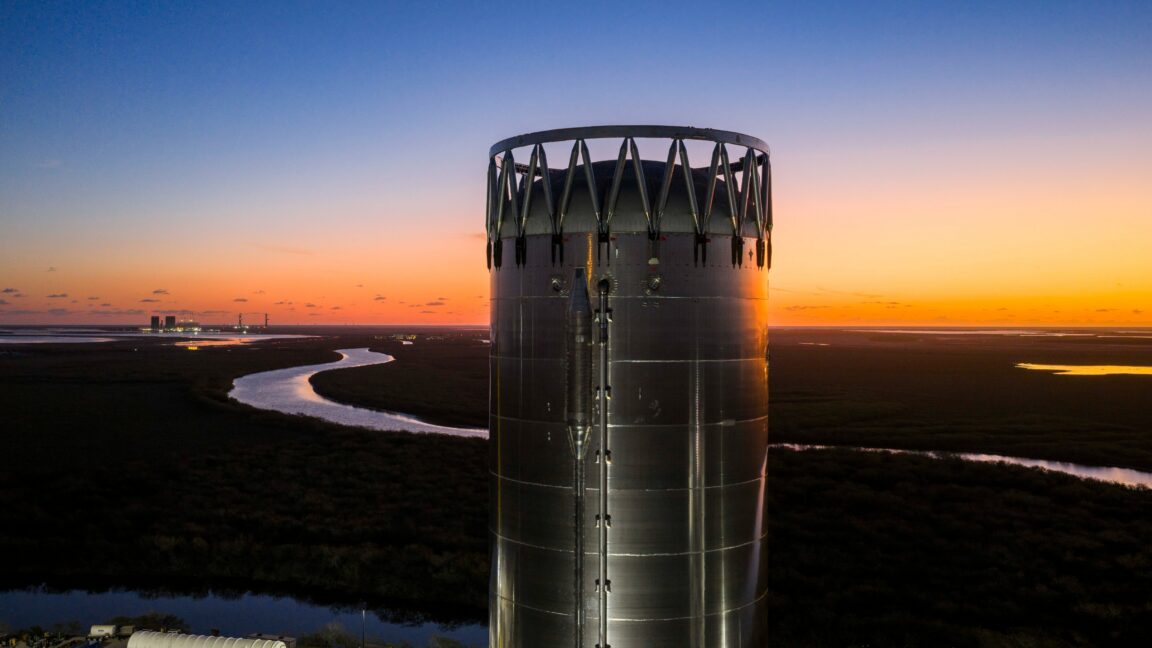
As this internal investigation unfolds, the company's Starship division has resumed testing at its Starbase facility in Boca Chica, Texas. The Starship spacecraft prototype and its Super Heavy rocket, designed to be fully reusable and capable of carrying massive payloads to the Moon and Mars, are entering a new phase of preparation for a fourth integrated flight test. Recent activities have included pressurization tests and static fires of Raptor engines, signaling that the program is advancing despite the focus on the Falcon family. This dual development—investigating a problem in the current workhorse while progressing the next-generation system—exemplifies SpaceX's capacity to manage multiple high-complexity technological fronts.
The Amazon contract, however, is perhaps the most revealing data point about the state of the market. In a statement, an Amazon spokesperson noted: "The near-term shortage in launch capacity in the industry has led us to secure additional capacity with SpaceX. We continue to make progress with our existing launch partners and look forward to deploying our Project Kuiper satellites on time." This statement is a tacit acknowledgment of the delays affecting other providers, such as United Launch Alliance (ULA) with its new Vulcan Centaur rocket, and Arianespace, whose Ariane 6 has yet to debut. For Amazon, a direct competitor to Starlink in the satellite internet business, relying on rival SpaceX for launches is a pragmatic decision based on demonstrated availability and reliability, despite underlying competitive tensions.
The impact of this news is multifaceted. For SpaceX, the anomaly investigation could lead to procedural adjustments or design modifications that further reinforce the Falcon's already impressive reliability. A pause for affected launches is possible, but the company has a broad cadence to absorb it. For the broader launch market, Amazon's contract with SpaceX confirms a concentration of demand on the most capable providers, potentially accelerating a de facto consolidation in the industry. Competitors will be pressured to demonstrate reliability and operational tempo. For Project Kuiper, guaranteed access to more launches is crucial to meeting FCC regulatory requirements, which mandate the deployment of half its constellation by mid-2026.
In conclusion, the week has painted a portrait of a SpaceX operating at the pinnacle of the commercial space industry, simultaneously facing the inherent technical challenges of pushing frontiers and capitalizing on its dominant market position. The upper stage investigation is a reminder that spaceflight remains intrinsically difficult, even for the most experienced player. At the same time, Amazon's decision to entrust more critical payloads to SpaceX, despite being a competitor, is a powerful testament to the operational capability Musk's company has built. As Starship testing continues on the horizon, the present belongs to the Falcon, a vehicle whose continued success is now even more critical to the plans of multiple tech giants and to the future of global connectivity from space.