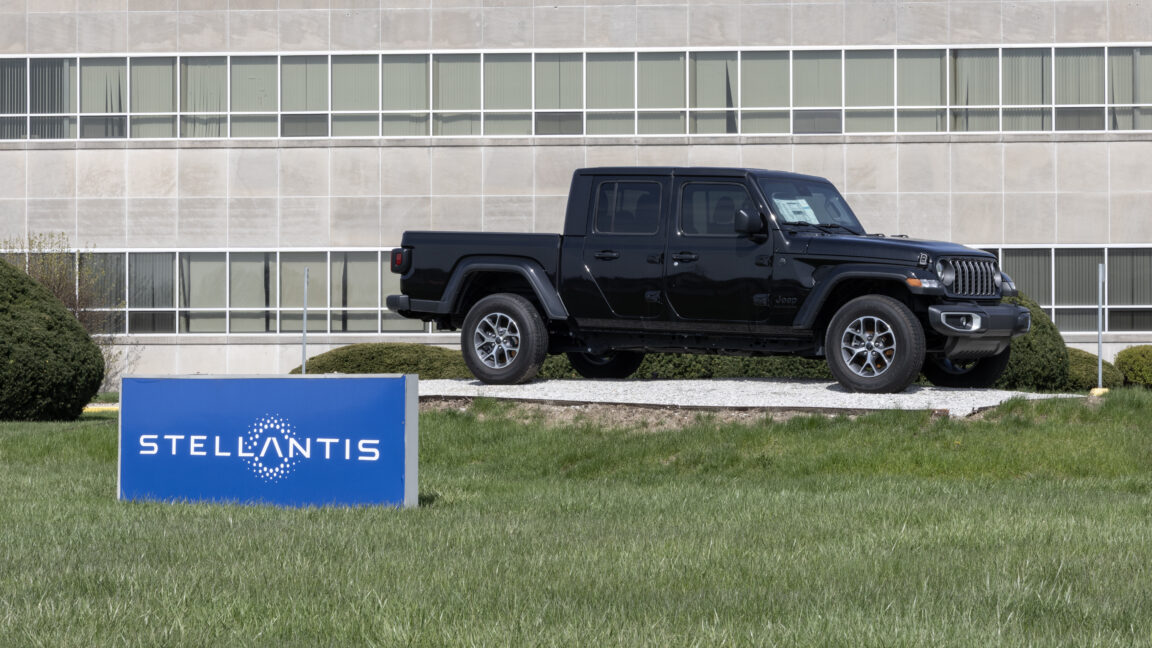
Automotive conglomerate Stellantis, owner of brands such as Jeep, Ram, Peugeot, and Fiat, has announced a monumental asset impairment charge of $26 billion, a move reflecting a deep reassessment of its global electric vehicle (EV) strategy. This decision places the company in line with its American rivals, Ford and General Motors, who have also booked massive accounting losses after betting on technologies and production plans that have not materialized as expected. The news shakes the foundations of the industry, which finds itself at a crossroads between ambitious electrification promises and the harsh reality of the market.
The context for this decision is complex and multifaceted. Stellantis, formed from the merger of Fiat Chrysler and the PSA Group, had made significant investments in EV platforms, battery manufacturing capabilities, and technology developments specific to electrification. However, the slowdown in EV adoption in key markets, high costs deterring consumers, intense competition (especially from Chinese manufacturers), and shifting government policies have forced the company into a painful reckoning. The impairment, an accounting concept that reduces the value of assets on the balance sheet, indicates that the investments made are no longer expected to generate the economic returns initially projected.
Relevant data underscores the scale of the challenge. The $26 billion represents one of the largest value corrections in the recent history of the automotive industry. This figure adds to the approximately $4.7 billion in losses Ford recorded in its EV business last year, and the billions GM has earmarked to revise its production targets. Globally, EV sales growth, while still positive, has slowed considerably. In Europe and the United States, many potential buyers cite concerns about price, charging infrastructure, and range as primary barriers. This environment has led Stellantis to delay some electric model launches and reevaluate investments in certain production plants.
Carlos Tavares, CEO of Stellantis, has commented on the situation, emphasizing the need for agility and realism. "Our commitment to electrification remains unwavering, but it must be a smart and financially sustainable commitment," he stated in a recent communication. "The market is sending us clear signals, and our responsibility is to adapt to protect the future of the company and our employees, without sacrificing our long-term vision." These remarks reflect a more cautious tone compared to the unbridled optimism that characterized industry announcements just a few years ago.
The impact of this decision will be far-reaching. Internally, Stellantis is likely to reallocate resources, possibly accelerating the development of hybrid vehicles as a more viable bridge technology in the short and medium term. It may also seek alliances or adjust its joint ventures in the battery sphere. For employees, there is concern that cost-cutting could translate into restructuring or layoffs in areas linked to now-deprioritized EV projects. Externally, the move sends a powerful signal to suppliers, investors, and governments: the transition to electric vehicles will be longer, more costly, and more tortuous than many anticipated. Suppliers specialized in EV components may see their orders reduced, while governments that have offered generous subsidies may reevaluate their policies.
In conclusion, Stellantis's massive impairment is a symptom of a critical inflection point for the entire global automotive industry. It is not the end of electrification, but a painful yet necessary adjustment toward a more realistic path. Companies are learning that the technological transition does not follow a straight line and that consumer demand is the ultimate determining factor. The future will likely see a more diversified landscape, with battery electric vehicles, hybrids, and even improved internal combustion engines coexisting for longer than previously expected. The ability of Stellantis, Ford, GM, and other giants to navigate this complex transition, balancing innovation with profitability, will define their survival and success in the coming decade.