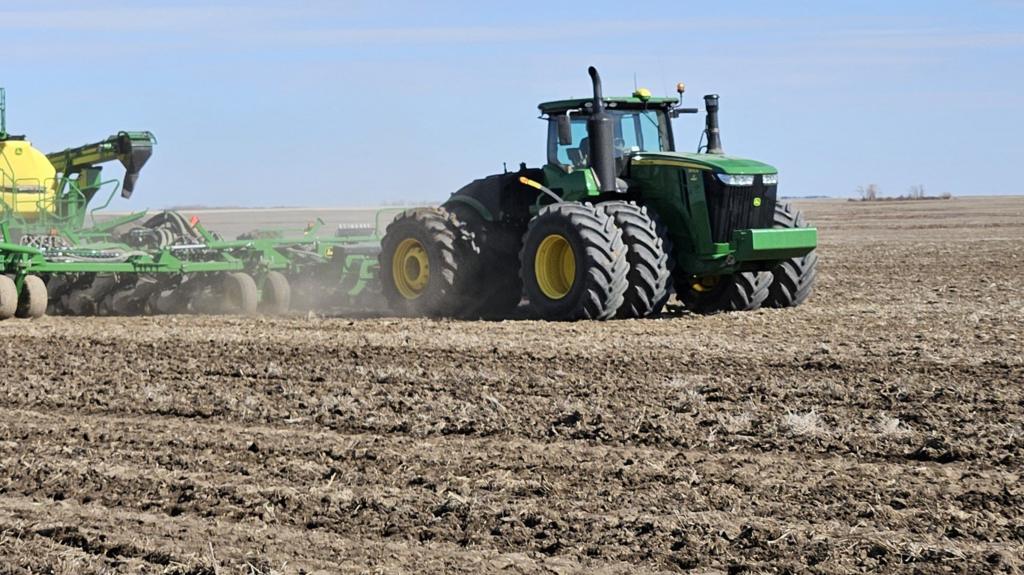
In a world facing the dual challenge of feeding a growing population and mitigating the environmental impact of food production, a quiet revolution is taking shape in the fields. The promise of 'tech-dense' farming, where sensors, drones, artificial intelligence, and robotics are integrated into every stage of the crop cycle, is emerging as a potential solution to these pressing problems. This approach is not simply about adding gadgets to traditional practices; it represents a fundamental shift towards a data-driven, hyper-efficient, and potentially more sustainable farm management system. The premise is powerful: leveraging technology to get more food from every drop of water, every gram of fertilizer, and every hectare of land, while simultaneously lowering costs and the ecological footprint.
The context for this transformation is critical. According to the United Nations Food and Agriculture Organization (FAO), global agricultural output needs to increase by roughly 70% by 2050 to meet projected demand. Yet, resources like arable land and fresh water are finite, and conventional farming is a significant contributor to greenhouse gas emissions and soil degradation. 'Tech density' emerges as a response to this seemingly impossible equation. The tools now available to farmers are diverse and sophisticated. Internet of Things (IoT) sensors buried in the soil monitor moisture, nutrients, and temperature in real-time, enabling precision irrigation and fertilization that avoids waste. Drones equipped with multispectral cameras fly over crops, identifying areas of stress, disease, or pest infestation before they are visible to the human eye, allowing for surgical interventions.
Artificial intelligence analyzes vast datasets from satellites, sensors, and historical machinery to predict yields, optimize planting dates, and recommend practices tailored to specific patches of land—a concept known as site-specific precision agriculture. At the cutting edge, autonomous robots perform tasks like weeding, pruning, and selective harvesting, addressing labor challenges and increasing consistency. Relevant data comes from case studies: farms that have adopted these technologies report reductions in water use of up to 30%, decreases in herbicide use of 90% through robotic weeding, and yield increases of 5 to 20% due to optimized management. These figures, while variable, point to the transformative potential.
Statements from key players reflect both optimism and challenges. 'Technology doesn't replace the farmer; it amplifies their intuition and experience with objective data,' says Maria Lopez, an agronomist specializing in digital agriculture. 'We are moving from making decisions based on field averages to decisions based on data from individual plants.' However, from the producer's side, opinions are mixed. Juan Perez, a mid-scale farmer, comments, 'The initial investment is overwhelming. The benefits are clear on paper, but the path to accessing them is paved with expensive hardware and software subscriptions.' This point underscores the main barrier: affordability and complexity, which can exclude small and medium-sized farmers, exacerbating the digital divide in the countryside.
The impact of widespread adoption of tech-dense farms could be profound and multifaceted. Economically, it could lower long-term production costs and stabilize food prices by making supply more predictable and resilient to climate disruptions. Environmentally, the potential to reduce chemical runoff, conserve water, and sequester carbon through optimized practices is a powerful argument for sustainability. Socially, however, there is a risk of further concentration of agricultural production in large operations with capital to invest, potentially disrupting traditional rural communities. Furthermore, reliance on complex digital systems introduces new vulnerabilities, such as cybersecurity and data ownership.
In conclusion, tech-dense farms undoubtedly represent a *possible* and increasingly *probable* future for significant segments of global agriculture, particularly for high-value crops and in resource-scarce regions. They offer a promising pathway to raise yields and lower prices, as promised, but they are not a universal panacea. Their success at scale will critically depend on overcoming access barriers, ensuring benefits are distributed equitably, and developing frameworks that integrate this technological know-how with ecological wisdom. The future of farming will likely not be fully robotic, but a hybrid ecosystem where digital connectivity and human intelligence collaborate to grow our food in the smartest and most responsible way possible. The question is not whether technology will play a role, but how we can design its integration to create a food system that is not only productive but also just and regenerative.