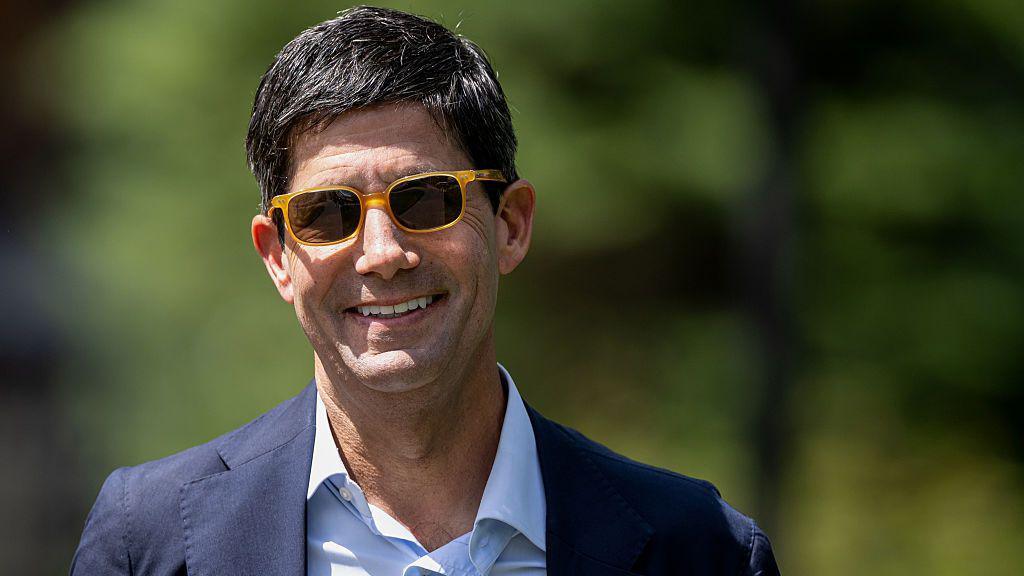
The selection of the next Chair of the United States Federal Reserve has become one of the most crucial appointments of the Trump administration, with profound implications for the global economy. President Donald Trump has publicly expressed his dissatisfaction with current monetary policy, advocating for lower interest rates and criticizing what he perceives as an overly cautious approach by the central bank. His favored candidate, Kevin Warsh, a former member of the Fed's Board of Governors, emerges as a figure who could align the institution more closely with the president's economic vision. However, experts and analysts are deeply divided on whether Warsh, despite his experience and Republican connections, would truly drive the radical change Trump seeks, or if the Fed's institutional independence and economic realities would constrain his room for maneuver.
The context of this appointment is extraordinary. The Federal Reserve, designed to operate independently from direct political pressure, is under unprecedented scrutiny. Trump has broken with the bipartisan tradition of praising and respecting the central bank's autonomy, using platforms like Twitter to criticize the decisions of its current Chair, Janet Yellen. His search for a successor is framed by his desire for a more "accommodative" monetary policy to stimulate economic growth and, potentially, ease the financing of the national debt. Kevin Warsh, who served on the Board of Governors from 2006 to 2011, during the financial crisis, is not an unknown quantity. He is viewed as a monetary policy "hawk," traditionally concerned with inflation, but he has also criticized post-crisis stimulus measures, a stance that in the past might have aligned him with critics of quantitative easing.
Relevant data paints a complex picture. The US economy shows a low unemployment rate, but persistently moderate wage growth and inflation. The Fed has begun a slow process of normalizing rates and reducing its balance sheet, policies Trump has questioned. Warsh, in his recent writings and statements, has expressed skepticism about the efficacy of unconventional monetary policy tools, advocating for a more predictable, rules-based framework. A Congressional Research Service report notes that any Fed Chair must navigate between short-term political pressures and long-term legal mandates: maximum employment and price stability. Warsh's experience on Wall Street and his marriage to the daughter of Sears' founder give him a unique perspective, but could also raise questions about his proximity to financial interests.
Statements from key figures reflect the division of opinion. "Kevin Warsh is a brilliant individual with a deep knowledge of global markets. His nomination would be welcomed by investors looking for clarity and stability," commented a former Fed colleague who asked not to be named. On the other hand, economist and Nobel laureate Paul Krugman warned in his column: "Choosing Warsh would be a deeply political move that would risk the Fed's credibility. His record suggests a propensity to prioritize fighting phantom inflation over supporting real employment." Trump himself has been ambiguous, praising several candidates but making his ultimate goal clear: "We need a strong person at the Fed. Someone who really gets that we want our country to get back to work with low interest rates."
The impact of this decision extends far beyond US borders. A Fed led by Warsh could mean faster monetary normalization or a shift in the institution's communication, triggering volatility in global currency and bond markets. The central banks of Europe, Japan, and emerging markets, whose policies are often tacitly coordinated with the Fed, would have to recalibrate their strategies. For the US economy, the risk lies in a potential erosion of the Fed's perceived independence, which could undermine confidence in the dollar over the long term. Furthermore, a more conflictual relationship between the White House and the central bank could create uncertainty detrimental to business investment.
In conclusion, while Kevin Warsh represents a potential generational and philosophical shift for the Federal Reserve, he is unlikely to be a mere instrument of Trump's political agenda. History shows that the office tends to moderate its occupants, and global macroeconomic realities exert a powerful force. Warsh, if confirmed, is likely to seek a balance between implementing some procedural reforms desired by Fed critics and upholding the institution's integrity against excessive political demands. The change Trump wants—ultra-low rates and aggressive monetary stimulus—may clash with the convictions of an inflation hawk and the institutional limits of the Fed itself. Therefore, the appointment, while significant, may result in evolution rather than revolution, leaving both the president and the markets dealing with a new, but not radically different, reality in US monetary policy.