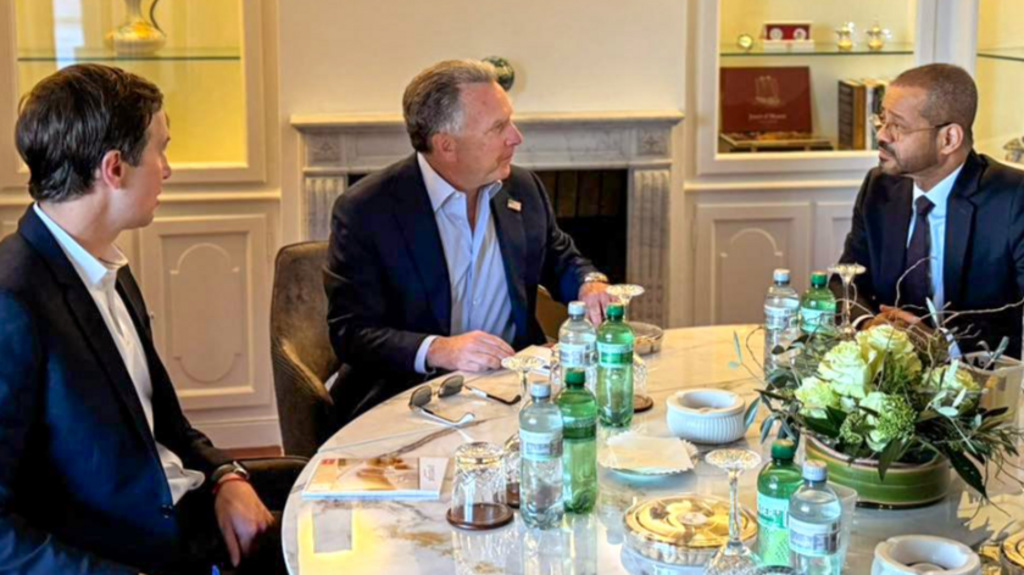
In a high-stakes diplomatic move, representatives from the United States and Iran have begun a round of indirect talks mediated by a third country, in what international analysts describe as a crucial effort to prevent an open military escalation in the Middle East region. The conversations, taking place in a neutral setting under strict secrecy, primarily aim to establish clear communication channels and reduce the dangerous buildup of incidents that have characterized bilateral relations in recent months. This outreach occurs in a volatile regional context, marked by airstrikes, tensions in the Persian Gulf, and deep-seated mutual distrust rooted in decades of hostility.
The context for these negotiations cannot be understood without reviewing the series of recent events that have brought the relationship to the brink. Since the collapse of the 2015 Nuclear Deal (JCPOA) and the reimposition of US sanctions, Iran has progressively increased its uranium enrichment and activities considered provocative by the West. For its part, the United States has maintained a "maximum pressure" stance and reinforced its military presence in the region. Incidents such as attacks on oil tankers, the downing of drones, and attacks by Iran-backed militias on US interests have created a cycle of action and retaliation that many fear could spiral out of control. Mediation by powers like Oman or Qatar has been key to achieving this first contact, although both sides insist this is not a formal negotiation, but rather an "exchange of messages" to manage crises.
Relevant data indicates that Iran's stockpile of enriched uranium has far exceeded JCPOA limits, approaching the threshold necessary for potential military uses, according to reports from the International Atomic Energy Agency (IAEA). In parallel, the US naval presence in the Gulf includes aircraft carriers and destroyers equipped with missile defense systems. Regional security experts estimate that an open conflict would have catastrophic consequences, not only for both countries but for the global economy due to the disruption of oil supply routes passing through the strategic Strait of Hormuz. The price of crude oil has already shown volatility at the mere possibility of a confrontation.
Although no direct official statements from the negotiators have been released, sources close to the discussions have leaked some key points. A European diplomat involved in the facilitation efforts stated on condition of anonymity: "Both sides recognize the existing danger. They are not talking about a grand deal, but about establishing some basic rules of engagement and, above all, a direct communication red line to avoid misunderstandings that could lead to war by mistake." On the other hand, a US State Department spokesperson said in a generic statement that "the United States is committed to diplomacy to address threats to regional security," without specifically mentioning Iran. In Tehran, state media have covered the news cautiously, highlighting Iran's "resistance" and its willingness to talk if "illegal" sanctions are lifted.
The potential impact of these talks is immense. Failure could mean the consolidation of a new phase of direct or proxy confrontation, with a heightened risk of a serious incident triggering large-scale hostilities. Conversely, success, even a modest one, in establishing a de-escalation mechanism could open the door to future negotiations on more substantial issues, such as Iran's nuclear program and regional activities. The allies of both sides are watching nervously: Israel and some Gulf nations prefer a hard line against Iran, while European powers and China push for a diplomatic solution to stabilize energy markets.
In conclusion, these dialogues, however fragile and preliminary, represent a glimmer of hope in a bleak landscape. The international community is breathing cautiously upon seeing that diplomatic channels, however tense, remain open. Recent history shows that the lack of communication between Washington and Tehran has been a key factor in past crises. Therefore, the mere fact that they are talking, even through intermediaries, is a significant step. The path to stability is long and fraught with distrust, but the alternative—a war with unpredictable consequences—is a risk that neither the United States nor Iran seem willing to deliberately take at this moment. The world watches and hopes that prudence will prevail over provocation.