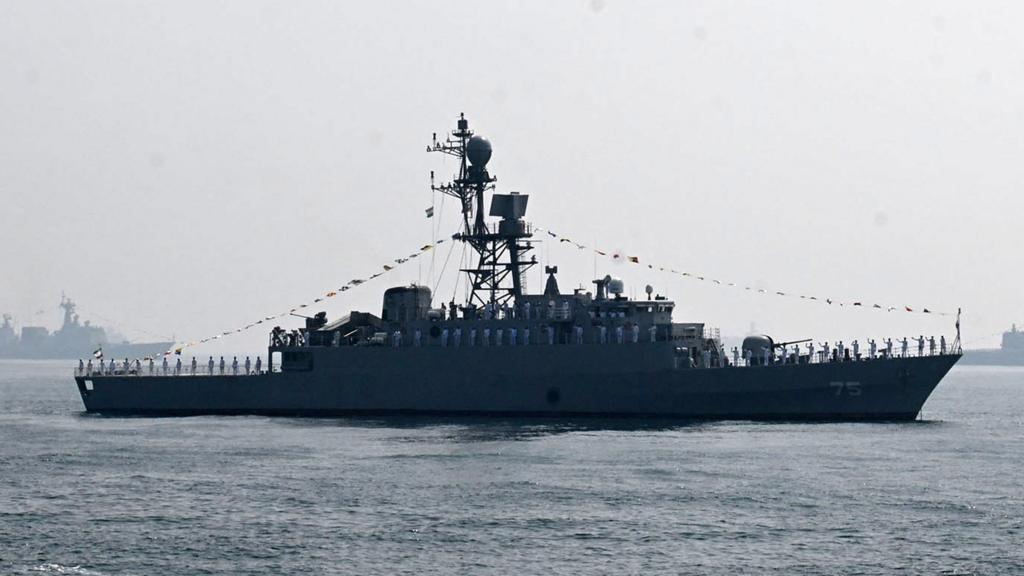
In an incident that threatens to escalate tensions in one of the world's most critical maritime corridors, a U.S. Navy submarine reportedly sank an Iranian warship in the Indian Ocean, according to an exclusive report by Fox News host Pete Hegseth. The information, not yet officially confirmed by the Pentagon, indicates the confrontation occurred after the Iranian vessel conducted hostile maneuvers and targeted its weapon systems against U.S. units in the region. The incident takes place amid high alert for security in the Strait of Hormuz and surrounding waters, vital for global oil transportation.
The context of this alleged confrontation is a prolonged maritime cold war between the United States and Iran, which has seen numerous incidents of merchant vessel harassment, oil tanker seizures, and shows of force. The Islamic Republic of Iran Navy has significantly increased its presence in international waters of the Indian Ocean, often deploying fast-attack craft and naval drones that perform dangerous approaches to U.S. aircraft carriers and destroyers. Defense experts note that the rules of engagement (ROE) of the U.S. Navy's Fifth Fleet in Bahrain allow for a lethal response to imminent threats, which could explain the severity of the reported reaction.
Although Hegseth did not specify the type of Iranian vessel sunk, analysis based on the regional fleet suggests it could be a *Moudge*-class corvette or a fast-attack patrol boat, vessels Iran frequently uses for intimidation operations. On the American side, the submarine involved is believed to be a *Virginia*-class attack submarine, equipped with advanced Mk 48 torpedoes. The initial refusal of U.S. Central Command (CENTCOM) to comment on the case has been interpreted by some analysts as a measure to avoid immediate rhetorical escalation while assessing the strategic consequences.
Statements from anonymous sources within the national security establishment cited in the report indicate the action was "defensive and proportional." "The Iranian vessel crossed multiple red lines, ignored radio warnings, and activated its fire-control radar, which constitutes an act of war under international maritime law," stated one source. So far, the Iranian government has not issued any official statement on the matter, although state media affiliated with the Islamic Revolutionary Guard Corps (IRGC) have begun speaking of an "act of piracy" by the United States.
The impact of this event, if confirmed, would be profound. It could trigger asymmetric retaliation by Iran or its proxy allies in the region, such as the Houthis in Yemen, who have demonstrated the capability to attack ships with drones and missiles. Oil markets reacted nervously to the news, with Brent crude rising over 2% in Asian trading, reflecting fears of supply disruptions. U.S. regional allies, such as Israel and Saudi Arabia, are monitoring the situation with extreme attention, while powers like China and Russia will likely condemn the U.S. action at the UN Security Council.
In conclusion, the alleged sinking of an Iranian warship by a U.S. submarine represents a potential turning point in the contentious bilateral relationship and global maritime security. Although the information still requires official verification, the mere report in a high-audience outlet like Fox News alters the risk calculus in an already volatile region. The world is watching to see if this incident will remain an isolated clash or become the first chapter of a broader naval confrontation, with implications for the global economy and the geopolitical stability of the Middle East and Asia.