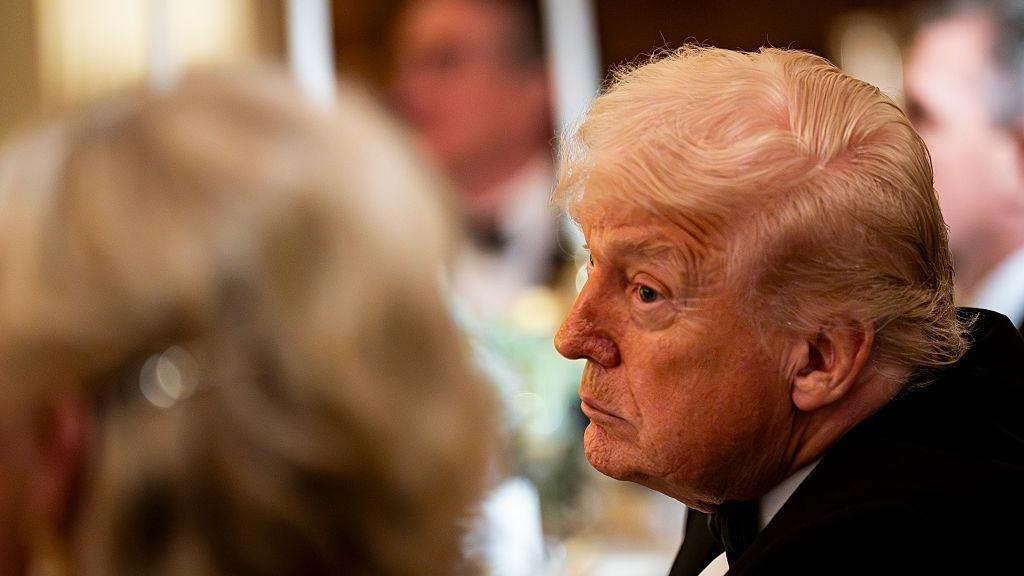
In a statement aimed at calming international markets and clarifying the stance of the incoming administration, the trade representative designated by former President Donald Trump asserted that the fundamental US tariff policy "hasn't changed." This declaration comes at a time of intense speculation about the direction of American trade policy under a potential second Trump term, marked by his previous aggressive "America First" approach and trade wars with key partners like China and the European Union. The message intends to convey continuity in a central pillar of Trump's economic strategy, while leaving the door open for tactical adjustments.
The context of this assertion is crucial. During his presidency (2017-2021), Donald Trump revolutionized US trade policy by imposing widespread tariffs, primarily using Section 301 of the Trade Act of 1974 and Section 232 of the Trade Expansion Act of 1962, citing national security concerns and unfair trade practices. Tariffs on hundreds of billions of dollars worth of Chinese imports were the epicenter of this policy, but levies were also applied to steel and aluminum from allies like the EU, Canada, and Mexico. This stance triggered retaliatory measures, disrupted global supply chains, and was criticized by many economists, though defended by those who argued it was necessary to correct trade imbalances.
The statement from the trade representative, whose identity is closely associated with implementing these policies in the first term, suggests that a potential Trump administration would not perform a 180-degree turn. Instead of dismantling the tariff architecture, it would likely refine it and use it as a permanent negotiation tool. Data from the Office of the US Trade Representative (USTR) shows that by the end of 2020, Trump-era tariffs covered over $350 billion worth of goods from China alone, with rates ranging from 7.5% to 25%. While the Biden administration maintained most of these tariffs while seeking a more multilateral approach, the "hasn't changed" rhetoric indicates a return to broader, unilateral application.
"The core premise remains the same: defending the interests of American workers and manufacturers against unfair competition and poorly negotiated trade deals," the representative stated, according to sources close to the campaign. "Tariffs are not an end in themselves, but a fundamental means to achieve reciprocity and bring jobs back home. That philosophy hasn't changed." This quote encapsulates the political justification for the policy: it is a tool of economic power and industrial policy, not merely a revenue measure. Critics, however, point out that the costs of these tariffs are largely borne by US businesses and consumers and have contributed to inflationary pressures.
The impact of this policy reaffirmation is immediate and far-reaching. In the short term, it introduces an element of certainty for businesses planning their supply chains, even if it is the certainty of a more protectionist trade environment. Currency and commodity markets could react to the prospect of renewed trade tensions. In the long term, it means US trade policy will remain a disruptive factor in globalization. Partners like the EU, which have been negotiating with the Biden administration to resolve inherited disputes, could face a less conciliatory counterpart. For China, the message is clear: any truce or de-escalation could be temporary, and systemic economic rivalry, driven by tariffs, will continue.
In conclusion, the assertion that tariff policy "hasn't changed" is more than a simple note of continuity; it is a statement of principle defining the likely economic course of a second Trump term. It signals the persistence of an economic nationalism that prioritizes unilateral bargaining power over established multilateral cooperation. While the tactics and specific targets (which could include new sectors like electric vehicles or tech products) may evolve, the core of using tariffs as an economic and political weapon remains intact. This shapes a global landscape where protectionism, rather than being an anomaly, becomes a lasting feature of the policy of the world's largest economy, with profound implications for global growth, geopolitical stability, and the architecture of international trade.