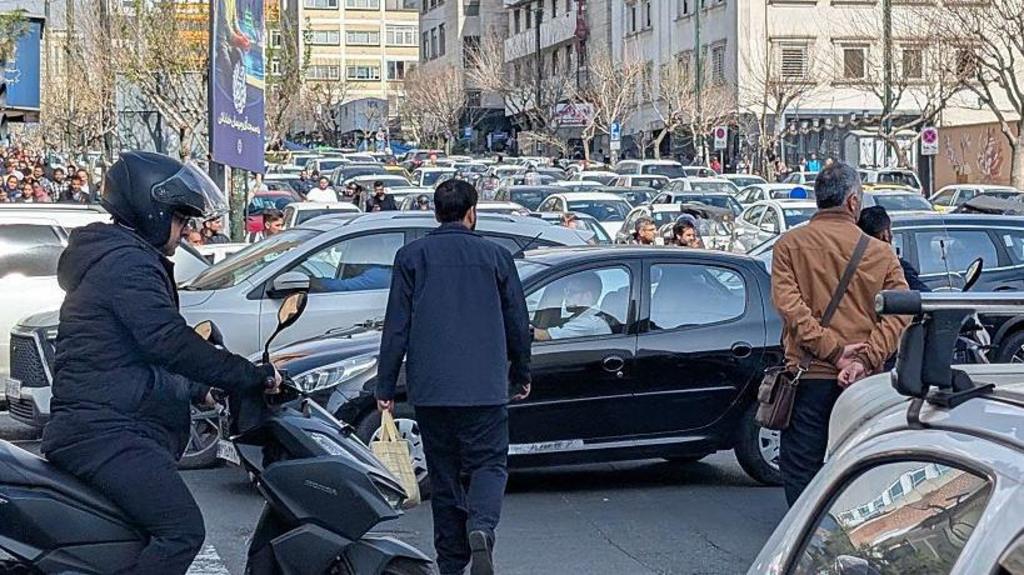
The sirens and explosions that echoed through Iran's night sky marked a turning point in the region's already tense geopolitical situation. As Iranian air defense forces were activated and citizens sought shelter, a complex mix of panic, resignation, and, for some, an unexpected sense of relief, took hold of society. The strikes, attributed to external forces in retaliation for Tehran's previous actions, not only exposed the country's military vulnerability but also the deep internal fractures among a population weary from economic crisis, international sanctions, and a government promising resistance at all costs.
The context for these events stretches back months of shadow escalation, with Iran being accused of supporting proxy militias on multiple fronts and advancing its controversial nuclear program. Western economic sanctions have strangled the Iranian economy, causing rampant inflation, shortages of basic goods, and palpable social discontent. In this scenario, the attacks are interpreted in diametrically opposed ways. For the political-military establishment, they are an affront to national sovereignty demanding a firm response and greater unity under the banner of "resistance." State media has broadcast images of defense systems intercepting targets and messages of resilience, attempting to project strength.
However, on the streets and in private conversations, many citizens express a different sentiment. "I heard the explosions and my first thought was for my children," recounts Sara, a Tehran mother who preferred not to give her last name. "But afterwards, I can't help but think that maybe this external pressure will force a change. We are tired of living in perpetual conflict while we can't make ends meet." This "relief" some speak of is not about the attacks themselves, but the hope that international pressure might catalyze a shift in the government's intransigent stance, opening the door to negotiations that ease sanctions and improve daily life. It is a risky sentiment rarely expressed publicly, for fear of reprisals.
Relevant data paints a bleak picture: annual inflation exceeds 40%, the local currency has lost much of its value, and youth unemployment is chronically high. Protests over economic and social freedom issues have been harshly suppressed in recent years. International analysts, such as Karim Sadjadpour from the Carnegie Endowment, note: "Iran is at an existential crossroads. The government faces the dilemma of maintaining its revolutionary, confrontational posture, which guarantees its political survival but suffocates the country, or seeking a detente that could destabilize its internal control. The population is trapped in the middle of this calculation."
The immediate impact has been the reinforcement of the official narrative of siege and the potential acceleration of military or nuclear activities as a show of force. In the longer term, these events could deepen the divide between the state and a significant portion of its people. While leaders clamor for national unity against the "enemy," social cracks may widen, fueling a discontent that, though silenced, remains latent. The international community watches with concern, fearing a spiral of retaliation that could further destabilize an already volatile region.
In conclusion, the strikes on Iran have revealed much more than military capabilities; they have acted as a mirror to the country's internal contradictions. The initial panic at the explosions coexists with a subtle and dangerous sigh of relief among those who see in external pressure a remote possibility for change. The regime faces the challenge of managing both national security and domestic discontent, in an increasingly precarious balance. Iran's future, therefore, is not decided only on battlefields or in nuclear centrifuge halls, but also in the mood of a population divided between fear and the hope for a different tomorrow.