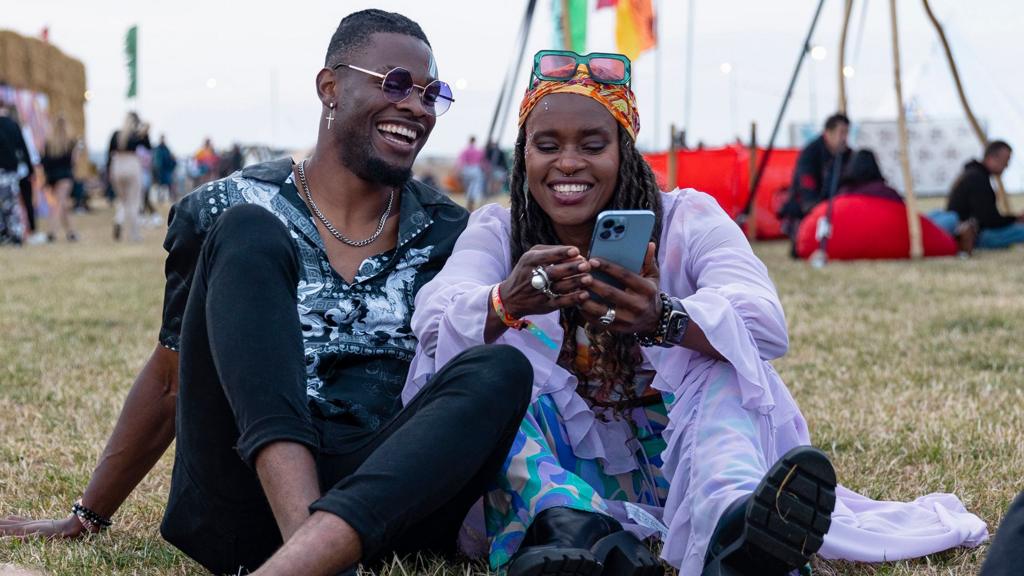
Picture yourself at your favorite artist's concert, ready to record the climax, or in the stadium during the 90th minute of the final, trying to send a message to your friends. Your screen relentlessly displays 'No Service' or 'Emergency Calls Only'. This frustrating experience, common for thousands of attendees at mass events, is not a random glitch but the direct consequence of a technical phenomenon known as cellular network congestion. In essence, cell towers have a limited capacity to handle simultaneous connections. In a densely populated area like a music festival or a sports stadium, tens of thousands of people attempt to use their devices at the same time, overwhelming the available resources. The network is simply flooded, unable to assign a communication 'channel' to each user. This problem is exacerbated by the type of data-intensive usage that predominates at these events: uploading high-definition videos to social media, live streaming, and constantly refreshing apps, which consume far more capacity than a simple voice call or SMS. Telecommunications companies are aware of the challenge and deploy temporary solutions like COWs (Cell on Wheels) or COLTs (Cell on Light Truck), which are mobile towers that expand local capacity. However, implementation is costly and logistically complex, and does not always manage to cover the extreme demand. 'It's a constant battle between infrastructure capacity and exponential data demand,' explains Dr. Elena Vargas, a telecommunications engineer. 'Every year, devices are more powerful and applications more demanding, which increases the load per user.' The impact goes beyond mere personal inconvenience. It affects safety, making it difficult to locate people in emergencies; it harms the event experience, as many modern aspects, like interactive apps or contactless payments, depend on connectivity; and it represents an economic loss for organizers and service providers within the venue. On a technical level, the transition to 5G networks promises significant improvements. 5G technology is designed to support a much higher density of devices per square kilometer. Its 'network slicing' architecture could, in theory, prioritize critical traffic. Nevertheless, the full rollout is gradual, and for now, 5G coverage indoors or in massive crowds remains a challenge. In the meantime, experts recommend simple strategies for users: turn off Wi-Fi if public networks are saturated, try using messaging (SMS or data-light apps) instead of uploading videos in real time, and, if possible, schedule downloads or send important messages before or after the event's peak hours. The paradox of hyperconnectivity is that, precisely in moments of greatest social and collective fervor, we find ourselves technically isolated. The solution is not simple and will require continuous investment, innovation in radio spectrum management, and possibly a change in our digital habits during events. The next time your screen goes blank in the middle of a crowd, remember you are not alone: you are sharing a technological limitation with thousands of people around you, in a silent collapse of the waves that keep us connected.
Business3 min read
Why Your Phone Fails at Festivals and Stadiums: The Network Congestion Crisis
Written by ReDataFebruary 27, 2026