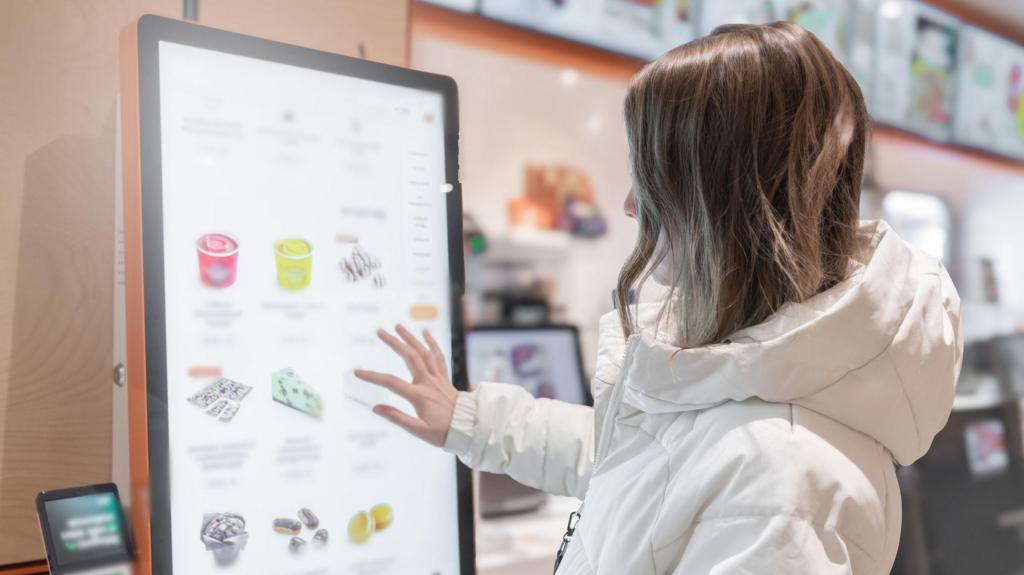
A quiet revolution in the shopping experience is sweeping through fast-food restaurants, coffee chains, and major retailers: the proliferation of self-service kiosks and terminals. Far from being mere tools for operational efficiency to reduce queues and labor costs, these touchscreens have evolved into sophisticated instruments of persuasion, meticulously designed using principles of behavioral science to subtly yet significantly increase the average spend per customer. The core psychological premise is powerful in its simplicity: when facing a machine, the consumer feels liberated from the social pressure and perceived judgment of a human cashier, reducing anxiety and fostering more indulgent purchasing decisions.
The context for this transformation is twofold. On one hand, the industry faces persistent pressures from rising minimum wages and labor shortages, driving automation. On the other, massive data collection and advances in consumer psychology have provided companies with unprecedented insight into what motivates us to open our wallets. Kiosks are not simply digital replicas of a menu on the wall; they are dynamic, customizable environments. They utilize algorithms that can suggest add-ons, upsell portion sizes, or promote seasonal items based on the time of day, weather, and, in more advanced systems, even approximate demographic analysis of the user via embedded cameras (a practice that sparks ethical debates).
The data is revealing. Case studies from chains like McDonald's, Panera Bread, and Shake Shack report increases in average check size ranging from 15% to 30% following widespread kiosk implementation. An analysis by consultancy firm Bain & Company notes that customers using self-service screens tend to add more premium ingredients, like extra avocado or bacon, and are more likely to accept visually presented 'would you like to add...?' suggestions. The absence of a human interlocutor removes 'order shame,' that moment of insecurity where one might feel judged for ordering a calorie-laden dessert or a giant drink. The machine casts no judgment, makes no faces, and is always ready to sell.
Behavioral experts like Professor Michael Norton from Harvard Business School explain the phenomenon. 'Human interaction, even the briefest and most transactional, carries a layer of social accountability,' Norton states. 'When you tell your order to a person, there's a micro-evaluation happening. With a screen, that evaluation vanishes. You feel more in control, but ironically, it's that very sense of control and privacy that makes you more vulnerable to the upsell and cross-sell techniques programmed into the system.' The interfaces are designed with appetite-stimulating colors, high-resolution food photography that makes everything look irresistible, and a navigation flow that inevitably guides the user toward higher-value options.
The impact of this trend is profound and multifaceted. For businesses, it represents a powerful lever to improve profitability, not only through higher sales but also via valuable collection of customer preference data. For consumers, the experience is mixed: while some celebrate the speed, accuracy, and lack of forced social interactions, others lament the loss of human contact and the feeling that purchasing decisions are being invisibly manipulated. For the workforce, displacement is a real concern, although many employers argue that automation frees up workers for higher-value tasks, like food preparation or more complex customer service.
In conclusion, the rapid adoption of self-service terminals extends far beyond mere technological modernization. It is the embodiment of a deeply psychological commercial strategy that leverages our desire for autonomy and our relief from perceived judgment to encourage less inhibited consumption. As these technologies become smarter and more ubiquitous, with integration of artificial intelligence for hyper-personalized offers, the line between convenience and manipulation will grow increasingly blurry. The challenge for society will be to find a balance where efficiency and business benefits do not completely erode genuine consumer agency or the social fabric of everyday commercial interactions. The next time you tap a screen to order your meal, remember: that feeling of freedom might be the most effective hook of all.