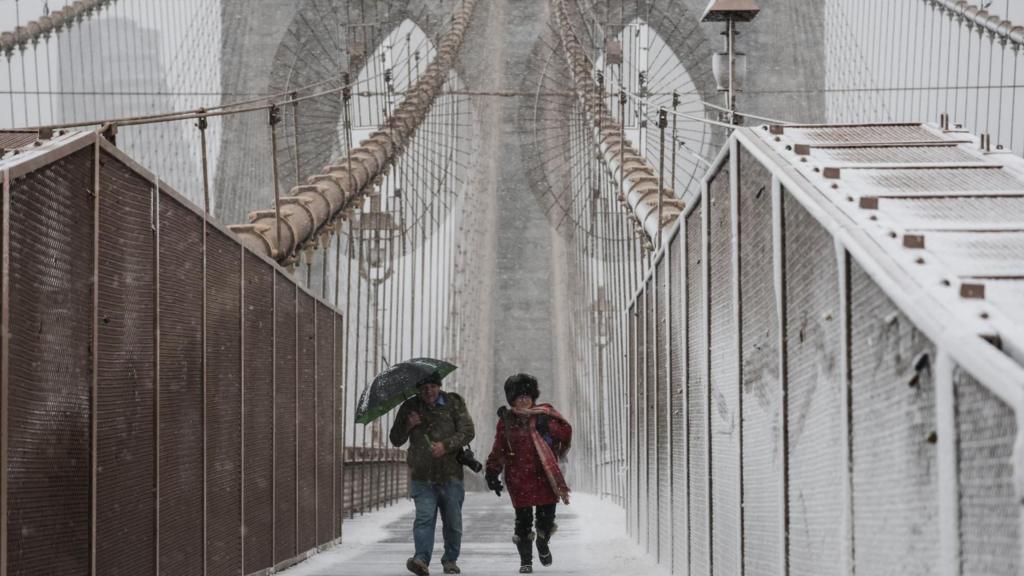
A massive and dangerous winter storm has unleashed its fury upon the Northeastern United States, paralyzing major cities, disrupting air and ground transportation, and forcing authorities to take drastic measures to protect the public. The system, which meteorologists have classified as a "bomb cyclone" due to its rapid intensification, has brought a lethal combination of blizzard conditions, historic snow accumulations, and hurricane-force winds exceeding 60 mph in coastal areas. New York City, the epicenter of the emergency, has issued a ban on non-essential travel, a rarely used measure that underscores the severity of the event.
The context of this storm fits within an unstable weather pattern that has affected much of North America in recent weeks. However, the convergence of an exceptionally cold Arctic air mass with a moisture-laden low-pressure system from the Atlantic Ocean has created the perfect conditions for a storm of historic proportions. Data from the National Weather Service (NWS) indicates snow accumulations could exceed two feet in parts of interior New England, while coastal areas, including parts of Long Island and Connecticut, face a heightened threat of coastal flooding due to storm surge combined with the full moon.
Statements from authorities have been forceful. "This is not a typical winter storm. It is a life-threatening event that requires the full cooperation of the public," stated New York City Mayor Eric Adams in a press conference. "The travel ban is in place so our emergency and sanitation crews can work safely and effectively. We are asking all residents to stay home, stay warm, and check on their neighbors." Meanwhile, New York State Governor Kathy Hochul activated the State Emergency Operations Center and warned of widespread power outages that could last for days in the hardest-hit areas.
The impact is already significant and far-reaching. Over 3,000 flights have been canceled nationwide, with JFK, LaGuardia, and Newark airports leading the disruption lists. Commuter rail systems, such as Metro-North and Long Island Rail Road, have suspended or severely reduced service. Public schools across the region, from Boston to Philadelphia, have announced preemptive closures. Delivery and distribution services have also ground to a halt, affecting local supply chains. Hospitals have implemented contingency plans, calling in additional staff and securing backup generators in anticipation of blackouts.
The conclusion is clear: the Northeastern United States is facing one of the most severe weather challenges of the past decade. While winter storms are common in the region, the intensity, speed of development, and combination of hazards from this "bomb cyclone" make it an exceptional event. The coordinated response from local and state governments, focused on public safety and risk mitigation, will be crucial over the next 48 hours. As the winds howl and snow continues to fall, the message for millions of residents is singular and paramount: shelter in a safe place and follow instructions from authorities until the worst of the storm has passed.