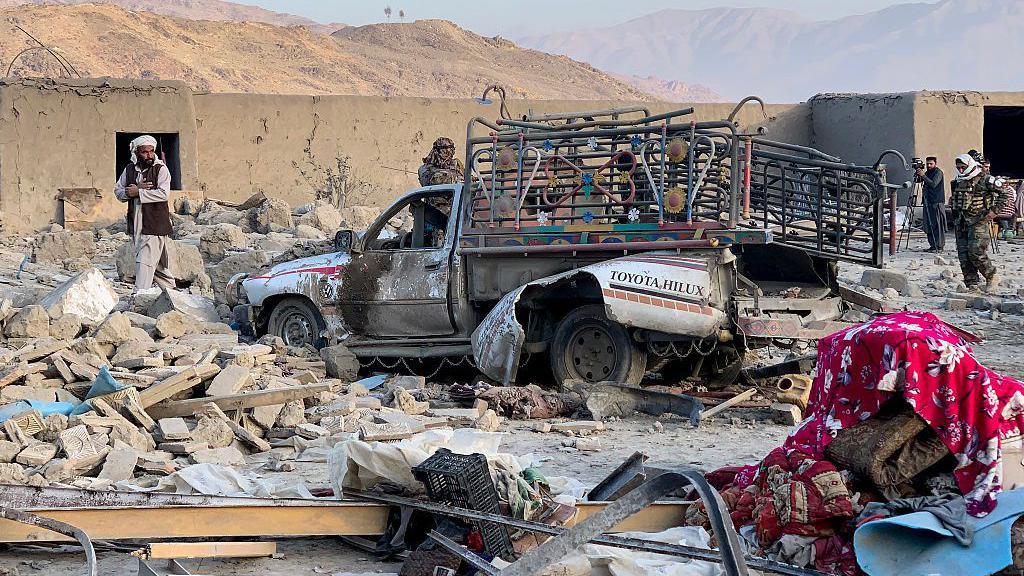
Border tensions between Afghanistan and Pakistan have escalated to a new level of direct military confrontation. The Taliban government of Afghanistan has announced the execution of a retaliatory strike against targets inside Pakistani territory, in response to what they describe as previous Pakistani air incursions into Afghan soil. This move marks one of the most serious episodes of cross-border violence between the two countries in recent years, testing the already fragile regional stability and diplomatic relations between the Kabul regime and its eastern neighbor.
The context for this escalation dates back to months of growing friction. Pakistan has repeatedly expressed concern about the presence of militants from the Pakistani Taliban Movement (TTP) within Afghanistan, whom it accuses of launching attacks from sanctuaries across the border. In response, Pakistani forces have reportedly carried out air and artillery operations in eastern Afghan provinces. The Taliban government, which has denied harboring the TTP, labeled those actions a violation of its sovereignty and warned of consequences. The 'retaliatory' narrative presented by Kabul seeks to position its action as a defensive and legitimate response to prior aggression, an argument aimed at both domestic and international audiences.
While precise details of the Afghan attack—such as the exact location, type of weaponry used, and extent of damage—remain unclear and subject to conflicting reports, its mere announcement by the Taliban is significant. It represents an uncommon military assertiveness from the Afghan de facto government, which has generally avoided open interstate conflicts while focusing on consolidating internal control. A Taliban spokesman stated, 'The Afghan defense forces were forced to take retaliatory measures against Pakistan to defend our national sovereignty and our people. We will respond forcefully to any aggression.' For its part, Pakistani authorities have not officially confirmed being hit by an attack, a silence analysts interpret as an attempt to avoid further escalation or a sign that the impact was limited.
The impact of this incident is multifaceted and potentially grave. Firstly, it threatens to further destabilize an already volatile region, with potential repercussions for security in South Asia. Secondly, it complicates diplomatic efforts, including dialogue channels between the Taliban and Pakistan, which had shown some signs of progress on trade and transit issues. Thirdly, it raises questions about the Taliban's capacity and willingness to manage complex interstate relations beyond their traditional insurgent focus. The international community, particularly influential regional actors like China, Russia, and Iran, is watching with concern, aware that an open conflict could have unpredictable consequences, including a new refugee flow and a resurgence of cross-border terrorism.
In conclusion, the Taliban's announcement of a retaliatory attack against Pakistan constitutes a dangerous turning point in bilateral relations. It underscores the failure of dialogue and containment mechanisms to manage Pakistan's long-standing security grievances and the Taliban's sovereignty sensitivities. While both sides may seek to contain the situation to avoid all-out war, the episode makes it clear that the Durand Line remains an open wound and a source of latent conflict. Future stability will depend on whether credible communication channels can be established and whether the international community can exert sufficient diplomatic pressure to curb a spiral of violence that would benefit neither nation's people.