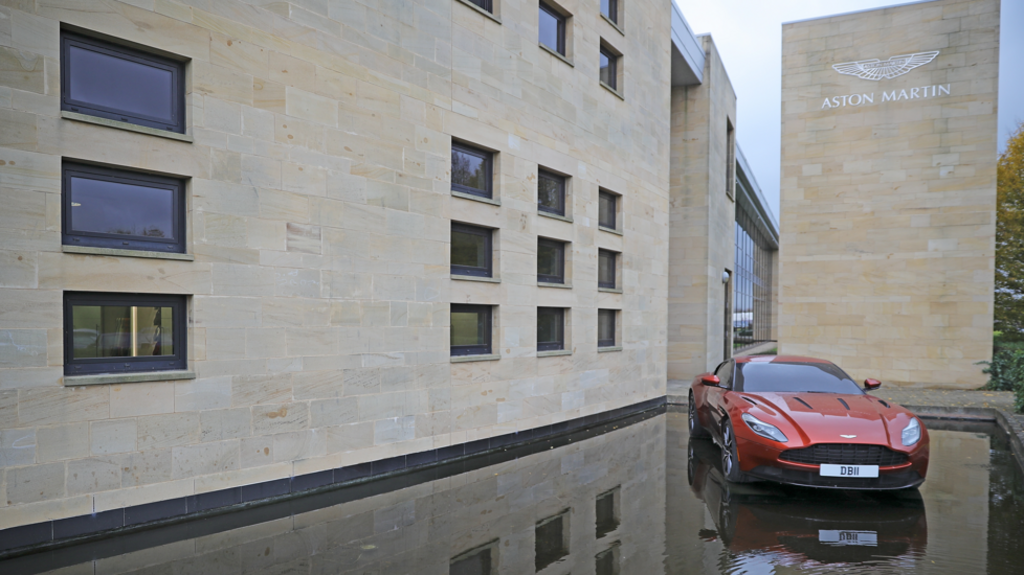
British luxury carmaker Aston Martin Lagonda has announced a drastic restructuring plan that includes cutting approximately 20% of its workforce, a desperate measure to stem widening financial losses that threaten the viability of the iconic brand. The decision, communicated to employees this week, will affect hundreds of workers at its production plants and headquarters in the United Kingdom, in an attempt to reduce operational costs and improve efficiency amid a challenging economic environment for the high-end automotive sector.
The context for this mass layoff lies in the company's latest financial results, which revealed pre-tax losses that have more than doubled over the past year. Aston Martin, famous for being the brand of choice for fictional character James Bond, has been battling a mountain of debt, high development costs for its transition to electric vehicles, and volatile global demand. The COVID-19 pandemic, followed by the supply chain crisis and soaring inflation, has hit luxury car manufacturers particularly hard, as they rely on discretionary spending that has been curtailed.
Relevant data indicates the company posted losses of over £200 million in the last fiscal year, an alarming figure for a firm of its size. Its net debt level exceeds £1 billion, a financial burden that severely limits its ability to invest in new technologies and models. The 20% cut to the workforce, which currently stands at around 2,500 employees, means roughly 500 people will lose their jobs. This move is part of a broader strategic plan, dubbed 'Project Horizon', which aims to save up to £50 million annually in structural costs.
In statements to the press, Aston Martin CEO Amedeo Felisa said, 'This is a difficult but necessary decision to secure the long-term future of Aston Martin. We are at a crucial inflection point. We must restructure our business to be more agile, efficient, and financially robust, while continuing to invest in our electric transformation and the launch of exciting new models.' Felisa, an automotive industry veteran, recently took the helm with the specific mandate to straighten the company's financial course.
The impact of this announcement is multifaceted. For the affected employees and their families, it brings immediate uncertainty in a complex job market. For the English Midlands region, where Aston Martin has significant industrial presence, it could mean an economic blow. In the business sphere, the measure has been met with a mix of understanding from analysts, who see the need for drastic action, and concern for the brand's long-term health. The company's shares, listed on the London Stock Exchange, have shown high volatility in recent years, reflecting investor doubts.
In conclusion, Aston Martin faces an existential crossroads. The workforce reduction is a symptom of deeper problems: an unsustainable cost structure, an expensive technological transition, and fierce competition in the luxury segment, where rivals like Ferrari, Porsche, and Lamborghini enjoy greater financial stability and brand power. The success of 'Project Horizon' and upcoming model launches, including its first fully electric SUV slated for the mid-2020s, will be decisive. The essence of the British brand, synonymous with elegance, performance, and exclusivity, is at stake. Its ability to navigate this perfect storm, balancing financial austerity with innovation and glamour, will define whether Aston Martin can return to profitability and secure its legacy for the coming decades, or become another case study on the challenges facing the traditional automotive industry in the era of electrification and global economic uncertainty.