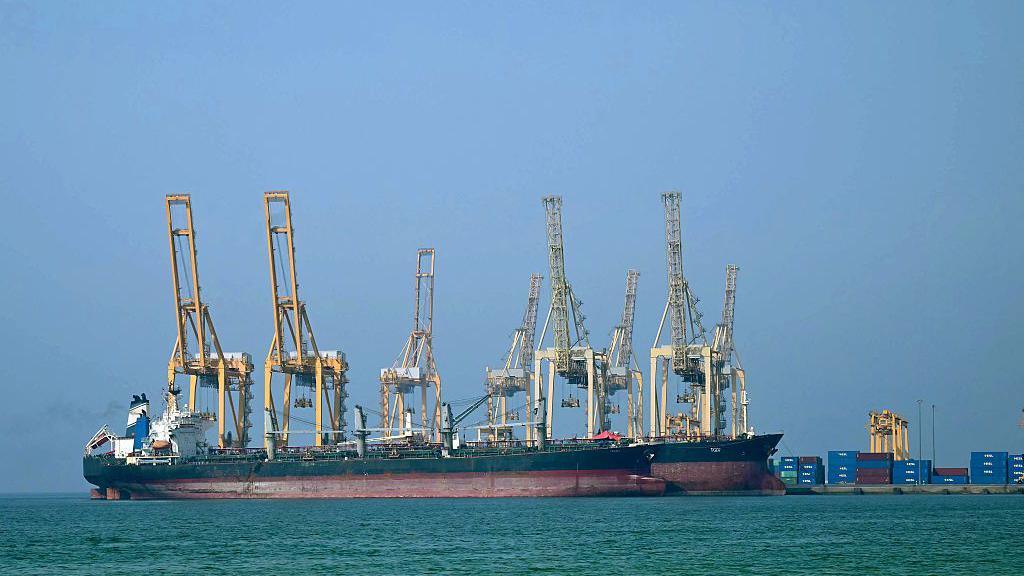
In a statement that escalates the United States' posture in one of the world's most volatile regions, former President Donald Trump asserted that the U.S. Navy would intervene to protect commercial maritime traffic in the Middle East 'if necessary'. These remarks, made during a campaign rally, come at a time of heightened tension in critical sea lanes, particularly in the Red Sea and the Gulf of Aden, where Iran-backed groups like Yemen's Houthis have carried out a series of attacks on commercial vessels. Trump's stance reflects a more assertive and unilateral foreign policy, echoing his previous term characterized by a firm posture against Iran and its regional allies.
The context of these statements cannot be separated from the current maritime security landscape. Since the outbreak of the Israel-Hamas conflict in October 2023, the Houthi militia, which controls much of northwestern Yemen, has repeatedly attacked ships in the Red Sea, claiming they are targeting vessels linked to Israel in solidarity with Palestinians. These attacks have forced many shipping companies to reroute around the Cape of Good Hope in southern Africa, significantly increasing freight costs and delivery times, and disrupting global supply chains. The current Biden administration has led an international coalition, Operation Prosperity Guardian, to counter these threats, conducting interceptions and defensive strikes.
Trump's statement, however, suggests a potentially more direct approach less reliant on multilateral alliances. 'We have the most powerful navy in the world,' Trump told his supporters. 'And if necessary, we will use it to protect American ships and free commerce from piracy and terrorist aggression. We are not going to allow militiamen with drones to bring the world economy to its knees.' This language evokes the 'peace through strength' rhetoric that was a hallmark of his first administration. Analysts note that, if materialized, such a policy could rapidly escalate confrontations with Houthi forces and, by extension, with their main sponsor, the Islamic Republic of Iran.
The impact of these declarations is immediate on multiple fronts. Domestically, in U.S. politics, they reinforce Trump's narrative as a decisive leader on national security, a key issue ahead of the upcoming presidential election. On the international stage, his words inject a new element of uncertainty into an already unstable region. Maritime insurance markets and logistics companies will closely watch any shift in the U.S. Navy's operational posture, as more active naval protection could, in theory, deter attacks and stabilize routes. However, there is also the risk that an overly bellicose stance could provoke a bolder response from the Houthis or Iran, potentially triggering a broader conflict.
In conclusion, Donald Trump's assertion about deploying the U.S. Navy to protect maritime trade underscores the deep divide in the U.S. foreign policy approach toward the Middle East. While the current administration prioritizes a coalition response, Trump advocates for a unilateral demonstration of military power as the primary deterrent. This stance not only has implications for the security of strategic waterways but also redefines the terms of the debate on America's role as the global police of commerce. The 'if necessary' hangs as a conditional warning, whose fulfillment would depend on the electoral outcome and the evolution of the fragile security situation in Middle Eastern waters.