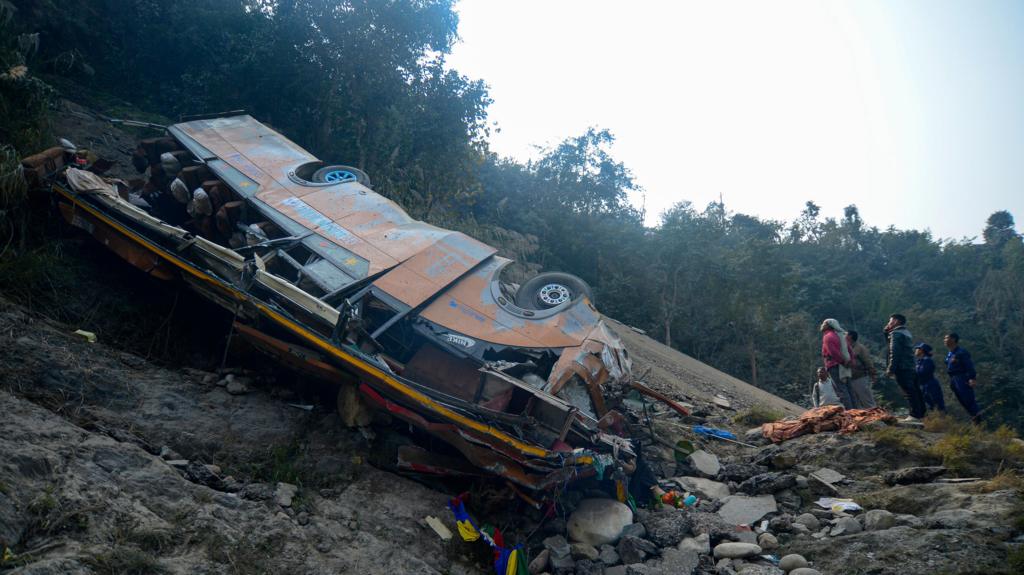
A tragic bus crash on Nepal's perilous mountain roads has claimed the lives of at least 19 people, including a British citizen, leaving dozens more injured. The accident, which has shocked the local community and the international traveler community, occurred in the Palpa district of west-central Nepal, an area renowned for its spectacular scenery but also for its winding, high-risk highways. The vehicle, carrying over 40 passengers, veered off the road and plunged down a ravine approximately 200 meters deep near the municipality of Rampur. Rescue teams, composed of police, soldiers, and local volunteers, worked for hours in extremely difficult conditions to recover the injured and the deceased from the wreckage.
The context of road safety in Nepal is a persistent challenge. Mountain roads, often narrow, poorly maintained, and lacking protective barriers, combined with vehicles that sometimes fail to meet safety standards and drivers who may be fatigued, create a dangerous cocktail, especially during the monsoon season when rains make roads slippery. Although authorities have not confirmed the official cause of the crash, preliminary investigations point to a possible mechanical failure or driver error as probable factors. This accident adds to a long list of similar tragedies in the Himalayan nation, where traffic accidents are a leading cause of death.
Among the confirmed fatalities is a citizen of the United Kingdom, whose identity has not been released pending notification of next of kin. The British Foreign Office has issued a statement confirming it is in contact with local Nepalese authorities and is providing support to the family of the deceased. Besides the British victim, most of the deceased and injured are Nepalese citizens, many of them local residents relying on public transport for their daily commutes. Data from Nepal's Department of Transport indicates that hundreds of people die in road accidents each year, with buses and heavy vehicles involved in a significant proportion of these crashes.
Statements from witnesses and first responders paint a harrowing picture. "We heard a loud crash and then screams. We ran to the site and saw the bus shattered at the bottom of the ravine. It was a nightmare scene," recounted a local resident who participated in the initial rescue efforts. A spokesperson for the Palpa district police stated: "We are doing everything possible to rescue the injured and provide them with immediate medical treatment. We have also launched a thorough investigation to determine the exact causes of this devastating accident." The injured, many in critical condition, were transported to area hospitals, including the Western Regional Hospital in Pokhara, though the capacity of these medical centers in remote regions is often under strain.
The impact of this tragedy is multifaceted. Locally, it has plunged numerous families into mourning and has once again highlighted the urgent need to improve road infrastructure and transport safety standards in Nepal. For the tourism community, it serves as a somber reminder of the risks associated with road travel in mountainous regions, even on popular routes for international travelers. Nepal, which relies heavily on tourism, especially trekking and mountaineering, may face questions about the safety of overland transport for visitors. Internationally, the death of the British citizen will likely lead embassies to review and possibly strengthen travel advice for citizens visiting the country.
In conclusion, the fatal bus crash in Palpa is a human tragedy that underscores a systemic problem. As families grieve for their loved ones and survivors face a long road to recovery, this incident should serve as a stark wake-up call for the government of Nepal and international development agencies. Sustained investment in safer roads, strict enforcement of vehicle regulations, driver training programs, and a culture of road safety are needed to prevent similar disasters from recurring. Nepal's natural beauty should not be marred by the preventable loss of life on its roads.