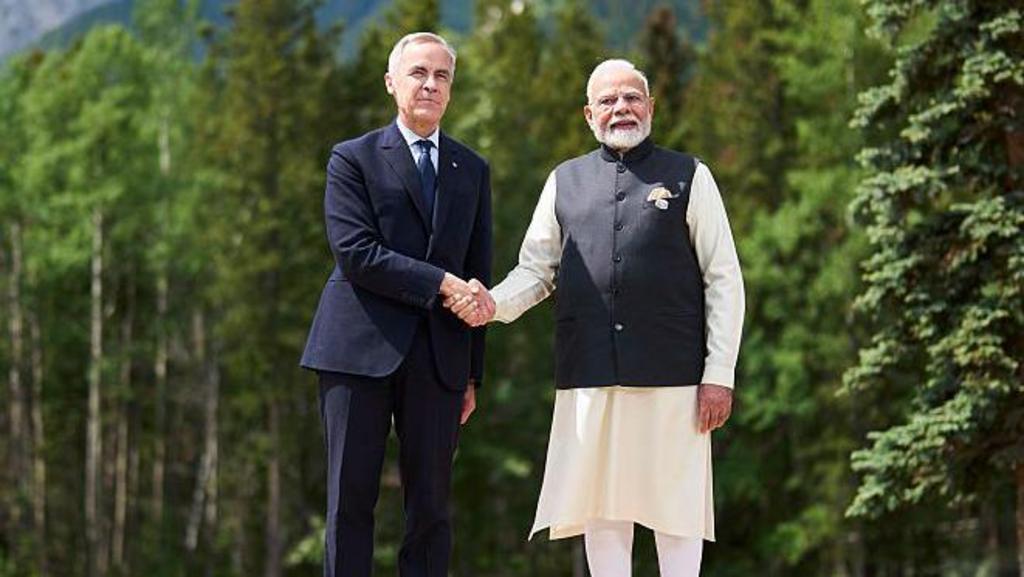
The visit of former Bank of England Governor Mark Carney to India has been interpreted as a high-stakes geopolitical move navigating complex diplomatic waters. Carney, a renowned global financial figure now involved in climate and investment initiatives, met with Indian Prime Minister Narendra Modi and other senior officials in New Delhi. The encounter takes place against a backdrop of strained relations between Canada and India, following Canadian Prime Minister Justin Trudeau's allegations last year of a potential Indian government link to the assassination of a Sikh activist on Canadian soil. India has labeled these allegations "absurd," leading to a mutual expulsion of diplomats and a freeze in talks on a free trade agreement.
For Canada, Carney's visit represents an attempt to maintain an open channel of dialogue and protect its considerable economic interests in India, while avoiding direct rhetorical escalation from Ottawa. Analysts describe this strategy as a "delicate balance." Carney, acting more as an economic and climate envoy than an official representative of the Canadian government, was able to address issues of mutual interest, such as the energy transition and sustainable finance, without frontally addressing the bilateral political disputes. His status as an independent international figure afforded him a layer of plausible neutrality.
On the Indian side, the reception for Carney was warm and fits into the broader narrative of Modi's government to position India as an indispensable investment destination and a global leader from the Global South. The visit was touted by commentators close to the government as a "win-win" situation. On one hand, India demonstrates it is open to constructive dialogue with influential Western figures, projecting an image of maturity and stability. On the other, it seizes the opportunity to advance its green growth agenda and attract foreign capital for its ambitious renewable energy goals, an area where Carney holds considerable credibility.
Economic data underscores the relationship's importance. India is Canada's tenth-largest trading partner, with bilateral trade in goods exceeding CAD 10 billion in 2023. Furthermore, the Indian community in Canada, numbering over 1.8 million people, is one of the largest in the world, creating deep human and economic ties. Any prolonged rupture would carry significant costs for both nations. In this sense, technical and economic dialogue, facilitated by figures like Carney, acts as a vital buffer.
"Diplomacy sometimes requires quiet channels and familiar faces," commented an Ottawa-based international relations analyst who requested anonymity. "Carney isn't negotiating a ceasefire, but his presence keeps the conversation on shared interests alive, which is crucial when political dialogue is frozen." From New Delhi, an Indian official told local media: "India always welcomes partners who wish to collaborate in our development journey and climate action. Our doors are open for serious dialogue based on mutual respect."
The impact of this visit may be more symbolic than immediate, but no less significant. It signals to other Western capitals that, despite political tensions, India remains an economic actor that cannot be ignored. For Canada, it avoids complete isolation from one of the world's fastest-growing markets. In the longer term, it could lay the groundwork for a gradual thaw once judicial investigations in Canada into the activist's case advance or political attention subsides.
In conclusion, Mark Carney's visit to India encapsulates the complexities of modern diplomacy, where economics and geopolitics are inextricably linked. For Canada, it was an exercise in restraint and bridge-preservation using a high-profile yet unofficial emissary. For Modi's government, it was an opportunity to project normality, attract investment, and reaffirm its role on the world stage, turning a potential friction point into a demonstration of its continued appeal. The path to a fully normalized relationship remains long and fraught with obstacles, but interactions like this demonstrate that both sides have an inherent interest in avoiding a total rupture.