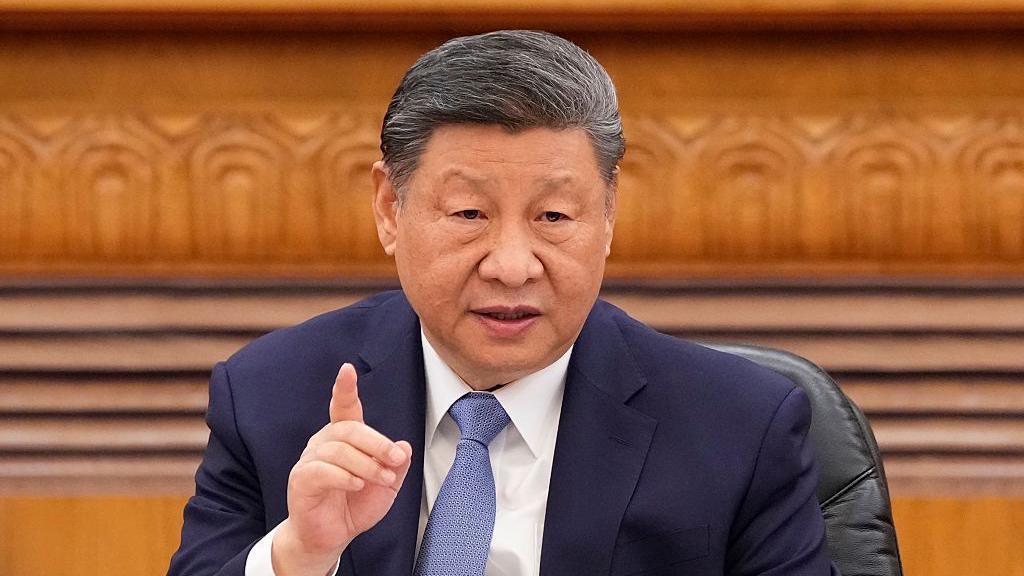
In a move that has captured the attention of political and military analysts worldwide, China has removed nine senior officials from its Armed Forces, including several members of the Central Military Commission, just weeks ahead of the crucial Third Plenary Session of the Communist Party's Central Committee. This meeting, scheduled for July, is traditionally a forum where major policy and economic directions for the country are outlined. The removals, confirmed through updates on official military institution websites, represent one of the most significant purges within the military establishment in recent years and point to an intensification of President Xi Jinping's efforts to consolidate control and loyalty within the People's Liberation Army (PLA).
The context of these removals cannot be understood without considering the profound restructuring the PLA has undergone under Xi's leadership. Since assuming power, Xi has prioritized the modernization and, above all, the absolute political loyalty of the armed forces, launching an extensive anti-corruption campaign that has already reached dozens of high-ranking generals. The military, with its ever-growing budget, is a fundamental pillar of China's national rejuvenation project and a key instrument in its power projection in arenas such as the South China Sea and regarding Taiwan. Any sign of fracture or lack of discipline at its top echelons is treated with utmost severity, especially at a time of geopolitical tensions.
While official statements have not specified the concrete reasons behind each removal, analysts point to a familiar pattern. "These dismissals, so close to an important plenum, reinforce the narrative that Xi Jinping is prioritizing political purity and discipline above all else," noted a researcher from the Washington-based Center for Strategic and International Studies. "The message is clear: loyalty to the Party and its supreme leadership is non-negotiable." Speculation suggests the causes could range from violations of party discipline, suspicions of corruption, or even failures in managing sensitive affairs under their responsibility. The lack of transparency is habitual in these processes, which are resolved within the Party's internal inspection mechanisms.
The impact of this purge is multifaceted. Domestically, it reinforces the unquestionable authority of Xi Jinping over the military establishment, sending a strong warning to any potential dissenters. It also serves to cement a new generation of commanders whose careers are intimately linked to the current leadership. Externally, the move could be interpreted by rivals like the United States or regional allies as a sign of internal strength, or conversely, as an indication of underlying tensions that need to be addressed. The cohesion of the PLA is a critical factor for stability in the Asia-Pacific region, and any turbulence at its top generates waves of analysis about Beijing's future posture.
In conclusion, the removal of nine senior military officials on the eve of the Third Plenary Session underscores President Xi Jinping's continued and relentless campaign to ensure tight control and unwavering loyalty in all branches of power, especially the military. This episode is not an isolated event but part of a broader trend of power centralization and the demand for absolute discipline within the Communist Party and its armed institutions. As China prepares to define its political and economic course at the upcoming plenum, the military purge acts as a powerful reminder that the consolidation of power and national unity remain the top priorities for the leadership in Beijing, with significant implications for both domestic politics and the international projection of the Asian giant.