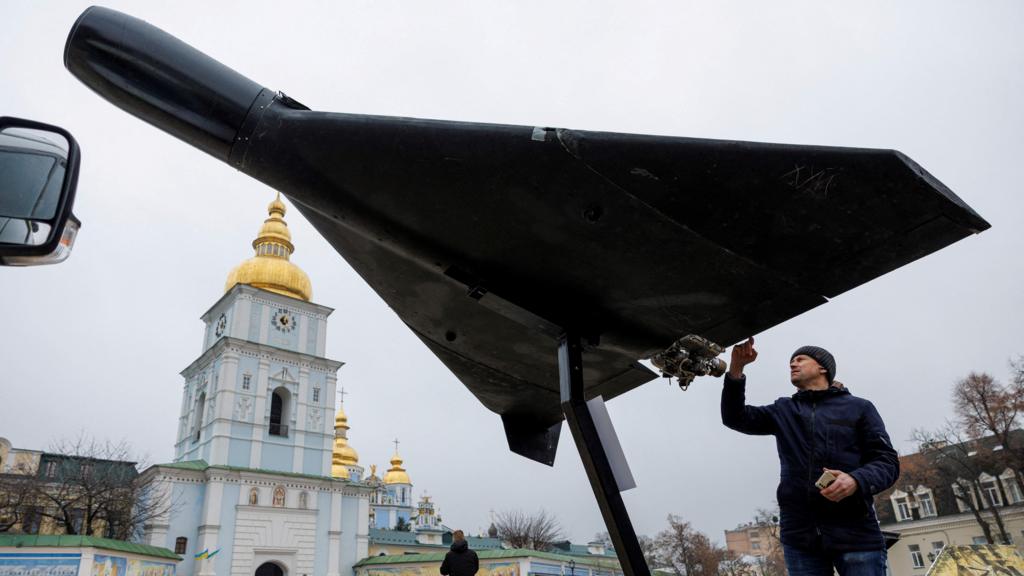
Ukrainian President Volodymyr Zelensky has voiced deep concern that a potential military conflict between the United States and Iran under a hypothetical second Donald Trump term could divert the international attention and resources crucial for Ukraine's survival. In recent remarks to international media, Zelensky stressed that Russia's war of aggression remains the greatest threat to European and global security, warning that any new confrontation in another region of the world could fracture the united Western support front, leaving Ukraine in an even more vulnerable position. The Ukrainian leader made these reflections against the backdrop of statements from former President Trump, who during his campaign has used harsh rhetoric against Iran, promising an "overwhelming" response to any provocation and criticizing the Obama-era nuclear deal.
The geopolitical context is extremely complex. Ukraine heavily relies on the continuous flow of military and financial assistance from the United States and its NATO allies to resist the Russian invasion. Any crisis forcing Washington to reallocate defense, intelligence, and diplomatic resources toward the Persian Gulf would have a direct and potentially catastrophic impact on the Ukrainian war effort. International security experts agree that an escalation with Iran, a regional actor with significant military and proxy capabilities, would absorb an enormous amount of political and material capital. "Support for Ukraine is not limitless," noted an analyst from the Atlantic Council. "If the U.S. becomes embroiled in a new large-scale conflict, the narrative of 'aid fatigue' would accelerate, and debates in Congress over defense budgets would become even more difficult for Kyiv."
Zelensky did not refer to Trump by name, but the message was clear: the stability and predictability of allies are vital. "Our battle is for democratic values and territorial integrity. When the spotlight dims on one theater of war, darkness can spread to others," stated the Ukrainian leader. This concern arises as Ukrainian forces struggle to contain a new Russian offensive in the east of the country and seek to rebuild their air defense capabilities after months of intense bombardment. The potential re-election of Trump, who has been ambiguous about his commitment to NATO and has suggested he might pressure Ukraine to negotiate with Russia on unfavorable terms, adds another layer of strategic uncertainty.
The impact of these concerns is already being felt in European diplomatic circles. EU officials have begun discussing contingency plans to maintain support for Ukraine in a scenario where Washington reduces its involvement. However, all acknowledge that without U.S. logistical, intelligence, and military leadership, Europe's capacity to sustain Ukraine in the long term would be severely challenged. The conclusion is grim: Ukraine's fate is intrinsically tied to the foreign policy dynamics of the United States. A war with Iran would not only destabilize the Middle East but could fatally alter the balance of power in Eastern Europe, granting Russia a decisive advantage in the most significant conflict on the continent since World War II. The international community thus faces an interconnected security dilemma, where crises do not occur in isolation, and the prioritization of threats becomes a zero-sum game with existential consequences for nations like Ukraine.