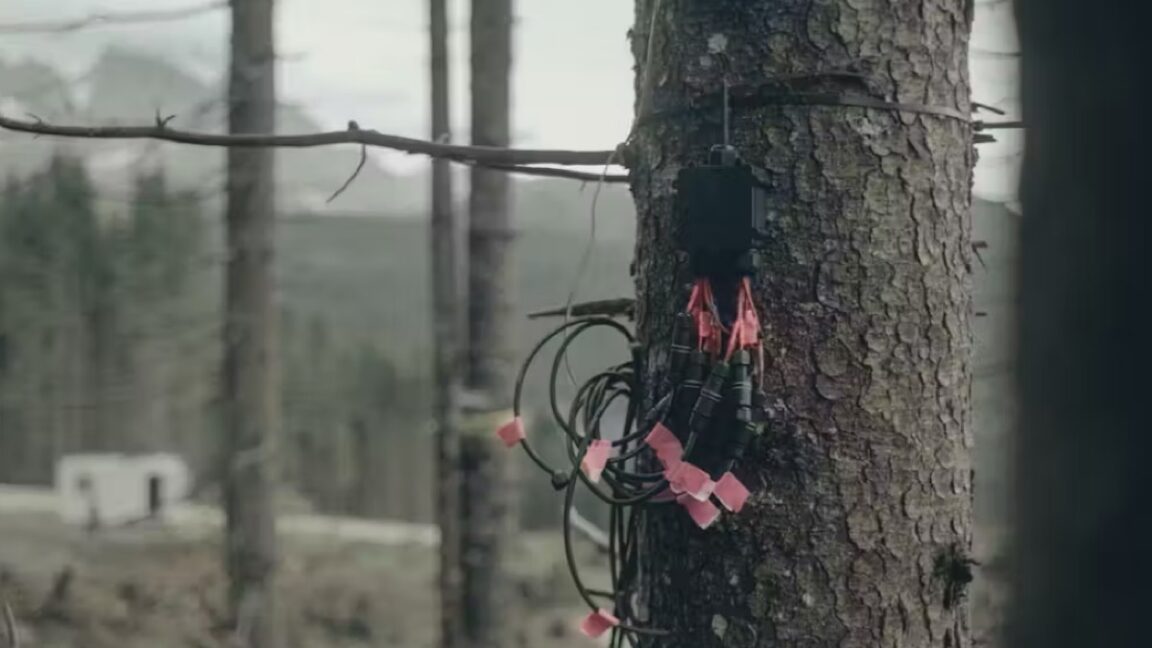
A controversial study published in early 2025, which claimed to have detected physiological responses in trees ahead of a total solar eclipse, has been subjected to a devastating scientific critique. The new assessment, conducted by an international team of plant physiologists and statisticians, concludes that the original research "represents the encroachment of pseudoscience into the heart of biological research." The work in question, led by a group from a private university, suggested that trees of several species showed measurable changes in sap flow and leaf electrical activity minutes before the moon began to cover the sun, implying a form of perception or anticipation of the astronomical event.
The context of this debate lies within the growing interest in plant neurobiology, a field exploring the complex communication and response systems of plants. However, many traditional scientists view with skepticism attempts to attribute cognitive or sensory capacities analogous to animals. The original eclipse study, widely circulated in non-specialist media, was hailed by some as a revolution but immediately raised methodological suspicions in the academic community. The new critique, published in the prestigious journal 'Plant Biology Review,' challenges not only the methods but the very interpretation of the data.
The relevant data presented by the critics is compelling. They point out that the original study used an extremely small sample size (only five trees from each of three species) and that the 'electrical activity' measurements were taken with equipment not calibrated for that specific purpose in plants. Furthermore, the statistical analysis allegedly committed a fundamental error: it did not correct for multiple comparisons. This means that by taking hundreds of measurements looking for any variation, it was highly likely to find, by pure chance, some patterns that appeared significant just before the eclipse. "When we reanalyzed the raw data applying standard statistical controls, the purported anticipatory signal completely disappeared," stated Dr. Elena Vargas, a biostatistician at the University of Cambridge and co-author of the critique.
Statements from the scientists involved in the rebuttal are clear. "This isn't about being closed-minded," said Professor Aris Thorne, a plant physiologist at the University of California, Davis. "It's about rigor. Plants are incredibly sensitive organisms to light, temperature, and humidity. A solar eclipse produces abrupt changes in all these parameters. What the initial study likely measured was the normal physiological response to those environmental changes, not an extrasensory perception of the event itself." Thorne emphasized that attributing consciousness or perception from misinterpreted data damages the credibility of serious botanical research.
The impact of this critique is significant on multiple levels. First, it serves as a necessary corrective within the scientific community, reinforcing methodological and statistical standards in a frontier field prone to speculation. Second, it acts as a case study for science communication, showing how extraordinary claims can gain traction in the media before rigorous peer scrutiny. Finally, it has implications for research funding, as studies with sensational conclusions but methodologically weak foundations can divert resources from more solid and promising lines of inquiry.
In conclusion, while nature continues to reveal surprising adaptation mechanisms in plants, from chemical communication to complex stress responses, the claim that trees 'sense' a solar eclipse has collapsed under rigorous scientific analysis. This episode underscores the importance of healthy skepticism and replication in science. The search for plant intelligence must advance with precise tools and testable hypotheses, avoiding narratives that, although attractive, lack the necessary empirical support. Science, at its best, self-corrects, and this case is a paradigmatic example of that essential process.