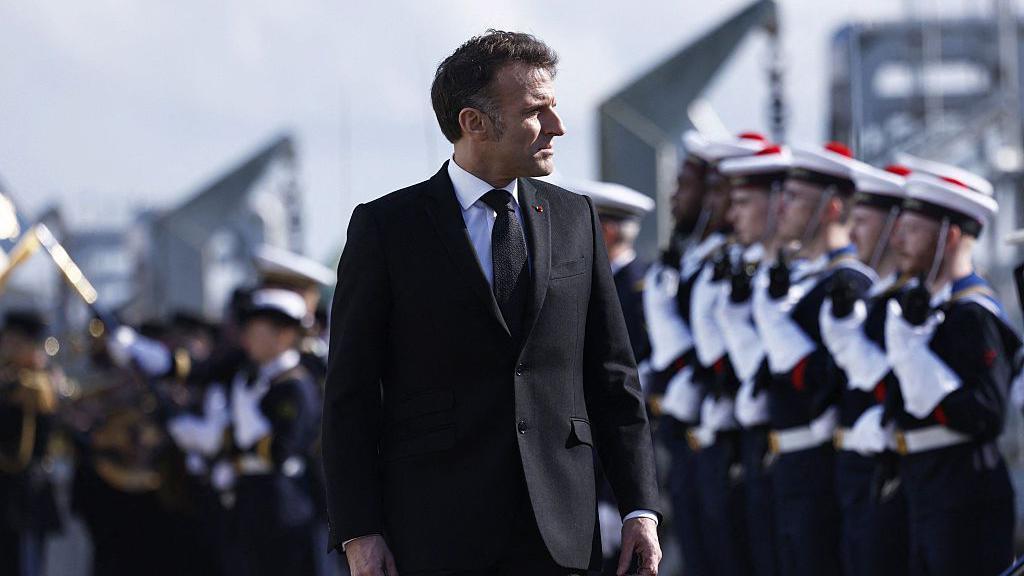
In a speech of profound strategic significance, French President Emmanuel Macron announced a comprehensive plan to bolster the country's nuclear arsenal and, in a historic move, extend the protective umbrella of its nuclear deterrent to France's European allies. This shift, described by analysts as one of the most significant turns in European defense policy in decades, comes against a backdrop of escalating geopolitical instability, marked by the war in Ukraine and rising tensions with Russia. The decision underscores Paris's willingness to assume a more robust continental security leadership role and redefines the contours of European strategic autonomy.
The announcement was made during a visit to the Strategic Forces facilities in Istres, southern France. Macron detailed that France will increase investment in its nuclear deterrent, modernizing all components of its strategic triad: the ballistic missile submarines (SNLE), the Rafale fighter jets capable of carrying nuclear-armed ASMPA cruise missiles, and the future systems that will replace them. This ongoing modernization effort will be accelerated and expanded to ensure the credibility and effectiveness of deterrence against "more numerous and more complex" threats. The president did not give concrete figures on increasing the number of warheads but emphasized a qualitative leap in capabilities.
The most novel and politically impactful aspect is the explicit extension of the protection of the French deterrent. "The French deterrent (...) contributes to Europe's security by its very existence. Today, in the face of evolving threats, this contribution must be more visible," Macron declared. He added that France is ready to engage in a "strategic dialogue" with its European partners who wish to deepen their cooperation on deterrence. This does not imply shared control of nuclear weapons, which remain under the exclusive authority of the French president, but a guarantee that the security of European allies is inextricably linked to that of France.
This decision responds to a context of deep uncertainty. The Russian invasion of Ukraine has shattered the foundations of post-Cold War European security, casting doubt on the solidity of collective security guarantees. The Kremlin's nuclear rhetoric, with veiled threats about the use of tactical weapons, has created a climate of strategic anxiety. Concurrently, doubts about the future commitment of the United States to Europe's defense, fueled by past isolationist statements, have prompted European powers like France to take matters into their own hands to strengthen the continent's resilience. The French deterrent thus presents itself as a complementary, yet independent, pillar of NATO.
Reactions have been swift. Berlin and Warsaw have received the news with cautious interest, acknowledging its strategic importance while studying the details. Security experts have highlighted that this step could be the seed of a genuine "European deterrent" in the long term, although the political and technical hurdles are formidable. For its part, Moscow has condemned the measure, calling it a "dangerous escalation" that undermines global stability. Macron's move places France at the center of the debate on Europe's future security architecture, with implications that will extend far beyond the merely military, affecting the power dynamics within the European Union and its relationship with the Atlantic Alliance.