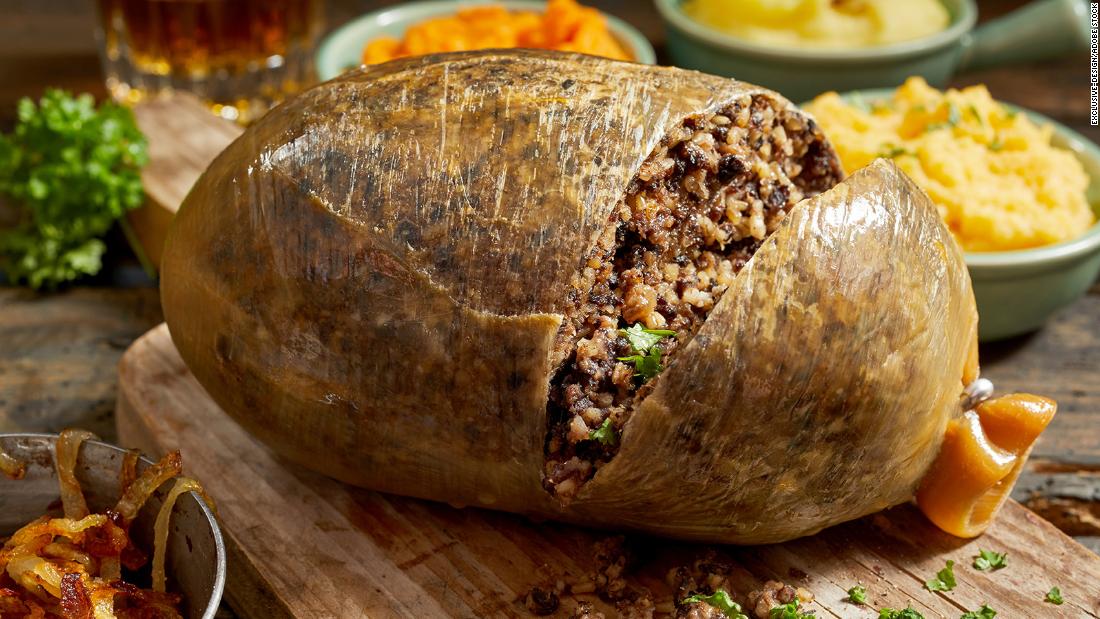
In the halls of Scottish fine dining, an ancestral dish defies international sanitary norms and divides palates: Haggis. This preparation, consisting of a mixture of minced lamb offal (heart, liver, and lungs) combined with onion, oatmeal, suet, spices, and salt, all stuffed into the animal's stomach and boiled for hours, is a national symbol in Scotland. However, its entry into the United States has been strictly banned since 1971, when the Department of Agriculture (USDA) prohibited the import of sheep lungs for human consumption, a key ingredient in the traditional recipe. This ban has created a curious gastronomic paradox where what is served in Michelin-starred restaurants in Edinburgh is considered a public health risk in New York.
The historical context of Haggis dates back centuries, with literary references including Scottish poet Robert Burns, who in 1787 dedicated his poem 'Address to a Haggis' to it, elevating it to a cultural icon. Originally, it was a practical food for rural communities, who used all parts of the animal after slaughter. Today, it is the centerpiece of the 'Burns Supper', celebrated every January 25th, where the poem is recited and the Haggis is cut to the sound of bagpipes. Its flavor, described as earthy, spicy, and with a granular texture from the oatmeal, has evolved with gourmet versions including ingredients like malt whisky or even vegetarian adaptations. In Scotland, chefs like Tom Kitchin, from the Michelin-starred restaurant The Kitchin in Edinburgh, reinterpret it with modern techniques, presenting it as a fine delicacy that can cost over £30 per serving.
The ban in the United States is based on specific health concerns. Sheep lungs, according to the USDA, may contain residual gastric fluids that pose a risk of bacterial contamination, such as E. coli. While the UK Food Standards Agency considers lung consumption safe if properly processed, the United States maintains its stance, arguing that inspection methods do not guarantee total pathogen elimination. This regulatory discrepancy has led to a market for 'American' Haggis, where local producers omit lungs or use substitutes like additional liver, though purists argue it loses its essence. Sector data indicates that Scotland produces around 1,500 tonnes of Haggis annually, with exports to countries like Canada and Japan, but none to the United States of the authentic variety.
Expert statements reflect the divide. Fiona Richmond, from the organization Quality Meat Scotland, states: 'Haggis is part of our heritage, and its quality is backed by strict controls. It's ironic that it's celebrated globally but banned in a country like the U.S.' On the other hand, Dr. Michael Hansen, a scientist at the Consumers Union of the U.S., argues: 'The ban is based on evidence of microbiological risks. It's not a cultural issue but one of food safety.' The economic and cultural impact is significant: the restriction affects Scottish producers who see limited expansion, while in the United States, Scottish restaurants must improvise with adapted recipes, sparking debates over authenticity versus adaptation.
In conclusion, Haggis encapsulates a conflict between tradition and global regulation. Its status as a delicacy in Scotland and a banned product in the United States underscores how sanitary norms can clash with centuries-old culinary heritage. While Scottish chefs innovate to keep the tradition alive, the ban persists as a reminder that, in the era of gastronomic globalization, some flavors remain confined by invisible borders. The future may see pressures to reevaluate the rule, but for now, authentic Haggis remains a Scottish national treasure that Americans can only taste by traveling to the Highlands.