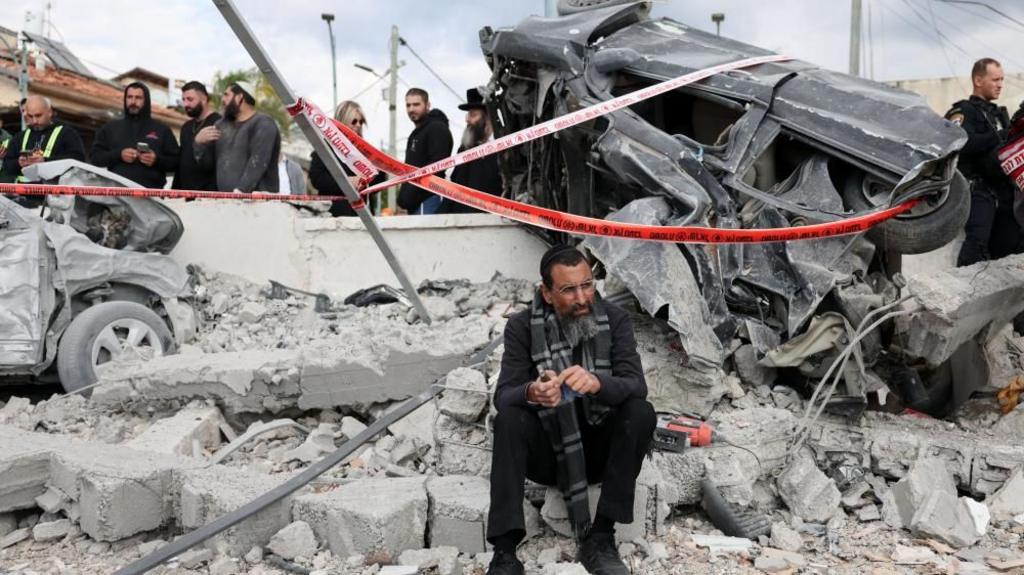
A mass evacuation order issued by the Israel Defense Forces (IDF) for the southern suburbs of Beirut, a stronghold of the militant group Hezbollah, has plunged the Lebanese capital into a state of panic and anticipation of a potential large-scale conflict. The warning, disseminated through leaflets and social media channels, urges residents of specific areas, including the Dahiyeh districts, to leave their homes immediately, citing imminent military operations. This move represents a significant escalation in the border tensions between Israel and Hezbollah, which have been exchanging artillery fire and drone attacks almost daily since the onset of the war in Gaza last October.
The context of this order is framed by a low-intensity conflict that has been dangerously escalating. Hezbollah, a powerful Iran-backed group designated as a terrorist organization by Israel, the United States, and others, has declared its support for Hamas. The cross-border exchanges, while largely contained to the Lebanon-Israel border area, have resulted in dozens of fatalities on both sides and the displacement of tens of thousands of civilians. The evacuation order for southern Beirut's suburbs, the political and operational heart of Hezbollah, suggests Israel is considering significantly widening the scope of its operations, potentially targeting the group's command infrastructure within densely populated areas.
Relevant data indicates that the southern suburbs of Beirut, collectively known as Dahiyeh, are home to hundreds of thousands of civilians. It is an area that has been devastated by previous conflicts, including the 2006 war between Israel and Hezbollah. The United Nations and various human rights organizations have expressed deep concern for the civilian population's welfare, warning that a large-scale conflict in this densely populated urban area would have catastrophic humanitarian consequences. Lebanon, already mired in a deep economic and political crisis, lacks the infrastructure to handle a massive influx of internally displaced persons.
Statements from both sides have fueled fears. An Israeli military spokesperson stated, "We urge civilians in specific areas of southern Beirut to evacuate immediately for their own safety. The IDF will act with decisive force against Hezbollah's terrorist infrastructure wherever necessary." In response, a senior Hezbollah official retorted with defiance, asserting, "These threats do not scare us. Our resistance is ready to respond to any aggression, and the enemy should know that any attack on Beirut will be paid for dearly." These bellicose statements underscore the high risk of a spiral out of control.
The immediate impact on the ground has been chaos. Roads leading out of the southern suburbs have experienced massive traffic jams as families laden with possessions attempt to flee to safer areas in northern Beirut or the Bekaa Valley. Transportation prices have skyrocketed, and there are reports of fuel shortages. The panic has been compounded by traumatic memories of the 2006 war. Internationally, diplomats from the United States, France, and other powers are making frantic calls to contain the situation, warning that a full-scale war on a second front would completely destabilize the region.
In conclusion, the Israeli evacuation order for southern Beirut's suburbs marks a dangerous tipping point in the simmering conflict with Hezbollah. While it could be a tactic of psychological pressure, observable military preparedness on both sides of the border suggests genuine preparation for a broader conflict. The international community faces a race against time to mediate and prevent a regional conflagration that would have a devastating human cost and unpredictable geopolitical consequences. The stability of Lebanon, already on the brink of collapse, hangs in the balance.