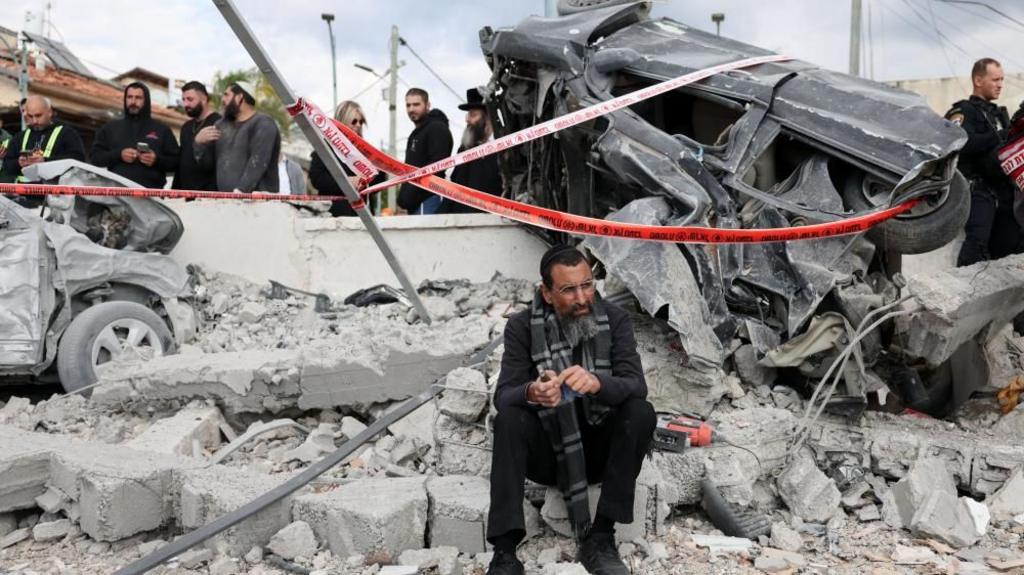
Amid a complex geopolitical landscape, Israeli society is showing surprising support for a potential military confrontation with Iran, despite high levels of uncertainty and palpable fatigue following months of conflict in Gaza. This sentiment, reflected in recent polls and public opinion analysis, reveals a deep-seated concern over the existential threat posed by the Islamic Republic's nuclear program and military capabilities. The national security narrative, cultivated over decades, appears to temporarily override doubts about the human and economic cost of opening a new war front.
The context for this support is framed by an escalation of tensions that has been building for years. Iran, through its network of proxies like Hezbollah in Lebanon and militias in Syria, has maintained a policy of constant harassment against Israel. Incidents such as drone and missile attacks, coupled with advances in Iran's nuclear program—which, according to Western intelligence services, could be weeks or months away from producing fissile material for a weapon—have created a breeding ground for fear and resolve. Prime Minister Benjamin Netanyahu's government has repeatedly emphasized that it will not allow Iran to obtain a nuclear weapon, a red line that has united much of the Israeli political spectrum, from the right to parts of the center-left.
Relevant data from a poll published by the Israel Democracy Institute earlier this month indicates that about 65% of Israelis would support a preemptive military strike against Iranian nuclear facilities if diplomatic negotiations completely fail. This support, however, is nuanced. Only 48% believe a war with Iran would end in a clear Israeli victory, while 35% anticipate an indecisive outcome with a high cost. Fatigue is a tangible factor: following the long and costly operation in Gaza, which has resulted in hundreds of military casualties and deep social division, many citizens express emotional and economic exhaustion in forums and social media. Nevertheless, the perception of an immediate existential threat seems to tip the scales toward supporting action.
Statements from key figures reflect this duality. A senior military officer, speaking on condition of anonymity, recently told the local press: 'Our dilemma is not whether we should act, but when and how. Fatigue is real, but inaction could have catastrophic consequences.' On the other hand, opposition leaders like Yair Lapid have urged caution, stressing the need to build a stronger international coalition before any move. 'A unilateral strike is the last option, not the first,' Lapid declared in a speech at the Knesset. Meanwhile, from Tehran, Foreign Ministry spokesman Nasser Kanani warned that any Israeli aggression would receive a 'crushing and devastating response.'
The impact of this public sentiment is multifaceted. Domestically, it grants Netanyahu's government significant political maneuvering room to consider bolder military options, though it also pressures it to act if the threat is perceived as imminent. Regionally, this support fuels the already volatile security dynamic, increasing the risk of an accidental or calculated escalation that could involve multiple actors, including the United States and its Arab allies. Economically, the mere prospect of an open conflict with Iran has generated nervousness in markets, with fluctuations in oil prices and risk assessments for the Israeli economy.
In conclusion, Israeli support for a confrontation with Iran, despite uncertainty and accumulated fatigue, is a testament to how deeply the 'by our own hands' national security doctrine is ingrained in the collective psyche. It is not a bellicose enthusiasm, but a calculated resignation in the face of what is perceived as an inevitable threat. This fragile consensus, however, could quickly crumble if the costs of war materialize in lost lives and a damaged economy. The path forward will depend on an intricate dance between international diplomacy, intelligence assessments, and the ability of Israeli leaders to manage the expectations of a weary but resolved population. The shadow of a larger conflict looms over the Middle East, and public will in Israel will be a critical factor in the coming dangerous chapters.