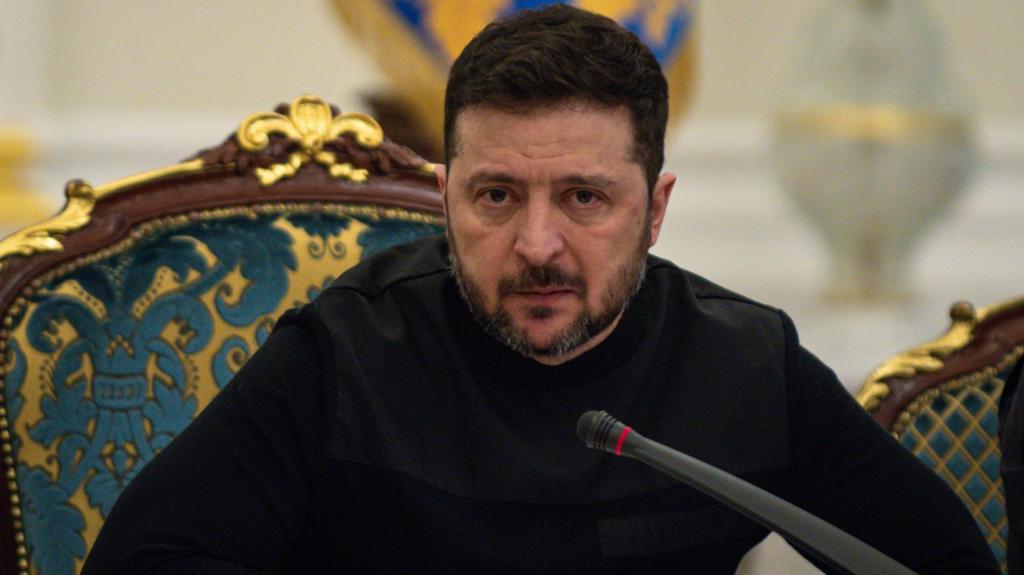
Ukrainian President Volodymyr Zelensky revealed in a recent interview that the United States requested his country's assistance in developing countermeasures against Iranian-made drones that have been used by armed groups in the Middle East. This statement, made during a conversation with international media, highlights a significant shift in global military cooperation dynamics, positioning Ukraine not only as a recipient of aid in its war against Russia but also as a provider of tactical and technological expertise in an area of growing concern for Washington.
The context of this request is framed by the extensive use of Iranian-origin Shahed-136 drones by Russian forces in the Ukrainian conflict. Since the fall of 2022, these unmanned aerial vehicles (UAVs) have been deployed in waves of attacks against critical Ukrainian infrastructure, including power plants and electrical grids. The Ukrainian Air Force, alongside Western air defense systems such as IRIS-T, NASAMS, and Gepard guns, has developed unique operational experience in detecting, tracking, and intercepting these platforms, which are relatively cheap but can cause considerable damage.
"We have accumulated invaluable knowledge on how to counter these specific threats," Zelensky stated, without going into operational details for security reasons. "When our partners face similar challenges, it is natural to share experiences. This cooperation is bidirectional and strengthens our collective security." The revelation suggests the Pentagon seeks to leverage tactical knowledge acquired on the European battlefield to protect its bases and allies in regions such as Iraq, Syria, and the Gulf, where Iran-backed militias have increased the use of kamikaze and surveillance drones.
Military analysts note that the effectiveness of Ukrainian defenses against the Shahed drones has been remarkable, with interception rates exceeding 80% in some periods, thanks to a combination of modernized radars, electronic warfare, and anti-aircraft artillery. This practical experience is considered a unique "testing ground" for 21st-century asymmetric warfare tactics. "Ukraine has become a laboratory for countermeasures against low-cost drones," explained a Western defense source on condition of anonymity. "Data on flight patterns, communication frequencies, and weak points of these systems is invaluable."
The impact of this collaboration transcends the military sphere, reflecting an evolution in security alliances. Traditionally, the flow of defense assistance has been predominantly from the West to Ukraine. This knowledge exchange temporarily inverts that dynamic, elevating Ukraine's status as a strategic partner with specialized competencies. Furthermore, it could influence future technology transfers and intelligence cooperation between Kyiv and Washington, solidifying a relationship that projects beyond the current war.
In conclusion, Zelensky's admission underscores a less visible chapter of the war: the export of Ukrainian wartime expertise. As the country continues to defend itself against the Russian invasion, its ability to contribute to the security of an ally like the United States demonstrates its resilience and adaptability. This exchange of knowledge not only strengthens Western defenses against Iranian threats but also weaves a deeper, more symbiotic web of cooperation, positioning Ukraine as a key player in the future global security landscape.