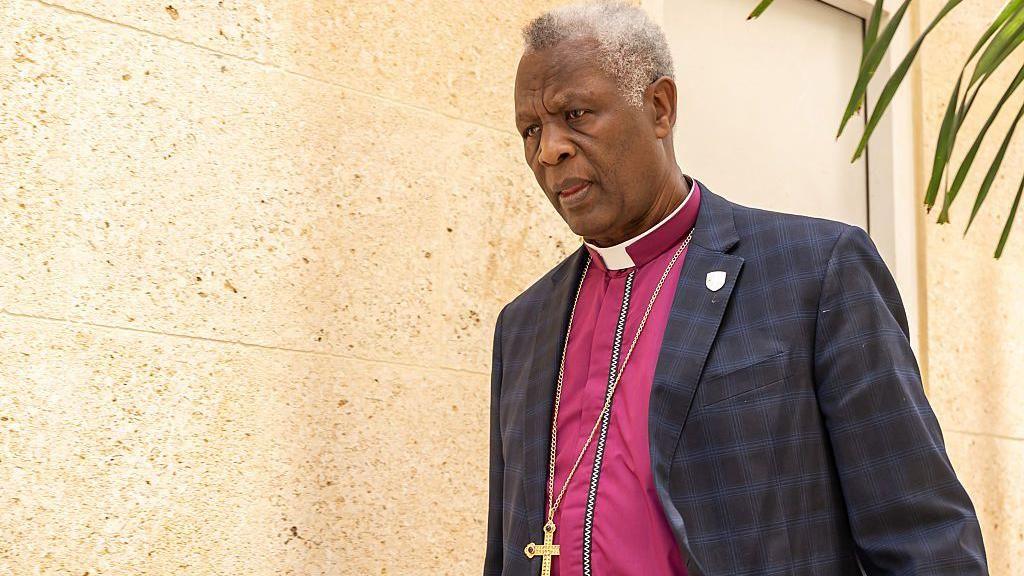
In a move aimed at avoiding a total fracture within the worldwide Anglican Communion, a significant group of conservative Anglican churches, primarily from Africa and Latin America, has decided not to proceed with the formal election of a rival archbishop to directly challenge the authority of the current Archbishop of Canterbury, Justin Welby. This decision, made during a key meeting in Kigali, Rwanda, represents an attempt to recalibrate the strategy of the conservative faction, known as the Global Anglican Future Conference (Gafcon), which has been at odds with Western churches for years, especially over issues of human sexuality and biblical authority. Tensions reached a boiling point when the Church of England advanced plans to bless same-sex unions, a move conservative provinces view as an unacceptable departure from traditional Christian doctrine.
The context for this decision stretches back decades of growing theological divisions within the world's third-largest Christian communion, with approximately 85 million members. Gafcon, formed in 2008, has served as a network and voice for Anglican provinces, primarily from the Global South, who oppose the growing acceptance of homosexuality and the perceived liberal leadership from Canterbury. In 2022, following the Church of England's decision on same-sex blessings, Gafcon threatened to establish a parallel leadership structure, which would have effectively created two separate Anglican communions. However, the recent meeting in Kigali, which gathered over 1,300 delegates, including 315 bishops from 52 countries, opted for a less confrontational stance, at least for now.
Relevant data shows a shifting demographic landscape. While Anglican churches in the UK, North America, and other liberal Western parts experience decline in attendance and influence, provinces in Africa, particularly Nigeria, Uganda, Kenya, and Rwanda, are experiencing exponential growth. The Church of Nigeria, for instance, boasts about 18 million members, making it one of the largest Anglican provinces. This demographic shift has given conservative leaders from the Global South significant moral and numerical clout, which they have used to pressure Canterbury. A senior Gafcon bishop anonymously told Reuters: 'Our influence does not come from naming a rival archbishop, but from our faithfulness to the gospel and our growth. We will continue to work from within the existing structures to call for repentance and reform.'
The immediate impact of this decision is the preservation of a fragile structural unity within the Anglican Communion. It avoids, for the moment, a formal, constitutional split that would have had profound ecumenical and legal implications, especially concerning property ownership and the recognition of holy orders. However, the underlying tension remains unresolved. Gafcon has made clear it will continue to establish alternative episcopal oversight structures in countries where national churches have adopted liberal stances on sexuality, such as in Scotland, the United States, Canada, and New Zealand. This creates a reality of 'two churches in one country' in several nations, undermining the traditional authority of local archbishops and the Archbishop of Canterbury himself as 'first among equals.'
In conclusion, the decision by conservative Anglicans not to elect a formal rival to the Archbishop of Canterbury is a tactical move, not a surrender. It reflects a long-term strategy to exert influence through demographic growth, Global South solidarity, and the creation of parallel networks of authority, rather than a head-on challenge that could isolate them. For Justin Welby and the See of Canterbury, this offers a temporary respite but does not solve the fundamental crisis of authority. The Anglican Communion continues to function as an increasingly decentralized federation, where doctrinal loyalty often trumps institutional loyalty. The future will likely see a more polycentric communion, where the role of Canterbury transforms from an undisputed spiritual leader to a historical symbol with diminishing real authority, barring a miracle of theological reconciliation.