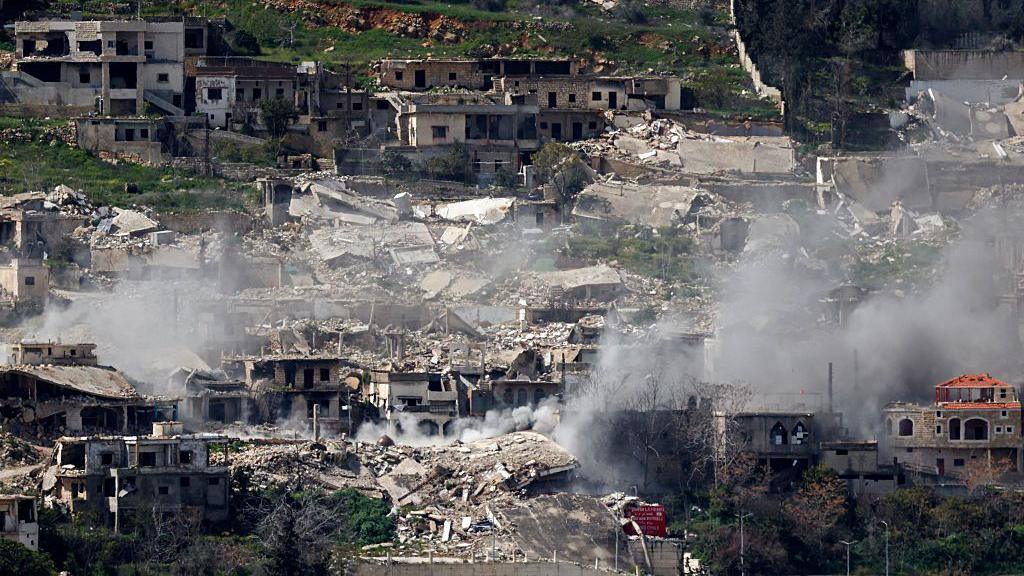
In a dramatic escalation of tensions on the northern border, Israeli troops have initiated limited ground operations inside Lebanese territory, marking a turning point in months of cross-border exchanges of fire with the Iranian-backed militant group Hezbollah. This move, described by military analysts as an "offensive incursion," aims to create a buffer zone and destroy Hezbollah military infrastructure close to the border. The action occurs amid a highly volatile regional context, with the war in Gaza still active and growing fears of a large-scale conflict that could involve multiple actors across the Middle East.
The context for this new phase of hostilities dates back to October 8, 2023, when Hezbollah initiated rocket and drone attacks against Israeli positions in solidarity with Hamas, following the start of the war in Gaza. For months, both sides have maintained a daily but contained exchange of fire across the border, resulting in dozens of fatalities, primarily Hezbollah fighters and some civilians on both sides. Over 150,000 residents have been evacuated from their homes in northern Israel and southern Lebanon. The Israeli government, led by Prime Minister Benjamin Netanyahu, has faced increasing internal pressure to restore security and allow the return of the displaced, leading to an increasingly bellicose stance.
Relevant intelligence data indicates that Hezbollah has used the past months to significantly strengthen its positions along the border, deploying elite units, advanced anti-tank systems, and a network of tunnels and bunkers. The group, estimated to possess an arsenal of between 150,000 and 200,000 rockets and missiles of various ranges, represents the most direct and formidable military threat to Israel. For its part, the Israel Defense Forces (IDF) have mobilized reservists and deployed additional brigades to the north, conducting extensive combat simulation exercises in urban and mountainous terrain similar to that of southern Lebanon.
Official statements have reflected the gravity of the moment. An Israeli military spokesperson stated: "We are carrying out defensive and offensive operations to eliminate the immediate threat Hezbollah poses to our border communities. We will not seek a wide war, but we are prepared for it if necessary." On the Lebanese side, Hezbollah's Secretary-General, Hassan Nasrallah, warned in a recent speech: "Any expansion of Israeli aggression will be met with a fierce and unprecedented response. Our fingers are on the trigger." The Lebanese government, mired in a deep political and economic crisis, has called on the international community to avert a catastrophe, but its authority over Hezbollah is limited.
The impact of these incursions is multifaceted and potentially devastating. On a humanitarian level, there is a real risk that tens of thousands of additional Lebanese civilians could be caught in the fighting or forced to flee northward, worsening the already critical displacement crisis in the country. Economically, an open war would completely paralyze southern Lebanon and could lead to the destruction of critical infrastructure, such as ports and power plants. Regionally, there is a danger that Iran and its allies in the "Shia Crescent" (such as militias in Iraq, Syria, and Yemen) would intensify their attacks against Israeli and American interests, further destabilizing the region. For Israel, a war on two fronts (Gaza and Lebanon) would impose extreme logistical and military pressure and could result in a significant number of casualties.
In conclusion, the advance of Israeli troops into Lebanese territory marks a dangerous qualitative leap in a latent conflict that has been on the brink for months. Although both sides have so far expressed a preference for avoiding an all-out war, the action-reaction dynamic and military logic could lead to an uncontrollable escalation. The international community, led by the United States and France, is in a race against time to mediate a de-escalation agreement that separates the belligerents. However, with distrust at its peak and the strategic interests of Iran and Israel at stake, the window for diplomacy is closing rapidly. The coming days will be crucial in determining whether the Middle East is heading toward another devastating conflict or whether, at the last moment, the flames can be contained.