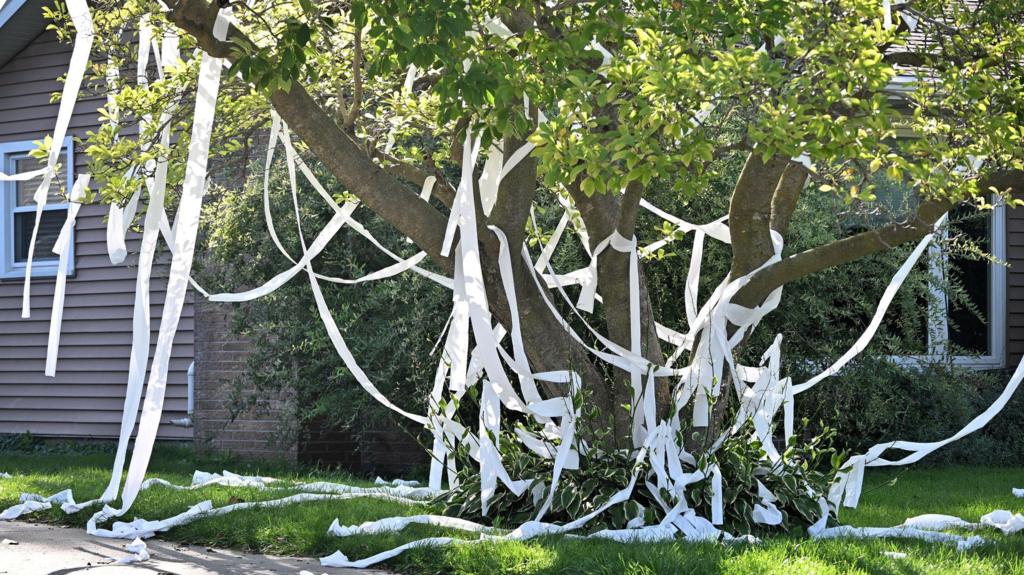
A preventable tragedy has shaken the educational community of a small town in the American Midwest. Sarah Miller, a beloved 34-year-old teacher at Maplewood Central High School, passed away last week after sustaining catastrophic injuries during what was initially described as an "innocent prank" involving toilet paper, commonly known as "TPing" or "decorating" a house. The incident, which occurred in the early hours of Saturday morning, has unleashed a wave of grief, safety questions, and a debate on the boundaries of youthful mischief.
According to the preliminary report from the County Sheriff's Office, Miller was accompanying a group of senior students, including her younger sister, on an unauthorized late-night outing. The tradition of "TPing" the houses of friends and teachers as part of end-of-year celebrations is a deep-rooted, though contentious, practice in many American communities. The plan, it seems, was to toss rolls of toilet paper over the front-yard trees of another teacher's home. However, in a tragic turn, Miller, who was attempting to place a roll on a particularly high branch, lost her balance and fell from an aluminum extension ladder that was not fully secured. Emergency services arrived quickly after a frantic call from the terrified students, but resuscitation efforts at the scene and during transport to the regional hospital were unsuccessful. She was pronounced dead from severe traumatic brain injury.
The context of this event extends beyond the individual accident. Data from the U.S. Consumer Product Safety Commission (CPSC) indicates that falls from ladders account for over 500,000 medically treated injuries each year in the country, with hundreds of them resulting in fatalities. These incidents are often linked to improper use, such as not fully spreading the legs, failing to secure locks, or placing the ladder on unstable ground. In the school setting, this event raises uncomfortable questions about supervision, unstructured extracurricular activities, and peer pressure, even among young adults and authority figures seeking to connect with students.
"Sarah was the heart of this school. She was the teacher kids went to not just for algebra problems, but for life problems," stated school principal Robert Davies, his voice breaking during a press conference. "No one could have foreseen this horrific outcome from what, for generations of students, has been a largely consequence-free rite of passage. Our community is shattered." Meanwhile, County Sheriff Mark Henderson issued a call for reflection: "This is a devastating reminder that moments of fun can turn to tragedy in the blink of an eye. We urge everyone, young and old, to think twice about the unintended risks in what seem like benign activities."
The impact of this death ripples outward. Miller's family, including her younger sister who witnessed the fall, is receiving support from crisis counselors. The school has implemented group and individual counseling sessions for students and staff, canceling all pre-graduation festive activities. Legally, authorities are still determining whether any charges will be filed, though it is emphasized the investigation is focused on the accident, not criminal intent. Nationally, the case has reignited discussions about the culture of "senior pranks" in high schools and the need for more proactive education on risk assessment in everyday situations.
In conclusion, the death of teacher Sarah Miller is a profound loss that transcends home accident statistics. It underscores the dangerous intersection of tradition, camaraderie, and a lack of risk perception. As the Maplewood community begins the painful process of mourning, this incident serves as a somber warning to other communities: seemingly harmless customs can have unthinkable consequences, and safety, even in the most lighthearted moments, should never be taken for granted. Miller's legacy, her colleagues say, may be a more conscious national conversation about how we celebrate and how we look out for one another.