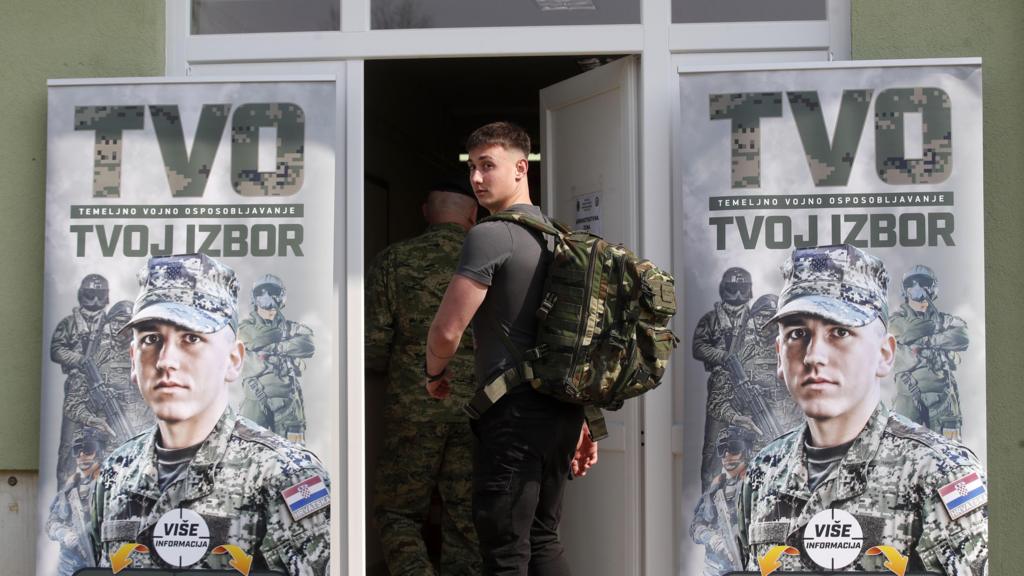
The Croatian Ministry of Defense confirmed this Monday the reporting of the first hundreds of young men called to arms, marking the effective start of the reinstatement of compulsory military service, suspended since 2008. The measure, approved by the Croatian Parliament last year, aims to strengthen national defense capabilities in a context of growing instability in the Balkan region and Eastern Europe following the Russian invasion of Ukraine. According to official data, approximately 2,500 young men born in 2006 and 2007 have received the first summons, of which about 1,500 are expected to complete the selection process this year.
The service, which will last six months, will combine basic military training with specialized instruction in areas such as cybersecurity, communications, and logistical support. Defense Minister Ivan Anušić emphasized in a press conference that the goal is not only to increase troop numbers but to "modernize the structure of the armed forces and foster a sense of civic responsibility among youth." Anušić added that the program will include modules on first aid, crisis management, and democratic values, seeking a balance between defensive preparedness and civic education.
The decision has sparked intense public debate. While the government and center-right parties defend the measure as a strategic necessity, youth groups and some NGOs have expressed concern about the interruption of university studies and professional careers. "It is an additional burden for a generation already facing economic challenges," stated Marta Kovač, spokesperson for the Croatian Student Association. However, recent polls show 58% public support for reinstatement, reflecting a shift in security perception after the conflicts in Ukraine and tension in the Western Balkans.
The economic and logistical impact is also significant. The government has allocated an initial budget of 45 million euros to adapt facilities, equipment, and instructor personnel. Military bases in Zagreb, Split, and Varaždin will be the main training centers. Defense experts like analyst Luka Borić point out that, beyond the numerical aspect, the return of compulsory service could have positive side effects on social cohesion, especially in a country with deep regional divisions inherited from the 1990s war. "The army can act as a melting pot where young people from different ethnic backgrounds and regions work together for a common goal," Borić stated.
Internationally, the move places Croatia in a growing trend in Europe. Countries like Sweden, Lithuania, and Latvia have reinstated or strengthened their conscription systems in recent years. NATO, of which Croatia has been a member since 2009, has endorsed the decision as a step toward meeting the Alliance's capability targets. However, pacifist organizations like the Balkan Peace Network have criticized what they consider a "militarization of society" and have called for the promotion of civilian service alternatives.
As the first recruits begin their training, attention is focused on the practical implementation of the program. Challenges such as the adequacy of facilities, the quality of instruction, and the management of exemptions for health or study reasons will be key to the success or failure of this policy. The Croatian experience could serve as a reference for other countries in the region considering similar measures on a continent that is rediscovering, after decades of relative peace, the importance of defensive preparedness. The reinstatement of military service is not just a defense measure but a reflection of the uncertain times Europe is experiencing.