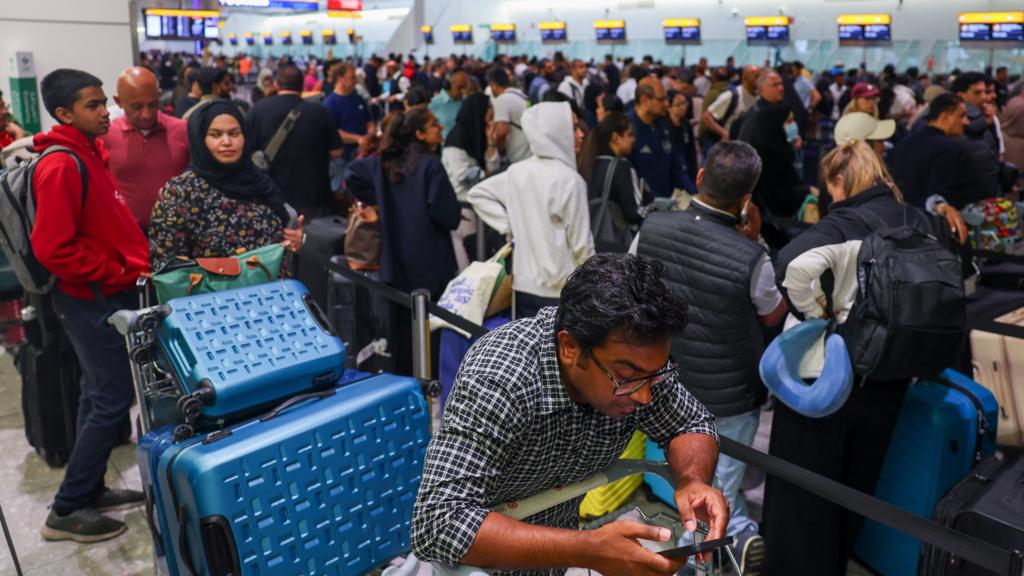
Civil aviation in the Middle East was plunged into unprecedented chaos this weekend after Iran launched a series of missile and drone attacks against targets in Israel. The sudden escalation of tensions triggered the immediate closure of airspace in several countries across the region, forcing airlines to cancel hundreds of flights and divert dozens of aircraft mid-flight. Aviation authorities in Iran, Israel, Jordan, Lebanon, and Iraq closed their skies as a precautionary measure, while neighboring countries like Saudi Arabia, the United Arab Emirates, and Turkey imposed severe restrictions on flight paths. The impact on travelers was immediate and massive, with airports such as Tel Aviv's Ben Gurion, Tehran's Imam Khomeini, and Amman's Queen Alia experiencing cascading cancellations and prolonged delays.
The context for this aerial disruption lies in Iran's response to the alleged Israeli attack on its consulate in Damascus in early April, which resulted in the deaths of several Revolutionary Guard commanders. In retaliation, Tehran launched over 300 drones and missiles toward Israeli territory, most of which were intercepted. The fear of civilian aircraft being intercepted, either by mistake or as an active defense measure, led authorities to take the drastic decision to close air corridors. Data from FlightRadar24 and other flight trackers showed a notable void on the air traffic map over Iran, Iraq, and the eastern Mediterranean, with aircraft drawing wide arcs to avoid the conflict zone, adding hours to flight times between Europe and Asia.
Statements from airlines reflected the gravity of the situation. A spokesperson for the Lufthansa Group, which suspended all its flights to Tel Aviv, Amman, and Erbil, stated: 'The safety of our passengers and crews is our top priority. We are monitoring the situation minute by minute in coordination with the authorities.' Meanwhile, Emirates Airlines announced the cancellation of several flights to and from Jordan, Lebanon, and Iraq, and diverted some of its aircraft overflying the region. 'We are in constant contact with regulators and will adjust our operations as necessary,' noted a statement from the Dubai-based carrier.
The economic and logistical impact of these disruptions is significant. The Middle East region is a crucial global air connectivity hub, with airports like Dubai (DXB), Doha (DOH), and Abu Dhabi (AUH) acting as massive transit points between Europe, Asia, Africa, and Oceania. Flight cancellations affect not only passengers but also cargo transport, including perishable goods and medical supplies. Airlines face multimillion-dollar losses from additional fuel costs due to diversions, passenger compensations, and the logistics of repositioning crews and aircraft. Experts from the International Air Transport Association (IATA) warn that prolonged instability could lead to a rethinking of global flight routes, affecting airline profitability in a sector still recovering from the pandemic.
As military tensions temporarily subsided following the attacks, some countries began gradually reopening their airspace. However, uncertainty persists. Civil aviation authorities have urged airlines to maintain a 'high degree of caution' when operating in the region. The conclusion is clear: geopolitical conflict in the Middle East has an immediate domino effect on global connectivity. This episode underscores the fragility of air transport networks in the face of regional crises and the need for robust contingency protocols. As airlines and regulators navigate this volatile landscape, millions of travelers worldwide remain on standby, reminding us that in our interconnected age, peace and stability are not just a political aspiration but a fundamental requirement for the functioning of the modern world.