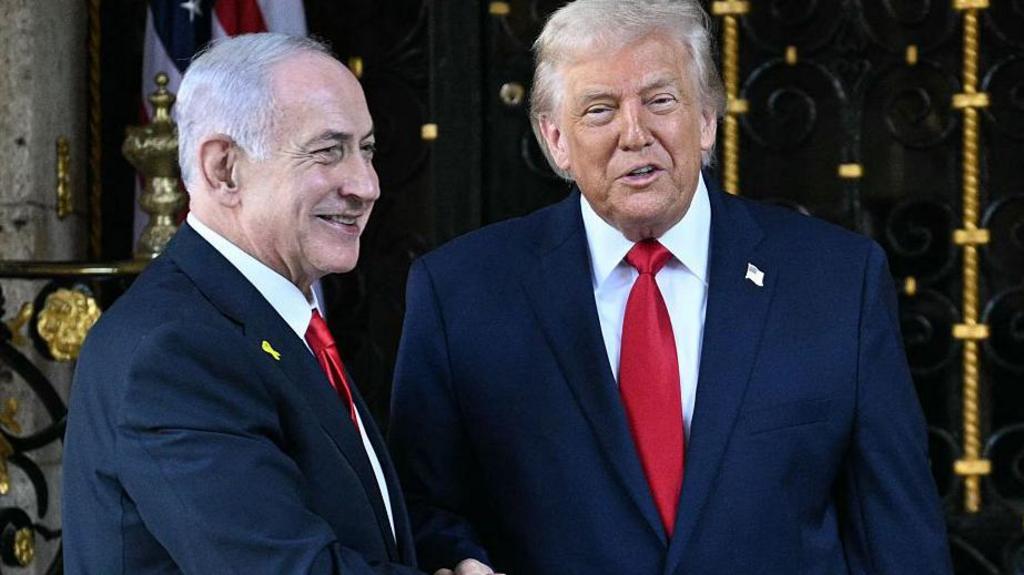
Israeli Prime Minister Benjamin Netanyahu is set to meet with former U.S. President Donald Trump at a time of heightened geopolitical tension, as international talks to revive the nuclear deal with Iran (JCPOA) reach a decisive stage. This meeting, scheduled for the coming days, underscores the deep political divide in the United States regarding Middle East policy and Israel's role as a key regional actor. The encounter comes as the Biden administration seeks to revive, through indirect negotiations in Vienna, the 2015 nuclear pact from which Trump unilaterally withdrew in 2018, subsequently imposing harsh sanctions on Tehran.
The context of this meeting is extraordinarily complex. Israel, which is not a signatory to the JCPOA, has vehemently opposed the original deal and any effort to restore it, arguing it does not effectively prevent Iran from developing nuclear weapons and funds regional terrorism. Netanyahu has repeatedly called any return to the pact a "historic mistake of strategic proportions." Meanwhile, the Biden administration seeks a "return to mutual compliance" that limits Iran's nuclear program in exchange for relief from economic sanctions, a stance that has generated skepticism both in Israel and among Republicans and some Democrats in the U.S. Congress.
Relevant data indicates that Iran's nuclear program has advanced significantly since the deal's collapse. The International Atomic Energy Agency (IAEA) reports that Iran has enriched uranium to 60% purity, a level very close to that needed for a nuclear weapon, and has stockpiled reserves far exceeding JCPOA limits. Concurrently, Iran has increased its influence in countries like Syria, Lebanon (through Hezbollah), and Yemen, fueling Israeli security concerns. The Netanyahu-Trump meeting, therefore, is not merely a diplomatic gesture but a political move designed to influence the domestic U.S. debate and project a unified stance of opposition to the Vienna negotiations.
Although no official statements have been leaked ahead of the meeting, analysts expect both leaders to issue a joint communiqué emphasizing the dangers of a deal with Iran and the need to maintain maximum pressure. Trump may reiterate his criticism of Biden's policy, stating, as he has in the past, that "the nuclear deal was the worst deal ever." Netanyahu, for his part, will seek to capitalize on Trump's continuing influence within the Republican Party to mobilize legislative opposition against any new pact. The impact of this meeting is multifaceted: it reinforces the alliance between Israel's Likud and the Trumpist wing of the GOP, complicates Biden's diplomatic efforts by highlighting a lack of bipartisan consensus in the U.S., and sends a clear message to Tehran that opposition to the JCPOA remains strong.
In conclusion, the meeting between Netanyahu and Trump symbolizes the critical intersection of U.S. domestic politics and international security at a time of great uncertainty. While negotiators in Vienna attempt to finalize a technically complex agreement, this political encounter on American soil acts as a powerful reminder of the domestic hurdles any pact must overcome. The outcome of the nuclear talks will not only define the relationship between the West and Iran but also the dynamics of the U.S.-Israel alliance and the balance of power in one of the world's most volatile regions. The stage is, without a doubt, critical, and every diplomatic move counts.