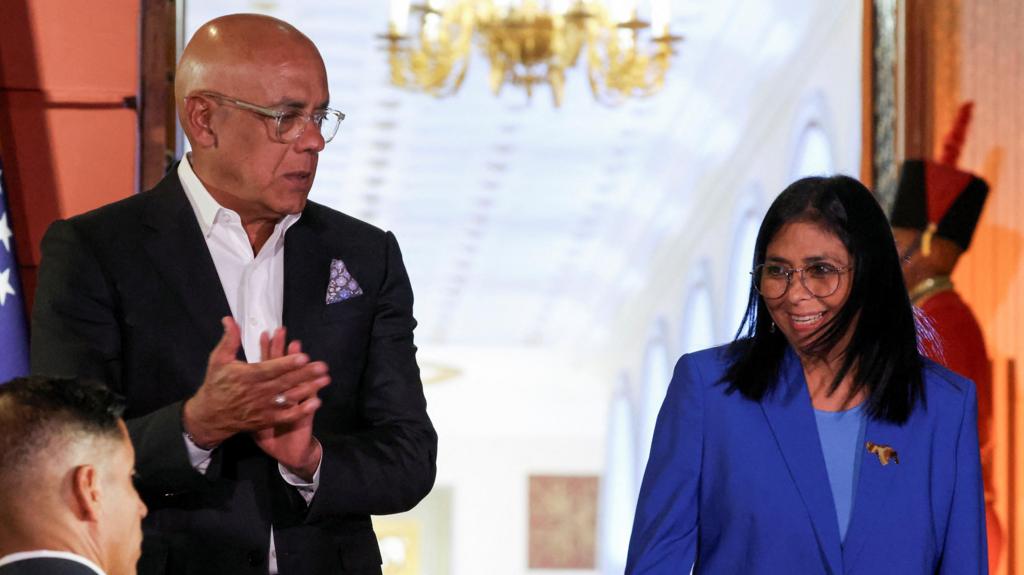
In a move that could mark a turning point in Venezuela's political and human rights crisis, more than 1,500 individuals considered political prisoners by civil society organizations have formally submitted amnesty applications to the country's judicial authorities. This process follows the reactivation of a legal mechanism provided for in Venezuelan legislation, generating both hope and skepticism among families, activists, and the international community. The scale of the applications underscores the magnitude of what opponents and independent observers describe as a systematic policy of persecution and imprisonment on political grounds over the past decade.
The context of these applications is set against a backdrop of persistent political tensions and a deep economic and social crisis that has driven millions of Venezuelans to emigrate. For years, organizations such as the Venezuelan Penal Forum, Provea, and the UN High Commissioner for Human Rights have documented thousands of cases of arbitrary detentions, trials without due process guarantees, and the imprisonment of opposition leaders, dissident military personnel, journalists, social activists, and ordinary citizens accused of participating in protests. The figure of over 1,500 applicants represents a significant portion of the estimated 270 political prisoners that human rights organizations currently list, and also includes individuals who have already served sentences or are on parole but still have pending legal proceedings.
The amnesty mechanism, though existing in the legal framework, has been subject to debate. Its application depends on a set of criteria and the political will of the judicial instances, largely controlled by the government of President Nicolás Maduro. "The mass submission of these applications is an act of faith in justice, but also a litmus test for the Venezuelan state and its declared commitment to dialogue and human rights," stated Alfredo Romero, director of the Venezuelan Penal Forum, one of the organizations facilitating the legal process. For their part, government representatives have asserted that the Venezuelan judicial system is independent and that all applications will be reviewed in accordance with the law, dismissing accusations of political persecution.
The potential impact of this process is multifaceted. Domestically, a broad amnesty could alleviate pressure on the prison system and represent a gesture of reconciliation in a deeply polarized country. It could also influence political negotiations between the government and the opposition, which have sought, with varying success, a way out of the crisis. Internationally, a favorable resolution would be closely watched by foreign governments and multilateral bodies that have imposed sanctions on Venezuela for human rights violations and condition their relaxation on concrete gestures. However, doubts persist about the impartiality of the process. Many cases are based on charges such as "treason," "conspiracy," or "terrorism," legal classifications that human rights organizations consider vague and used to criminalize dissent.
In conclusion, the amnesty application by over 1,500 Venezuelans constitutes a critical episode that tests the rule of law in the country. As the detainees' families wait anxiously, the response of the Venezuelan judicial system will not only determine the fate of hundreds of individuals but also send a powerful signal about the possibility of genuine political détente and respect for fundamental freedoms. The world is watching to see if this process will become a genuine step towards justice or another chapter of impunity and continuity in the Venezuelan crisis.