Sudan's civil war, now over a year old, has opened a new and decisive front in the heart of the country's economy: the gold and oil-rich regions. Intelligence reports and local testimonies confirm a massive increase in the use of armed and reconnaissance drones by the Sudanese Armed Forces (SAF) and the paramilitary Rapid Support Forces (RSF), now battling for control of the natural resources that could fund the prolongation of the conflict. This technological escalation in an already brutal war marks a turning point, shifting violence to areas that had remained relatively stable but are vital for the economic survival of any future government.
The context for this new chapter is bleak. Since fighting erupted in Khartoum in April 2023 between the regular army, led by General Abdel Fattah al-Burhan, and the RSF paramilitaries, commanded by General Mohamed Hamdan Dagalo 'Hemedti', the country has descended into catastrophic humanitarian crisis. Thousands have died, millions have been displaced, and basic infrastructure lies in ruins. However, the conflict had been largely concentrated in urban areas and specific regions. The recent shift of fighting towards the states of South and North Kordofan, and especially towards areas like the locality of Sinkat and deposits near the border with Chad, reveals a calculated strategy to seize the nation's most valuable assets.
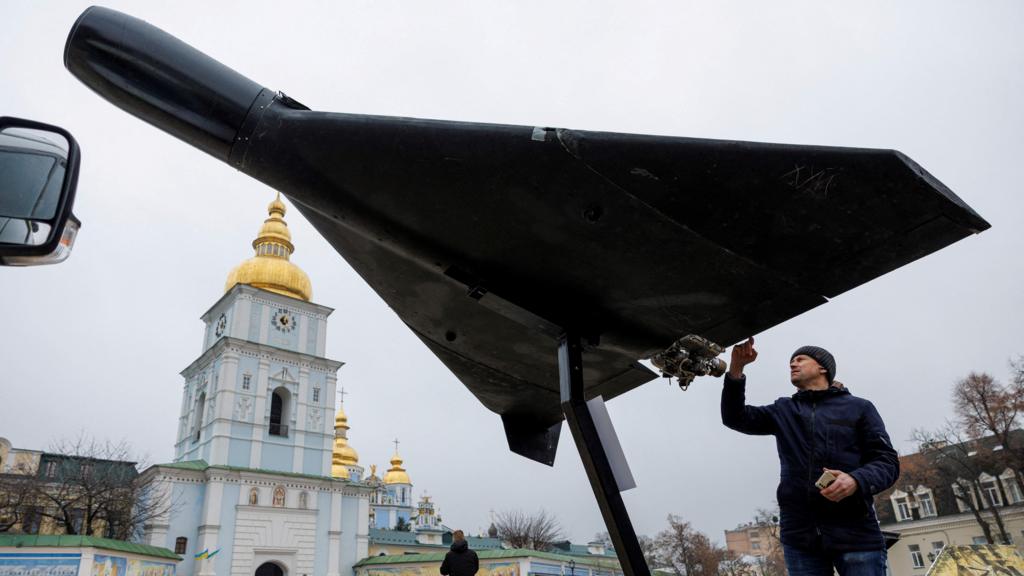
The data is telling. Sudan is Africa's third-largest gold producer, with pre-war annual production exceeding 90 tonnes, and holds significant oil reserves, although large-scale exploitation was disrupted after South Sudan's secession in 2011. Control of these mines and potential extraction sites represents immediate cash flow, as gold can be easily traded on parallel markets to buy weapons and pay fighters. Observers from Conflict Armament Research (CAR) have documented how both sides have integrated modified commercial drones, often of Turkish, Chinese, or Iranian manufacture, equipped with improvised explosive devices or used for surveillance and artillery correction. 'We are seeing an accelerated militarization of accessible technology,' stated an analyst on condition of anonymity. 'The drones are not sophisticated like those in Ukraine, but they are abundant, cheap, and lethal in this context.'
Statements from sources on the ground paint a terrifying picture. 'The buzzing is constant, day and night. They are not just planes anymore; they are these small devices flying low, watching, and then, sometimes, something explodes,' a humanitarian worker who requested anonymity for security reasons told this outlet by phone. Meanwhile, an SAF spokesman, General Nabil Abdallah, stated in a diffuse communiqué that his forces 'use all technological means at their disposal to defend national sovereignty and its resources from looting militias.' The RSF, on the other hand, has accused the army of 'launching an extermination campaign with drones against entire communities to steal their land and gold.'
The impact of this new phase is multidimensional and deeply concerning. Firstly, it exacerbates the humanitarian crisis, dragging rural populations and artisanal mining communities into the line of fire. Secondly, it internationalizes and prolongs the conflict, as control of resources attracts external actors interested in mining concessions or geopolitical influence, from the United Arab Emirates and Russia to regional players. Finally, it destroys any short-term prospect of a viable economy for Sudan, plundering the natural capital needed for eventual reconstruction. The international community, led by the UN, has shown a patent inability to mediate or enforce a meaningful ceasefire.
In conclusion, the battle for Sudan's gold and oil via drones is not merely a tactical shift; it is a strategic evolution that turns a war for power in the capital into a war for resources in the periphery. This pivotal front threatens to permanently entrench the conflict, create self-sufficient war economies for the belligerents, and condemn the Sudanese people to an even more prolonged era of instability and misery. The militarization of affordable and effective drone technology in this setting sets a dangerous precedent for future African conflicts, where natural resources and accessible tools of war can combine with devastating effects.