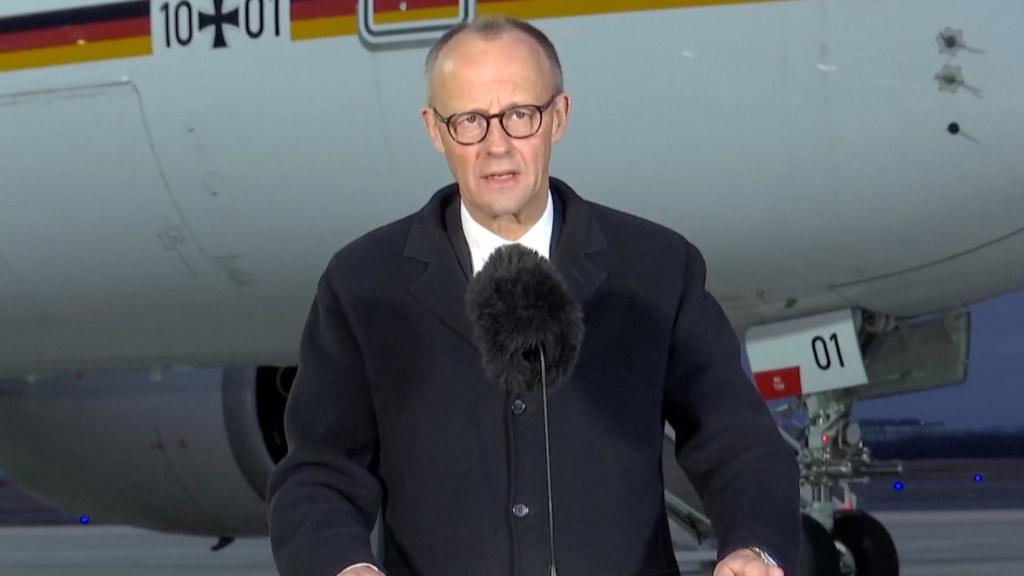
German Chancellor Olaf Scholz landed in Beijing on Sunday, kicking off his first official visit to China since taking office in December 2021. This three-day trip comes at a time of escalating geopolitical tensions and profound global economic reassessments, testing the delicate relationship between the world's second and third-largest economies. The German delegation, comprising top executives from companies like BASF, Volkswagen, Siemens, and Deutsche Bank, underscores the critical importance Berlin places on its trade ties with the Asian giant, despite mounting pressures to "de-risk" from strategic vulnerabilities.
The context for this visit is extraordinarily complex. Europe is in the midst of an energy and economic recession triggered by the war in Ukraine, forcing Germany to seek a new industrial and security strategy. Simultaneously, China, under President Xi Jinping's leadership, has reaffirmed its strategic partnership with Russia and maintained an ambiguous stance on the conflict, breeding distrust in Western capitals. Scholz, leading a three-party coalition with divergent views on China, must balance economic imperatives—China is Germany's top trading partner, with bilateral trade exceeding €245 billion in 2021—with democratic values and allied security concerns.
The economic data provides an unavoidable backdrop. Over one million German jobs depend directly or indirectly on trade with China. Companies like Volkswagen sell nearly 40% of their vehicles in the Chinese market, while BASF is investing €10 billion in a new integrated chemical plant in Zhanjiang. However, the dependence is mutual: China needs Germany's advanced technology and precision machinery for its transition to higher value-added industry. This interdependence is threatened by China's new national security strategy, tensions in the Taiwan Strait, and Western sanctions on semiconductor technology.
Scholz is expected to address these issues frankly in his meetings with Xi Jinping and Premier Li Qiang. According to pre-trip statements from a German government spokesperson, "the Chancellor will discuss how we can cooperate even more in the fight against climate change and digital transformation, but will also clearly raise our concerns regarding human rights, reciprocity in market access, and China's responsibility as a permanent member of the UN Security Council regarding Ukraine." No joint statements or massive agreements are expected; rather, the goal is dialogue to stabilize a relationship at a crossroads.
The impact of this trip will be measured in the coming months. For the European Union, it is a test of whether its concept of "strategic autonomy" can coexist with a pragmatic relationship with China. For the transatlantic community, it is a signal of whether Germany will prioritize coordination with Washington or pursue a more independent path. And for German businesses, the outcome could define the future of their multi-billion-euro investments. A failure in communication could accelerate the fragmentation of global supply chains, while a constructive, albeit limited, understanding could open a pathway to manage systemic competition without descending into open conflict.
In conclusion, Scholz's inaugural visit to China is far more than a diplomatic ritual. It is a defining moment for German foreign policy in the era of great power rivalry. The Chancellor carries with him the hopes of industry and the fears of allies. His ability to navigate these contradictory waters, asserting economic interests without yielding on fundamental principles, will not only shape the future of bilateral relations but also influence the balance of power in the Indo-Pacific and the cohesion of the Western bloc in the face of a rapidly transforming international order.