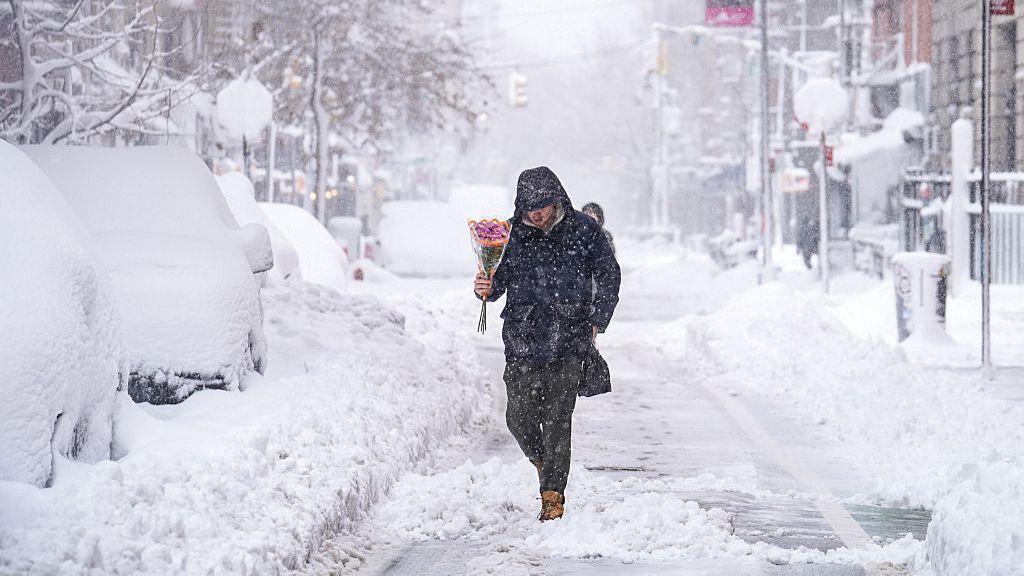
A powerful winter storm has plunged the US East Coast into chaos, triggering the cancellation of over 5,000 flights and leaving millions of residents grappling with record-breaking snow accumulations. The system, which battered areas from the Northeast to the Mid-Atlantic, dumped more than two feet of snow in some locations, crippling air and ground transportation, shutting down schools and businesses, and testing emergency response teams. This extreme weather event underscores the vulnerability of critical infrastructure to increasingly intense climate phenomena and raises questions about winter preparedness in one of the nation's most populous regions.
The storm, which meteorologists had been tracking for days, rapidly intensified off the coast, a phenomenon known as bombogenesis or explosive cyclogenesis. Cities like Boston, New York, and Washington D.C. were particularly hard-hit, with hurricane-force winds creating blizzard conditions and snow drifts exceeding three feet in rural areas. Major international airports, including JFK and LaGuardia in New York, Logan in Boston, and the three major airports in the Washington D.C. area, suspended most operations. The mass cancellations created a domino effect across the national and international air travel system, stranding thousands of passengers in terminals or seeing their holiday travel plans postponed indefinitely.
Airlines, facing dangerous takeoff and landing conditions as well as the inability to move crews and aircraft, activated travel waivers and flexible rebooking policies. A spokesperson for the Federal Aviation Administration (FAA) stated, "Safety is our top priority. Zero-visibility conditions and high winds make operations unsafe. Ground crews are working tirelessly to clear runways and ramps, but the process will be gradual." Meanwhile, state and local authorities urged residents to avoid unnecessary travel. Governors of several states declared states of emergency, mobilizing the National Guard to assist with rescue operations and the transport of medical personnel and essential supplies.
The economic impact of the storm is significant. Beyond the air travel collapse, the closure of interstate highways has disrupted supply chains at a critical time. Thousands of businesses, from small shops to major malls, remained closed, impacting retail sales. Power companies reported outages for hundreds of thousands of customers as the weight of the snow combined with high winds brought down lines and poles. Utility crews are working around-the-clock shifts to restore electricity but warn that some repairs could take days due to difficult access to the hardest-hit areas.
As the storm moves away into the Atlantic, the focus now shifts to the monumental recovery task. Cities have deployed full fleets of snowplows, but the magnitude of the snowfall means cleanup will take several days. Climate experts note that while major snowstorms are not unusual for this region, the intensity and rapid development of this event are consistent with patterns observed in a warming climate, where the atmosphere can hold more moisture and generate more powerful storms. This record snowfall serves as a stark reminder of the need for continued investment in climate resilience and robust contingency plans to protect communities and keep the nation's economic lifelines functioning.