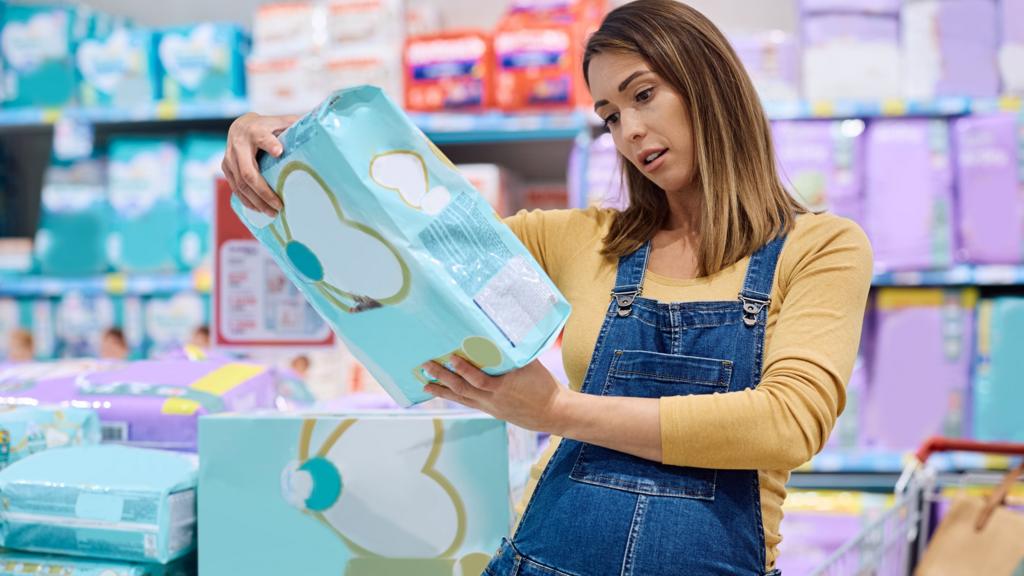
The global plastic waste crisis has found an unexpected ally in the fungal kingdom. Scientists worldwide are investigating the potential of certain fungal species, known for their ability to break down complex materials, to biodegrade one of the most persistent products in landfills: disposable diapers. These items, largely composed of plastics like polypropylene and polyethylene, can take up to 500 years to decompose, posing a monumental challenge for waste management and the environment. The search for biological solutions has led to a promising approach: mycoremediation, which harnesses the metabolic power of fungi to disintegrate pollutants.
The context for this research is urgent. According to UN data, an estimated 300,000 disposable diapers are discarded globally every minute, significantly contributing to plastic pollution. Landfills are saturated with these products, which not only occupy enormous volume but also release microplastics and chemicals as they slowly degrade. Traditional management methods, such as burial or incineration, present serious environmental problems, including greenhouse gas emissions and the leaching of toxins into soil and water. In this scenario, fungal biotechnology emerges as a sustainable and circular alternative.
Relevant data from recent studies, such as those published in scientific journals like 'Science of The Total Environment' and 'Applied Microbiology and Biotechnology', indicate that fungi from the genera *Aspergillus*, *Penicillium*, and particularly the white-rot fungus *Pleurotus ostreatus* (oyster mushroom), possess lignolytic enzymes like laccases and peroxidases. These enzymes are capable of breaking the chemical bonds of plastic polymers, transforming them into simpler, less harmful compounds. Laboratory experiments have shown that, under controlled conditions, certain strains can degrade up to 90% of the polypropylene in a sample within months, a process that would take centuries in nature.
Statements from leading researchers in the field reinforce cautious optimism. Dr. María García, an environmental microbiologist at the University of Barcelona, commented in a recent interview: 'Fungi are nature's master recyclers. Their enzymatic machinery is extraordinarily versatile. What we are doing is directing that capability towards a specific human pollutant: diaper plastic. Preliminary results are encouraging, but scaling this process to an industrial level is the next major hurdle.' Meanwhile, Professor Kenji Tanaka from the Tokyo Institute of Biotechnology added: 'The degradation efficiency depends on multiple factors: the fungal strain, temperature and humidity conditions, and pre-treatment of the waste. It is not a magic wand, but it is a crucial piece of the puzzle for a real circular economy.'
The potential impact of this technology is multifaceted. Environmentally, it could drastically reduce the volume of diapers in landfills, decrease the release of microplastics, and mitigate methane emissions associated with the anaerobic decomposition of organic waste within diapers. Economically, it could create new industries around the bioprocessing of waste and generate value-added products, such as fungal biomass for compost or even for animal feed in some cases. Socially, it would offer a more hygienic and less polluting solution for communities with deficient waste management systems. However, the challenges are considerable: the speed of the fungal process is still too slow for the massive volume of waste generated, and energy is required to maintain optimal conditions in bioreactors.
In conclusion, while plastic-eating fungi are not a miraculous and immediate solution to the disposable diaper crisis, they represent one of the most innovative and hopeful lines of research in the field of bioremediation. Their successful development will depend on continued investment in R&D, interdisciplinary collaboration among microbiologists, engineers, and waste experts, and support from public policies that encourage alternatives to the linear 'take-make-dispose' economy. Combined with source reduction efforts and the design of more easily recyclable products, the power of fungi could be a key tool in cleaning up one of the most persistent legacies of modern life, transforming a pollution problem into a resource for planetary regeneration.