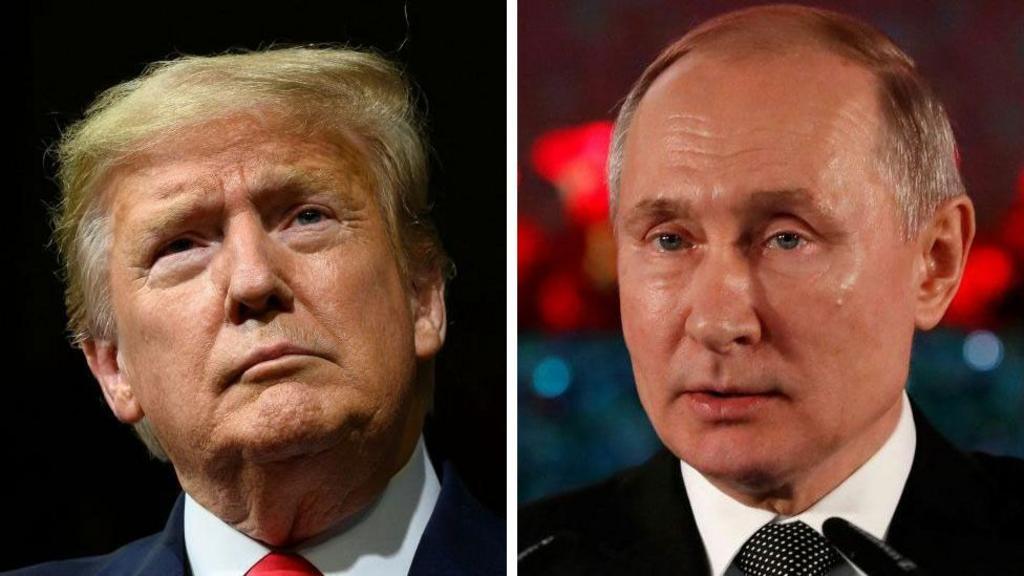
In a move that sparked controversy and geopolitical analysis in Washington and European capitals, the administration of former President Donald Trump, during its tenure, took steps to ease certain sanctions related to the Russian energy sector. This decision, which primarily affected specific oil and gas projects, was interpreted by many experts as a significant shift from the maximum pressure posture enacted after the 2014 annexation of Crimea. The context for this action is framed within a complex web of global energy interests, the U.S. strategy for dominance in liquefied natural gas (LNG) exports, and the ever-volatile relations between major powers.
The original sanctions, imposed by the United States and the European Union, aimed to economically isolate Russia and limit its ability to finance large-scale energy infrastructure projects, such as the Nord Stream 2 pipeline or Arctic explorations. These measures targeted the Kremlin's hydrocarbon revenues, a vital source accounting for a substantial portion of the federal budget. The Trump administration's decision to grant waivers or licenses for certain transactions was publicly justified under arguments of "energy security" and not harming European allies dependent on Russian gas. However, critics argued this weakened a key deterrent tool and sent a signal of ambiguity to Moscow.
Relevant data underscores the sector's importance to Russia. According to Russia's Central Bank and the International Monetary Fund, revenues from oil and gas exports can make up to 40% of federal budget revenues in some years. Any relief in restrictions that facilitates foreign investment or the completion of key projects therefore has a direct and positive impact on the Russian economy. Analysts from the Center for Strategic and International Studies (CSIS) have argued that while the relief was selective and did not remove the core sanctions, its psychological and practical effect was considerable. "It allowed Russian companies like Rosneft or Gazprom to breathe a little, secure financing, and advance long-term plans that would otherwise be stalled," explained an energy analyst who requested anonymity.
Official statements at the time were divergent. On one hand, the State Department asserted that sanctions policy remained "firm" and that waivers were granted on a case-by-case basis to avoid harming U.S. interests. On the other, figures in Congress like Senator Bob Menendez spoke out harshly: "Every time we ease the pressure, we give Putin room to maneuver, rearm economically, and continue his destabilizing behavior." From Moscow, Kremlin spokesman Dmitry Peskov at the time described any step toward normalization as "practical and welcome," while insisting the sanctions were illegitimate.
The impact of this policy is multifaceted. In the short term, it provided tangible financial relief to Moscow, possibly strengthening Putin's position at a time of internal tensions and volatile oil prices. Geopolitically, it created friction with NATO allies advocating a harder line, creating cracks in the united Western front. Furthermore, it influenced the global energy market, affecting prices and supply routes. In the long term, the debate remains open: did this approach help create a channel for dialogue, or did it simply allow the Kremlin to buy time and resources without changing its behavior? Many experts agree that, without a clear strategic framework linked to concessions from Russia, sanctions relief risks being perceived as a sign of weakness.
In conclusion, the Trump administration's decision to soften certain sanctions on Russian oil was a significant episode in global energy politics. Its motives were intertwined with realpolitik, commercial interests, and a particular vision of relations with Russia. While it is difficult to quantify exactly how much it helped Putin, it is clear that it removed some pressure from a sector vital to his regime, providing economic and political oxygen. This case highlights the delicate balance between using sanctions as a foreign policy tool and the interdependent realities of the global energy market. The legacy of this measure continues to influence the current debate on how the West should manage its economic relationship with Russia in a context of ongoing strategic rivalry.