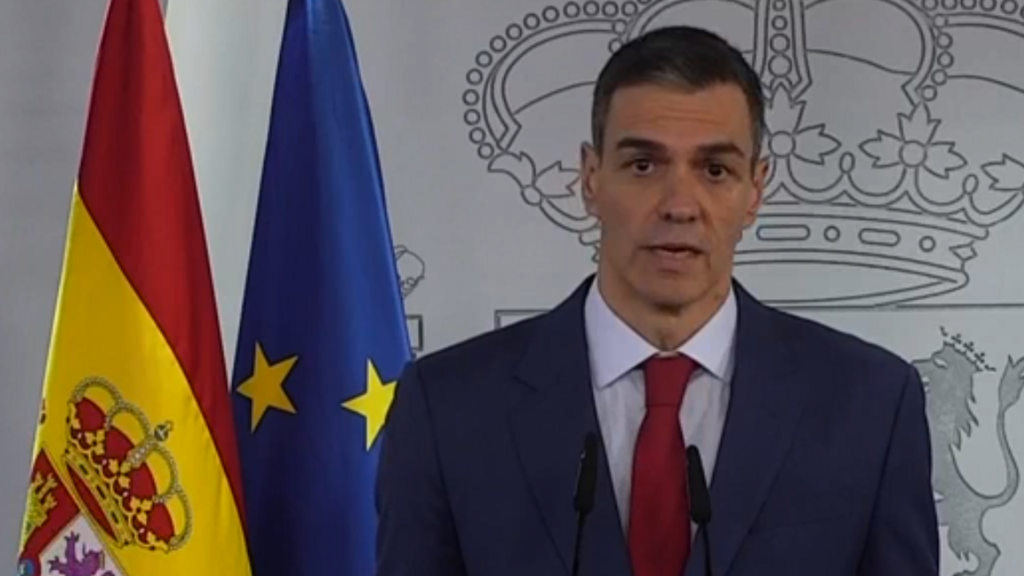
Spanish Prime Minister Pedro Sánchez has issued a firm response to former U.S. President Donald Trump's recent threats to impose massive tariffs or even sever trade with the European Union if he returns to the White House. In a speech delivered in Madrid, Sánchez underscored Spain and the EU's commitment to a rules-based international order, multilateralism, and cooperation, declaring a clear 'no to war'—commercial or otherwise. This stance draws a clear line in defense of European interests in the face of a potential scenario of aggressive protectionism from Washington.
The context for this rebuttal stems from statements made by Trump during his campaign, where he has suggested the possibility of imposing a 10% universal tariff or even higher on all imported goods, with a particular focus on China and, potentially, traditional allies like the EU. The transatlantic relationship, a cornerstone of Western economy and security since World War II, thus faces one of its most significant tests in decades. Spain, as the fourth-largest economy in the eurozone and with strong trade ties to the United States, finds itself on the front lines of this potential confrontation.
Economic data underscores the relationship's importance. The European Union as a whole is the United States' largest trading partner, with an exchange of goods and services exceeding one trillion dollars annually. For Spain, the United States is a crucial destination for exports such as olive oil, wine, automotive components, and pharmaceuticals, in addition to being a source of investment and tourism. A rupture or severe deterioration of these flows would have immediate and profound economic consequences for businesses and workers on both sides of the Atlantic. Sánchez reminded that trade conflict benefits no one and typically results in higher prices for consumers and job losses.
In his remarks, the socialist leader went beyond economic defense. 'Our response must be clear: no to war, neither commercial nor any other kind. Yes to dialogue, yes to the rules agreed upon at the World Trade Organization, yes to an alliance of equals that confronts the real global challenges,' stated Sánchez. This phrase encapsulates the European strategy of countering unilateralism with a firm adherence to the multilateral system. The Spanish prime minister also called for unity within the EU, urging the Twenty-Seven to prepare a coordinated and robust response to protect the single market and their collective interests.
The impact of this exchange of statements is multifaceted. In the immediate term, it injects uncertainty into markets and the investment decisions of companies with transatlantic supply chains. Politically, it reinforces the EU's role as a geopolitical bloc that must strengthen its strategic autonomy, in defense, technology, and trade alike. The European Commission has already begun working on instruments to counteract potential unilateral coercive measures, such as the regulation neutralizing extraterritorial sanctions. Sánchez's stance aligns with this community effort to build resilience.
In conclusion, Pedro Sánchez's firm response to Donald Trump's trade threats goes beyond mere rhetorical retort. It represents the defense of a model of international relations based on cooperation over conflict and underscores Europe's determination not to yield to pressure tactics that could destabilize the global economy. The 'no to war' message is a guiding principle that Spain and its European partners appear ready to uphold, preparing for a potentially turbulent period in transatlantic relations where dialogue and firmness must go hand in hand. The world is watching as one of the most enduring alliances navigates these uncharted waters of economic geopolitics.