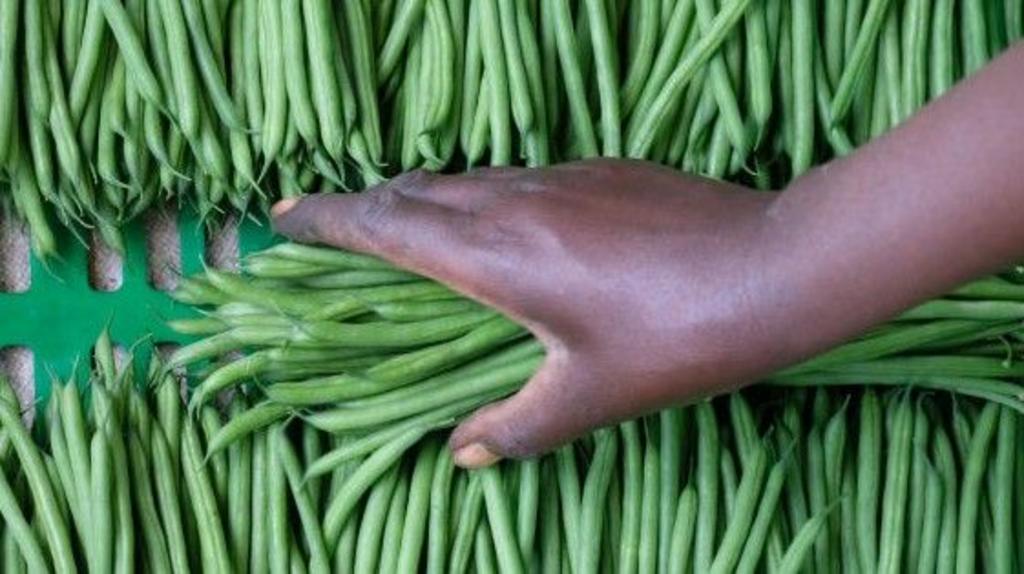
In the heart of the Niayes region, north of Dakar, two large-scale agricultural operations have become a fundamental pillar for British supermarkets. The French company Compagnie Fruitière, through its Senegalese subsidiaries, operates the Kayar and Potou farms, which together cover more than 500 hectares dedicated to growing French green beans, zucchini, peppers, and eggplants. These vegetables, cultivated under strict quality and sustainability protocols, travel over 6,000 kilometers by air to reach the shelves of chains like Tesco, Sainsbury's, and Marks & Spencer within hours, guaranteeing freshness year-round, especially during the European winter months when local production is scarce.
The context of this trade relationship dates back to the Economic Partnership Agreements between the European Union and African, Caribbean, and Pacific (ACP) countries, which facilitate preferential access for agricultural products. Senegal, with its favorable subtropical climate and growing seasons inverted relative to Europe, found a strategic niche. Compagnie Fruitière, with decades of experience in export agriculture in Africa, invested heavily in drip irrigation technology, insect-proof net greenhouses, and digital traceability systems. "Our model is based on contract farming," explains a company spokesperson. "We guarantee a stable price to British supermarkets and, in return, we can plan production and offer stable working conditions to more than 2,500 local workers, 65% of whom are women."
Data reveals the scale of this operation: it is estimated that these two farms produce annually over 8,000 tonnes of green beans and 3,000 tonnes of other vegetables. Approximately 70% of this production is destined for the British market, representing nearly 40% of the fresh green beans consumed in the UK outside the local season. Air freight, although with a significant carbon footprint, is considered essential to maintain the cold chain and the product's shelf life. The farms have implemented emission reduction programs, such as using solar energy for part of the operation and optimizing logistics.
However, this model is not without criticism. Fair trade organizations and some environmental groups question the long-term sustainability of importing basic vegetables from so far away, arguing that it weakens efforts to develop more resilient local agriculture in the UK and consumes large volumes of water in a Senegalese region facing water stress. In response, the company highlights its rainwater harvesting projects and its GlobalG.A.P. certification, which audits social and environmental practices. "We create decent jobs and transfer know-how," states the manager of one of the farms. "Without this external demand, much of this land would not be productive."
The impact of this supply chain is bilateral. For Senegal, it represents a vital source of foreign currency and formal employment in rural areas. For the United Kingdom, it ensures a consistent, quality supply, smoothing price volatility and availability. The dependence became evident during the COVID-19 pandemic when border closures and reduced cargo flights created moments of tension in supply, highlighting the fragility of global just-in-time chains.
In conclusion, the Kayar and Potou farms are a microcosm of modern food globalization: a complex relationship that balances consumer demand, development opportunities, high-precision logistics, and ecological challenges. Their future will depend on how post-Brexit trade policies evolve, the pressure for shorter supply chains, and adaptation to climate change, which is already affecting rainfall patterns in the Sahel. Meanwhile, they continue to be an almost invisible but crucial link connecting Senegalese fields with British tables, defining what is possible—and perhaps debatable—in 21st-century agriculture.