In a significant escalation of tensions in the Persian Gulf, a ballistic missile strike attributed to Iran's Islamic Revolutionary Guard Corps (IRGC) hit the Ali Al Salem Air Base in Kuwait in the early morning hours, resulting in the deaths of six U.S. service members and leaving at least a dozen more wounded. The attack, which regional intelligence reports indicate involved multiple projectiles, struck housing and logistics areas within the installation, which hosts U.S. and coalition troops as part of regional security operations. This incident marks one of the deadliest attacks on U.S. forces in the region in recent years and threatens to trigger a direct military response from Washington.
The context for this attack lies in the protracted confrontation between the United States and Iran, which has oscillated between proxy warfare and direct clashes for decades. Tensions have sharpened recently due to the stalemate in negotiations to revive the 2015 nuclear deal (JCPOA) and a series of incidents in Gulf shipping lanes. Ali Al Salem Air Base, located in the Kuwaiti desert about 80 kilometers from the Iraqi border, is a key hub for U.S.-led coalition air operations against ISIS and for deterrence against Iran. Pentagon officials confirmed the attack was 'deliberate and precise,' specifically targeting sectors housing U.S. personnel.
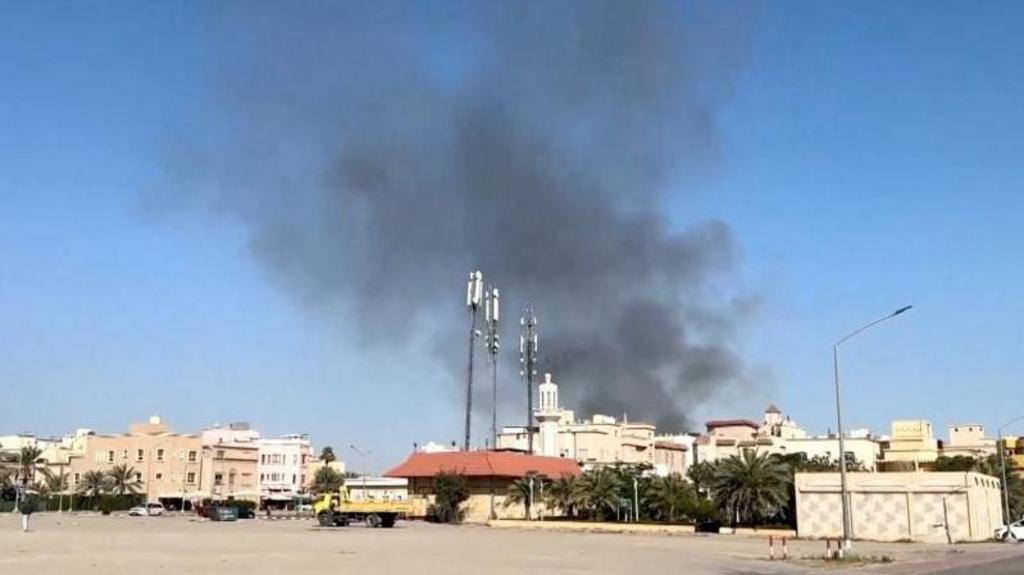
Preliminary data from Kuwaiti air defense indicates at least five missiles were launched from Iranian territory, possibly from Khuzestan province. Patriot air defense systems deployed at the base intercepted two of the projectiles, but three managed to impact. Satellite imagery and witness reports describe columns of smoke rising from the damaged facilities. Department of Defense spokesperson General Pat Ryder stated in an urgent press conference: 'Our thoughts are with the families of the brave service members who lost their lives today. We are assessing the situation and all options are on the table.' The Kuwaiti government, for its part, has summoned the Iranian ambassador to present a formal protest, calling the attack a 'flagrant violation of sovereignty.'
Thus far, Iran has not officially claimed responsibility for the attack, but IRGC-affiliated state media has published cryptic messages celebrating 'successful operations against enemy interests.' Regional analysts suggest the attack could be retaliation for the recent assassination, attributed to Israel, of a senior IRGC commander in Syria, or a response to Western economic sanctions that continue to strangle the Iranian economy. The immediate impact has been a spike in oil prices, with Brent crude surpassing $90 per barrel due to fears of supply disruption in the Strait of Hormuz. Global financial markets have shown volatility, with Asian stock markets falling on the prospect of a wider conflict.
The conclusion of this tragic event is that the world now stands on a dangerous precipice. The death of American soldiers in a direct attack by a nation-state represents a red line that has historically led to military escalation. The U.S. administration faces immense internal pressure to respond firmly, while European and regional allies are likely to advocate for restraint and the diplomatic path. The stability of the entire Middle East, already fragile due to conflicts in Gaza and Yemen, now hangs in the balance. This attack is not an isolated incident but the bloodiest chapter yet in a strategic confrontation that appears to be entering a new and more dangerous phase, where calculated actions could easily spiral into open confrontation with unpredictable consequences for global energy security and geopolitics.