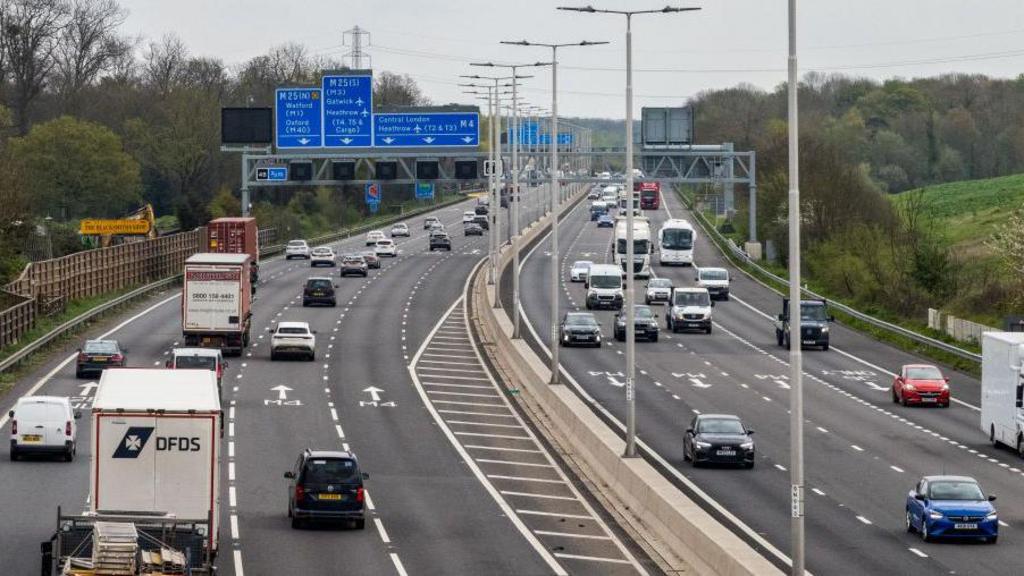
An internal report from National Highways, the government-owned company responsible for England's motorways, has found that the majority of 'smart motorway' projects are failing to deliver value for money. According to the documents, only three out of the sixteen schemes assessed are on track to deliver the expected financial benefits, casting serious doubt on the multi-billion-pound investment in this controversial road technology. Smart motorways, which involve converting the permanent hard shoulder into an extra traffic lane and using technology for real-time traffic management, have been promoted as a solution to increase capacity and reduce congestion without the need for costly and slow physical widening of the infrastructure.
The context for this finding is critical. The UK's smart motorway programme has been under intense public and political scrutiny for years, particularly following a series of fatal accidents where stationary vehicles in live lanes were hit from behind. Safety concerns have led to pauses in rollout and independent reviews. This latest report, focused on economic value, adds a new layer of criticism by suggesting that, even putting safety concerns aside, the projects may not be justified from a financial standpoint. The anticipated benefits, which often include time savings for drivers and reductions in carbon emissions from smoother traffic flow, are not materializing at the expected rate or scale on most corridors.
The relevant data is stark. Of the sixteen smart motorway schemes subjected to a 'value for money' review, only three—sections of the M6 in Cheshire and the M1 in Northamptonshire and Leicestershire—are currently on track to achieve a positive benefit-cost ratio. The remaining thirteen, covering some of the country's busiest routes, are failing to meet the financial targets set out in their respective business cases. This analysis is part of National Highways' 'Gate Review' processes, designed to assess the progress of major projects. The revelation comes at a time when the government has already cancelled the building of new smart motorways on grounds of safety and 'lack of public confidence'.
While the report itself has not been published with direct quotes, its contents have been confirmed by internal sources and have prompted immediate reactions. A National Highways spokesperson told media: 'We remain committed to ensuring all our projects deliver the best possible value for the taxpayer. We are applying lessons learned from earlier schemes to our ongoing operations.' On the other hand, road safety campaigners and MPs have been more forceful. Sarah Simpson, a spokesperson for the 'Smart Motorways Kill' campaign, stated: 'This is the final nail in the coffin. First we were told they were safe, when they weren't. Then we were told they were a cost-effective way to increase capacity, and now it turns out that's not true either. It has been a colossal waste of public money that has cost lives.'
The impact of this report is multifaceted. Firstly, it puts additional financial and political pressure on National Highways and the Department for Transport to justify the continued investment in maintaining and operating existing smart motorways. Secondly, it strengthens the arguments of those calling for the reinstatement of permanent hard shoulders on all stretches, a move that would be extremely costly. Thirdly, it could influence future transport infrastructure investment decisions, shifting focus away from purely technological and traffic management solutions and towards traditional physical investments or other alternatives. The credibility of the government's project appraisal process is also called into question.
In conclusion, the revelation that most smart motorways do not offer good value for money represents a significant blow to a transport policy already in retreat. It raises uncomfortable questions about the accuracy of the cost-benefit models used to approve large-scale infrastructure projects and underscores the dangers of prioritizing perceived economic efficiency over factors like safety and public acceptance. The legacy of smart motorways in the UK appears increasingly marked by controversy, high costs, and questionable benefits, serving as a cautionary tale for other nations considering similar road technologies. The focus must now be on how to make the existing network safer and on ensuring future investments are backed by robust and transparent analysis.