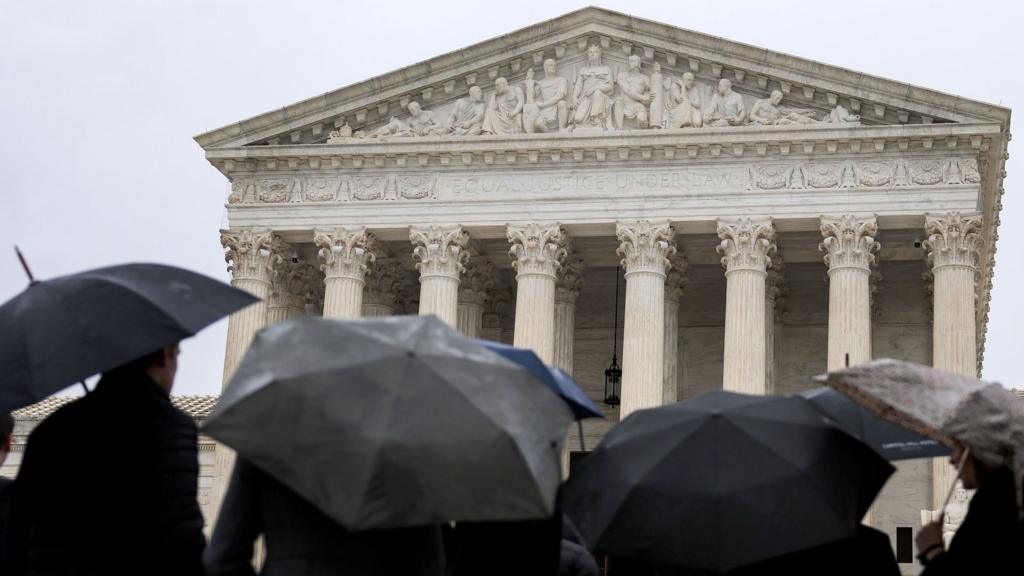
In a decision with profound implications for trade policy and the separation of powers, the U.S. Supreme Court delivered a major blow to former President Donald Trump's economic agenda, significantly curtailing executive authority to impose unilateral tariffs. The ruling, issued by a 6-3 majority, declares a key section of the Trade Act of 1974 unconstitutional, stating it allowed the president to levy tariffs on "national security" grounds without meaningful congressional oversight. The case stemmed from a lawsuit filed by a consortium of steel and aluminum importers impacted by the 25% and 10% tariffs, respectively, imposed by the Trump administration in 2018.
The context of this ruling traces back to a cornerstone of Trump's "America First" policy: the aggressive use of tariffs as a tool of foreign and economic policy. Under Section 232 of the Trade Act, the administration argued that metal imports threatened the nation's defense industrial base, thus justifying emergency measures. However, for years, critics and trading partners alleged this authority was being used overly broadly and discretionarily, flouting World Trade Organization rules and triggering trade wars, particularly with China and the European Union.
The majority opinion, written by Justice Amy Coney Barrett, held that Congress's delegation of power to the president under Section 232 was excessively vague and lacked "intelligible principles" to guide executive action, thereby violating the "nondelegation" doctrine. "Congress cannot abdicate its constitutional responsibility to set trade policy by granting the president limitless authority to redefine national security at will," Barrett wrote. The decision reaffirms that the power to regulate commerce with foreign nations resides primarily with Congress under Article I of the Constitution.
The immediate impact of this decision is complex. It does not retroactively invalidate the Trump-era tariffs already in place, but it sets a legal precedent that will make it exceedingly difficult for any future president, including a potential second Trump term, to impose new tariffs under the same statute without explicit congressional approval. Legal and economic experts note this could curb an escalation of protectionist measures and force greater collaboration between the executive and legislative branches on trade policy. For the agenda of a potential Trump second term, which promised universal 10% tariffs and even tougher measures against China, this ruling represents a monumental legal hurdle.
Political reaction was swift. Former President Trump called the decision "a terrible, cowardly ruling that disarms America against unfair competitors." In contrast, Democratic leaders and some pro-free trade Republicans hailed the ruling as a necessary restoration of constitutional balance. The verdict is also seen as a victory for the American business community, particularly manufacturers reliant on imported inputs who have long argued that tariffs are a hidden tax that raises costs and harms competitiveness.
In the long term, this ruling redefines the landscape of U.S. trade policy. While the president retains certain authorities under laws like Section 301 of the Trade Act of 1974 (targeting unfair trade practices) and the Trade Expansion Act of 1962 (for national security reasons, but with a more defined process), the door for broad, unilateral tariffs has been significantly closed. The decision underscores a trend of the current Supreme Court to question and limit what it perceives as overreach by executive agencies, a principle now applied to the realm of international commerce. In conclusion, more than a mere political setback, this ruling constitutes a historic reaffirmation of constitutional checks and balances, shaping the future of U.S. economic policy in a globalized world.