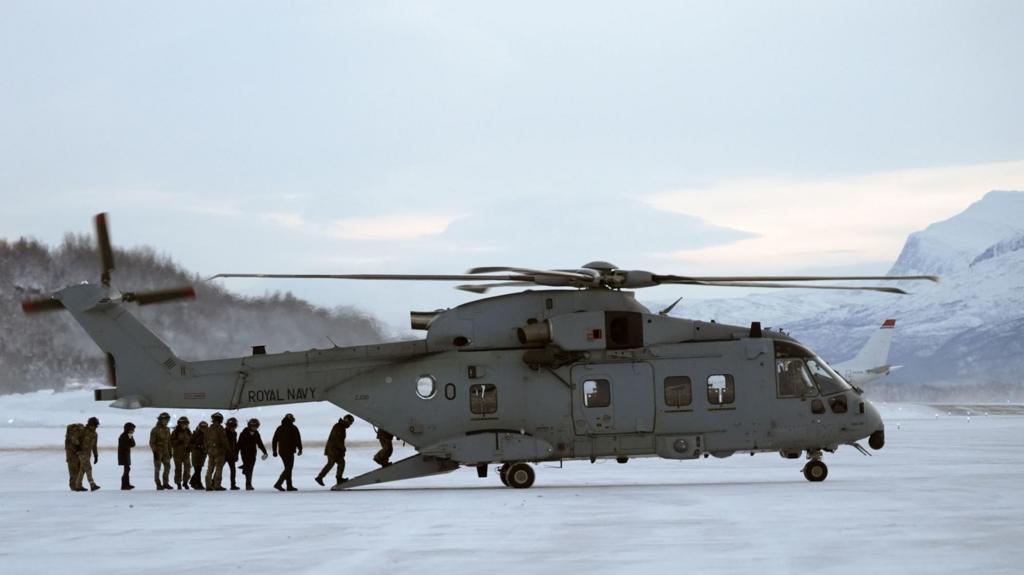
The UK government has announced a significant military deployment to Norway, a strategic move aimed at bolstering NATO's collective deterrence and countering the perceived growing threat from Russia in the Arctic and North Atlantic. This move, confirmed by the British Ministry of Defence, involves sending hundreds of additional troops, as well as advanced military equipment, for exercises and a more permanent rotational presence. The decision comes amid renewed geopolitical tensions following Russia's invasion of Ukraine, which has prompted a fundamental reassessment of the Atlantic Alliance's defensive posture on its northern flank.
The context for this reinforcement is Russia's increasing militarization of the Arctic, a region of strategic importance due to its shipping routes, natural resources, and value for nuclear deterrence. Russia has substantially modernized its military bases north of the Arctic Circle, reactivating Soviet-era facilities and deploying new missile systems, air defense capabilities, and attack submarines. Norway, which shares a land and maritime border with Russia in the Arctic, has been a key and steadfast NATO ally for decades. Bilateral military cooperation between London and Oslo is already extensive, but this new step represents a tangible intensification of mutual defense commitments.
Relevant data indicates the British contingent will integrate into large-scale exercises like "Cold Response," where thousands of NATO troops train for operations in extreme winter conditions. The deployment is expected to include infantry, cold-weather warfare specialists, and potentially assets from the Royal Navy and Royal Air Force for joint patrols. A spokesperson for the UK Ministry of Defence stated: "Our commitment to the security of our NATO allies is unwavering. This deployment to Norway demonstrates our resolve to defend our shared values and deter any aggression on the Alliance's northern flank." For their part, Norwegian authorities have stressed the importance of credible defense. Norway's Defence Minister, Bjørn Arild Gram, recently stated: "Close cooperation with allies like the UK is crucial for Norway's security and for stability in our region."
The impact of this decision is multifaceted. Militarily, it strengthens NATO's rapid response capability in a theater where lines of communication are long and the environment is hostile. Politically, it sends a clear signal to Moscow about the Alliance's unity and readiness, while consolidating the UK's position as a leading European security actor post-Brexit. However, it also carries the risk of escalating the security dynamic in the Arctic, a region Russia considers vital to its national security. Analysts warn it could fuel an action-reaction cycle, with Moscow interpreting the deployment as further provocation near its borders.
In conclusion, the bolstering of British troops in Norway is another component of NATO's post-Ukraine strategic reconfiguration, prioritizing forward defense and allied resilience. It underscores the Alliance's transformation from a crisis-management organization to one focused on large-scale deterrence and defense against a peer adversary. While the measure seeks to stabilize the security environment by demonstrating strength and cohesion, its long-term success will depend on careful strategic communication to avoid miscalculation and deep operational integration with Norwegian forces and other NATO allies in the Nordic region.