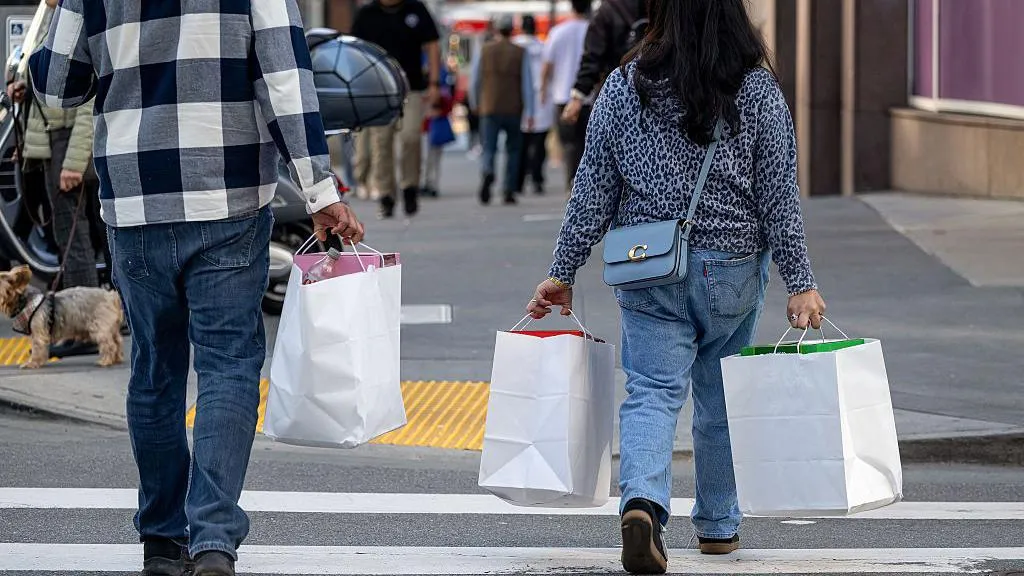
The U.S. economy, a global growth engine, showed signs of fatigue at the close of 2023. According to data released by the U.S. Department of Commerce, consumer spending, which accounts for roughly 70% of the nation's economic activity, rose a mere 0.2% in December, adjusted for inflation. This figure marks a significant slowdown from the robust 0.7% increase recorded in November and falls short of analysts' expectations, which anticipated a 0.3% gain. The data has raised alarms about the resilience of the American consumer in the face of a high-interest-rate environment, persistent inflation, and global economic uncertainty.
The context for this slowdown is complex. For much of 2023, consumer spending remained surprisingly robust, driven by a strong labor market with an unemployment rate near historic lows and by savings accumulated during the pandemic. However, the final months of the year revealed growing pressure on household budgets. Inflation, while moderated from its 2022 peaks, continues to erode purchasing power, especially in essential categories like food and housing. Simultaneously, the Federal Reserve has maintained high interest rates to contain prices, making credit more expensive for mortgages, auto loans, and credit card financing.
A detailed analysis of the report's components reveals important nuances. Spending on goods, particularly durable items like cars and appliances, contracted in December, reflecting greater caution in big-ticket purchases. Conversely, spending on services, which includes areas like travel, entertainment, and healthcare, continued to grow, albeit at a more moderate pace. This pattern suggests consumers are prioritizing experiences and basic needs while postponing purchases of costly material goods. Personal incomes, meanwhile, grew 0.3% for the month, a rate that barely outpaces inflation, indicating that the room for expansive spending is narrowing.
Economic experts have reacted with a mix of concern and caution. 'The December slowdown is not a surprise, but it confirms that the American consumer is beginning to feel the weight of restrictive monetary policy,' commented Dr. Sarah Chen, Chief Economist at the Global Economic Studies Institute. 'The key will be to observe whether this is a temporary pause after the holiday shopping season or the start of a more prolonged trend of moderation,' she added. For his part, Atlanta Fed President Raphael Bostic noted in recent remarks that 'the mixed data reinforces the need to be patient and methodical in our approach, ensuring inflation returns sustainably to our 2% target.'
The impact of this slowdown extends beyond U.S. borders. Weaker domestic demand in the world's largest economy could affect the exports of its trading partners, from China and the European Union to Latin America. In financial markets, the data was met with ambivalence: while some investors interpreted it as a sign that could push the Fed to cut rates sooner than expected, others fear it is the prelude to a deeper economic slowdown. Consumer confidence, a key leading indicator, will also be closely watched in the coming months.
In conclusion, the moderation in consumer spending in December acts as a warning sign, though not necessarily an immediate alarm. It reflects an economy in transition, where post-pandemic stimuli have been exhausted and cooling forces, like high interest rates, are gaining ground. The strength of the labor market remains the fundamental pillar that could prevent a more abrupt contraction. The path forward for the U.S. economy will depend on a delicate balance: that inflation continues its descent without growth coming to a complete halt, a scenario that policymakers and markets will watch with extreme attention throughout the first quarter of 2024.