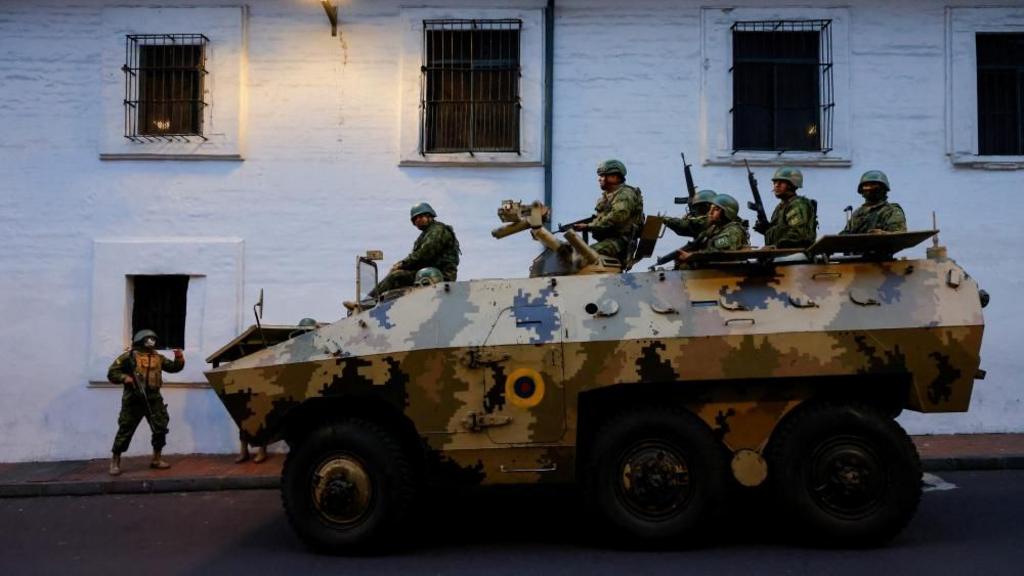
In an unprecedented mobilization to bolster regional security, the naval forces of the United States and Ecuador have launched a large-scale joint operation in the Eastern Pacific Ocean, with the stated goal of intercepting and dismantling drug trafficking routes that use international waters as a key corridor. The initiative, dubbed "Operation Phoenix," marks a turning point in bilateral cooperation and responds to the alarming escalation in the power of drug cartels, whose violence has destabilized coastal areas and threatens governance in Ecuador. The collaboration includes the deployment of frigates, high-speed patrol boats, U.S. Navy P-3 Orion surveillance aircraft, and satellite intelligence systems, creating an interdiction network spanning thousands of nautical miles.
The context for this operation is critical. Ecuador, traditionally a transit country, has seen transnational criminal groups, particularly Mexican cartels and dissidents of Colombia's FARC, increase their presence, using ports like Guayaquil and Esmeraldas to ship cocaine to North America and Europe. In the last year alone, maritime drug seizures in the region have exceeded 200 metric tons, according to data from the United Nations Office on Drugs and Crime (UNODC). The associated violence has led Ecuador to record some of the highest homicide rates in South America, with a 300% increase over the past five years, according to government reports.
"This strategic alliance is not just a military operation; it is a commitment to the security of our citizens and the stability of the region," declared Ecuador's Minister of Defense, Luis Lara, at a joint press conference in Quito. "The maritime routes are the main artery of drug trafficking, and we must cut them off at the root." For his part, the Commander of U.S. Southern Command, General Laura Richardson, emphasized the comprehensive approach: "We provide technological and intelligence capabilities, while Ecuador contributes tactical knowledge of the terrain. Together, we are sending a clear message to the cartels: the Pacific is no longer a lawless zone."
The impact of the operation is already being felt. In the first 72 hours, joint forces reported intercepting two semi-submersibles loaded with more than 3 tons of cocaine, valued at approximately $120 million on the black market. Additionally, a dozen arrests of alleged drug traffickers linked to logistical networks have been made. Security analysts warn, however, that long-term success will depend on the sustainability of cooperation and parallel efforts in financial intelligence and judicial strengthening. "Intercepting shipments is crucial, but if the financial and money laundering structures are not dismantled, the cartels will quickly adapt," noted Ana Rodríguez, an organized crime expert at the Inter-American Dialogue think tank.
In conclusion, "Operation Phoenix" represents a significant chapter in the war on drugs in the Western Hemisphere. As patrol boats ply the waters of the Pacific under a flag of cooperation, the underlying challenge remains: transforming these tactical blows into a lasting regional strategy that addresses not only trafficking but also the social and economic causes that fuel the drug trade. The world is watching to see if this alliance can become an effective model for other South American Pacific coast countries battling the same threat.