An unprecedented wave of violence has shaken several Mexican states following the confirmed death of Nemesio Oseguera Cervantes, alias "El Mencho," leader of the Jalisco New Generation Cartel (CJNG). The news, confirmed by Mexican military and intelligence sources in coordination with U.S. agencies, triggered armed clashes, roadblocks with burning vehicles, and attacks on government installations in at least six states, plunging entire regions into chaos and terror.
El Mencho, considered one of the world's most wanted drug traffickers with a $10 million bounty offered by the U.S. State Department, was killed during a joint military operation in a mountainous area on the border between Jalisco and Michoacán. According to preliminary reports, the capo offered armed resistance, resulting in a prolonged firefight that also claimed the lives of several of his lieutenants and bodyguards. His death represents the most significant blow against organized crime in Mexico since the capture of Joaquín "El Chapo" Guzmán, but it has also unleashed a fierce struggle for control of his vast criminal empire.
The CJNG, under El Mencho's command, had become Mexico's most powerful and violent criminal organization, with a presence in at least 28 of the country's 32 states and international operations spanning from the production and trafficking of methamphetamine, cocaine, and fentanyl, to extortion, kidnapping, and territorial control. Its business model, characterized by extreme brutality and sophisticated logistical infrastructure, allowed it to openly challenge the state. "The elimination of El Mencho is a monumental operational success, but it opens a power vacuum that multiple factions, both within the CJNG and rival cartels, will seek to fill at any cost," stated a senior security official on condition of anonymity.
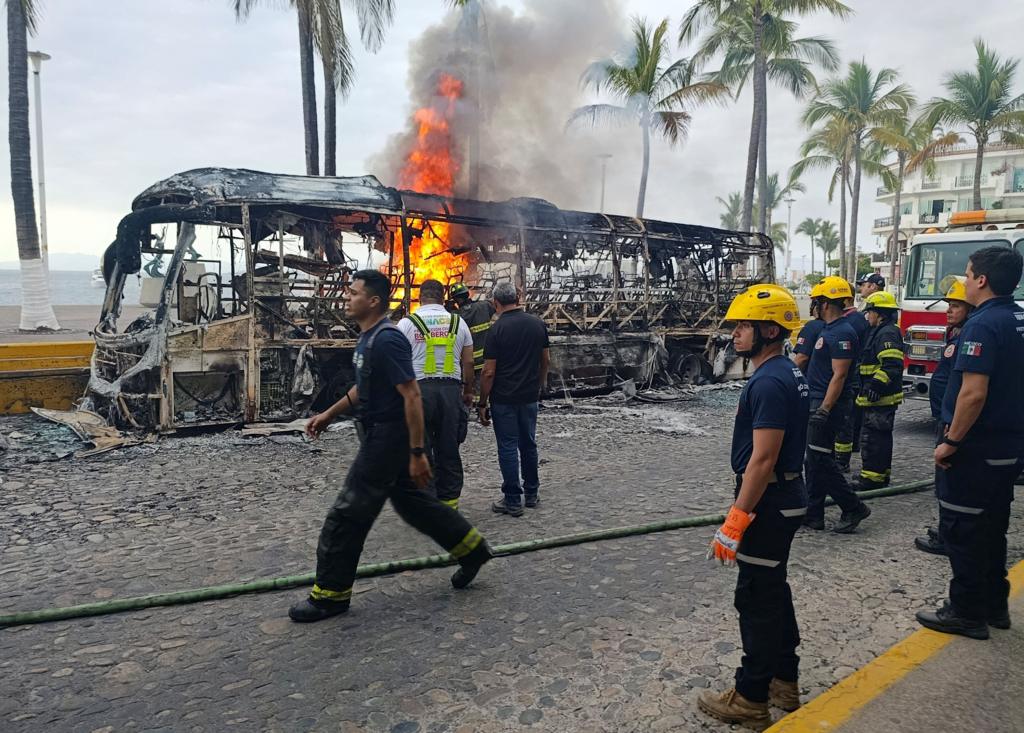
The violence manifested almost immediately. In Guadalajara, the capital of Jalisco, blockades were reported at over 30 points with trucks and buses set ablaze. In Michoacán and Guanajuato, armed groups attacked police stations and National Guard barracks with high-powered weapons. Authorities reported at least 45 violent incidents in the first 12 hours, including ambushes on patrols and summary executions. The federal government deployed additional Army and National Guard elements in an operation dubbed "Jalisco Shield," aimed at containing the spiral of violence. "We call on the population to remain calm. The Armed Forces and security corporations are deployed to guarantee order. We will not allow criminal groups to sow panic," affirmed the Secretariat of Security and Citizen Protection in a statement.
Security experts warn that the post-Mencho scenario is extremely volatile. Within the CJNG, a succession struggle is looming between his children, known as "Los Menores," and historic regional commanders such as "El 03" and "El 85." Simultaneously, rival cartels like the Sinaloa Cartel and local groups such as the United Cartels in Michoacán could attempt to invade territories traditionally controlled by the CJNG. "We are facing the likely fragmentation of the most powerful cartel. This does not mean the end of violence, but its transformation. We could witness a multi-factional war for control of routes, laboratories, and migration corridors," analyzed Eduardo Guerrero, a security consultant. The economic impact is already tangible, with the closure of businesses, suspension of classes in dozens of municipalities, and disruption of freight transport.
The death of El Mencho closes one chapter in the war on drugs but inaugurates another, potentially bloodier and more complex one. While federal forces attempt to maintain control, the civilian population is caught in the crossfire of a criminal reconfiguration whose medium- and long-term consequences are unpredictable. The challenge for the Mexican state is no longer just decapitating organizations, but preventing the scattered pieces of the monster from generating even more decentralized and difficult-to-combat violence.