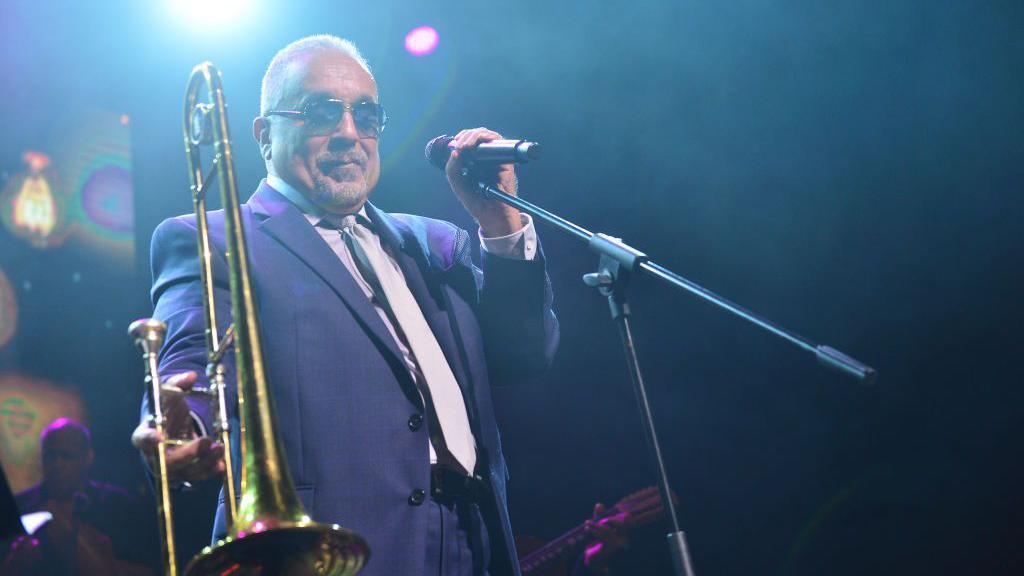
The Latin music world is in mourning following the confirmation of the death of Willie Colón, one of the most influential and innovative figures in the history of salsa, at the age of 75. The news, shared by his family and confirmed by representatives, has sparked a wave of condolences and tributes from all corners of the globe, recognizing an artist whose legacy transcends genres and borders. Willie Colón was not just a musician; he was a sonic architect, a social storyteller, and a cultural bridge who, from the New York Bronx, redefined Caribbean music for generations to come.
Born into a Puerto Rican family in the Bronx, New York, in 1950, William Anthony Colón Román discovered the trombone at an early age, an instrument that was not common in Latin music ensembles at the time, which were dominated by trumpets. His decision to adopt it would become one of his trademarks, bringing a deeper, richer, and more jazz-influenced sound to the burgeoning salsa scene of the late 1960s. At just 17 years old, he signed with Fania Records, the epicenter of the salsa movement, and released his debut album "El Malo" in 1967. This work, loaded with raw energy and lyrics reflecting the reality of urban streets, catapulted him to fame and established the blueprint for what would become known as "salsa dura" (hard salsa).
Colón's career was marked by historic collaborations, most notably his partnership with singer and composer Héctor Lavoe. Together, they formed one of the most explosive and productive duos in Latin music, creating timeless classics such as "El Día de Suerte," "La Murga," and "Calle Luna, Calle Sol." Their music was not just for dancing; their lyrics, often penned by the brilliant lyricist Rubén Blades, who also collaborated closely with Colón, addressed themes of social justice, Latino identity, poverty, and politics, elevating salsa from entertainment music to a vehicle for social commentary. Albums like "Siembra" (1978) with Rubén Blades are considered absolute masterpieces of the genre, fusing musical complexity with profound narratives.
Beyond his musical impact, Willie Colón was an activist and community figure. He used his platform to advocate for the rights of Latino immigrants and denounce inequality, bringing these struggles to international stages. His influence spanned five decades, with a discography exceeding forty albums that included experiments with jazz, Brazilian music, rock, and even opera. He received multiple Latin Grammy Awards and Grammy nominations, and his music has been sampled by hip-hop artists and across various genres, a testament to his enduring relevance.
The impact of his passing is immense. It leaves a void in the heart of global Latin culture. From music stars to anonymous fans, reactions highlight his genius, his authenticity, and his role as a mentor and pioneer. "Willie didn't just change the music; he changed the way a generation saw itself," declared a fellow musician in a tribute. His legacy lives on not only in his recordings but in the very essence of modern salsa and the spirit of innovation he instilled in all who followed him. Willie Colón, the "Juggler of the Trombone," leaves an indelible sound and a message of pride and resistance that will continue to resonate forever.