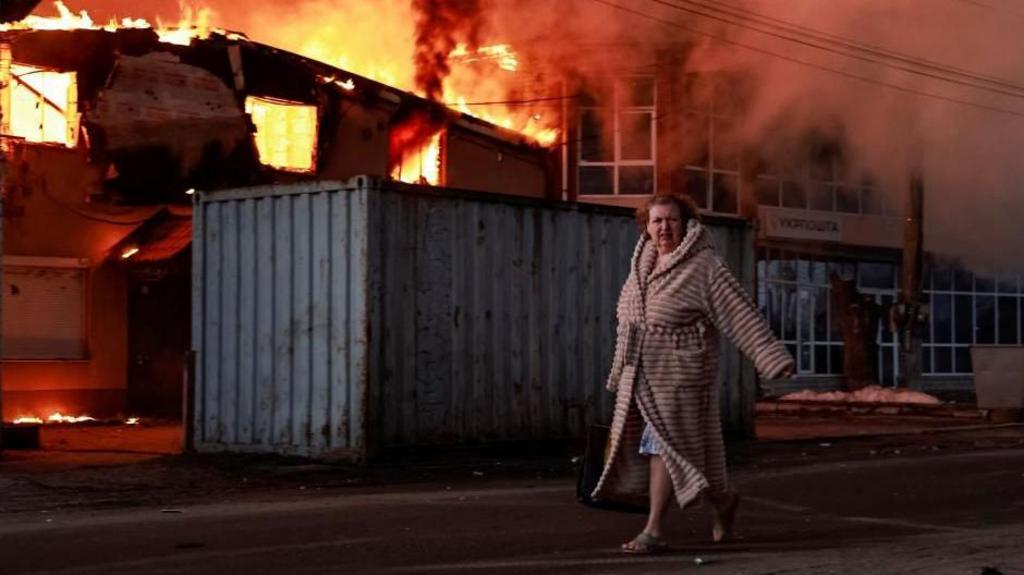
Ukrainian President Volodymyr Zelensky has leveled a serious accusation against the Kremlin, stating that Russia is strategically exploiting the escalation of tensions in the Middle East, particularly the conflict between Israel and Iran, to intensify its attacks on Ukrainian territory. The statement comes after a new devastating wave of Russian bombardments that hit critical infrastructure and residential areas in several regions of Ukraine overnight. According to reports from Ukrainian authorities, the attacks involved Iranian-made Shahed drones and cruise missiles, causing fatalities, injuries, and significant material damage.
The context of this accusation is framed in a moment of extreme geopolitical fragility. While the international community focuses its attention on Israel's response to the unprecedented attack with drones and missiles launched by Iran last weekend, Zelensky argues that Moscow has identified a window of opportunity. "When the world's attention is diverted, when leaders are busy with another crisis, Russian terrorists see their chance," the Ukrainian leader declared in his nightly video address. This strategy, according to analysts, seeks to exhaust Ukraine's air defenses and test the resilience of its energy infrastructure at a time of global distraction.
The data provided by the General Staff of the Armed Forces of Ukraine is telling. In the latest wave of attacks, Ukrainian air defense forces managed to intercept a significant portion of the projectiles, but at least a dozen targets hit their mark. The regions of Kharkiv, Odesa, and Lviv reported damage to thermal power plants and electrical substations, leaving thousands of citizens without power supply in the middle of spring. Emergency authorities are working against the clock to restore basic services. This pattern of attacks against the energy grid, which intensified during the winter, seems to be resurging with force, seeking to undermine civilian morale and the country's industrial capacity.
Zelensky's statements were not limited to denunciation. The president issued an urgent call to Western allies not to lower their guard and to accelerate the delivery of promised air defense systems, such as American Patriots and European SAMP/T. "Our partners know exactly what we need. We need these defenses not in the distant future, but now, to save lives," he stated. This call reflects a growing concern in Kyiv that military support, although firm, may suffer delays or misprioritization due to concurrent crises in Gaza and now on the Israeli-Iranian border.
The impact of this Russian strategy, if confirmed, is multifaceted. On a military level, it seeks to unbalance the battlefield in eastern Ukraine, where Russian forces have regained the initiative in some sectors. On a political level, it attempts to fracture the unity of the coalition supporting Ukraine, tempting some countries to divert resources or attention. On a humanitarian level, the indiscriminate attacks against civilian infrastructure constitute a clear violation of international humanitarian law and deepen the humanitarian crisis already affecting millions of Ukrainians. The international community thus faces a dilemma of managing multiple crises, where aggression by one authoritarian actor can fuel that of another.
In conclusion, Zelensky's warning underscores a defining characteristic of modern warfare: the interconnectedness of conflict theaters and the exploitation of global distractions by revisionist regimes. The new massive bombardment is not an isolated event, but another chapter in a war of attrition that adapts to the international context. The West's response to this move will be a crucial test of its ability to maintain a firm stance on multiple fronts simultaneously and of its long-term commitment to Ukraine's security and the stability of the rules-based order. The world is watching to see if solidarity can be as resilient as Ukrainian infrastructure under fire.